
Explore the secrets of Morocco!
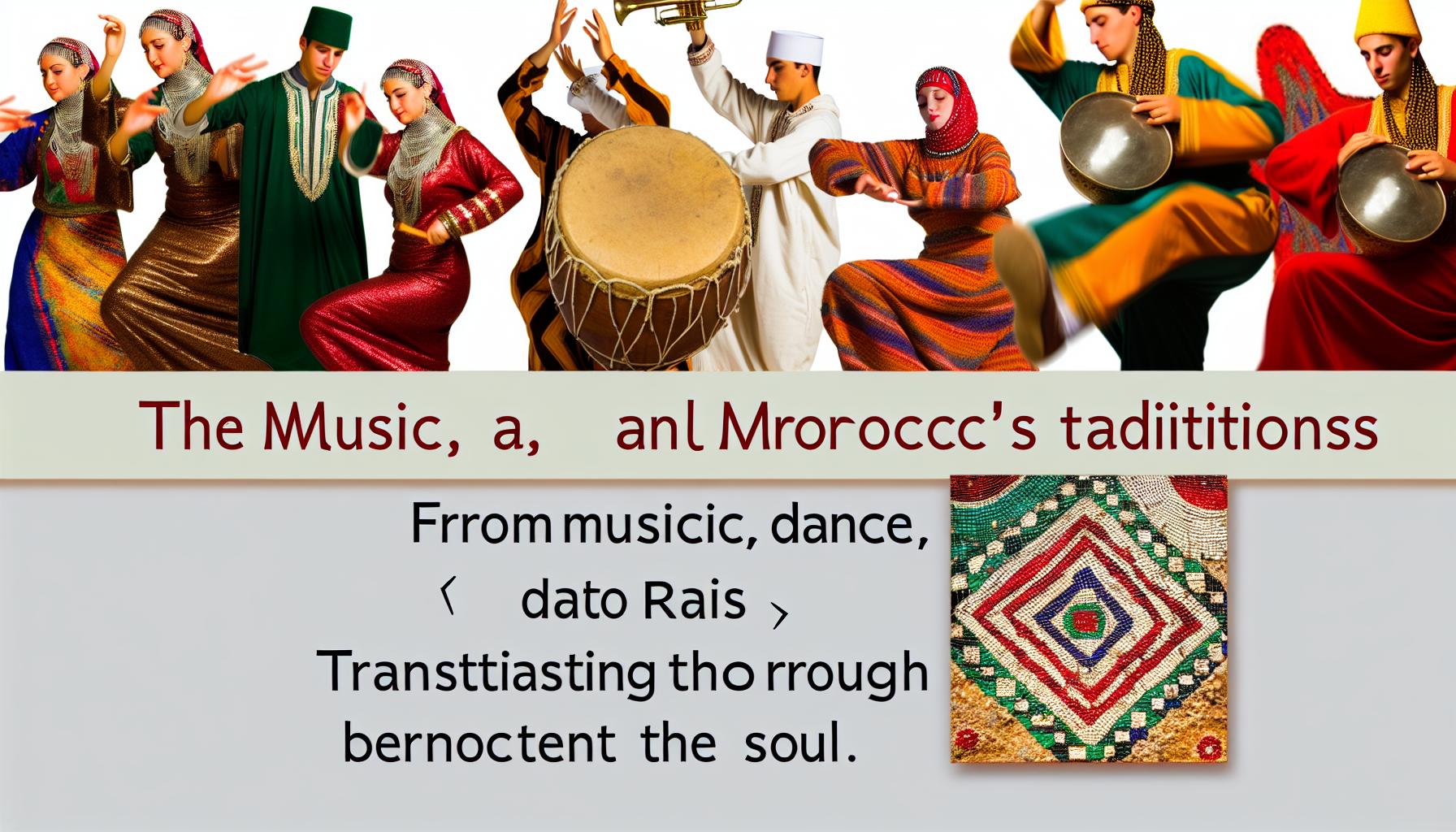
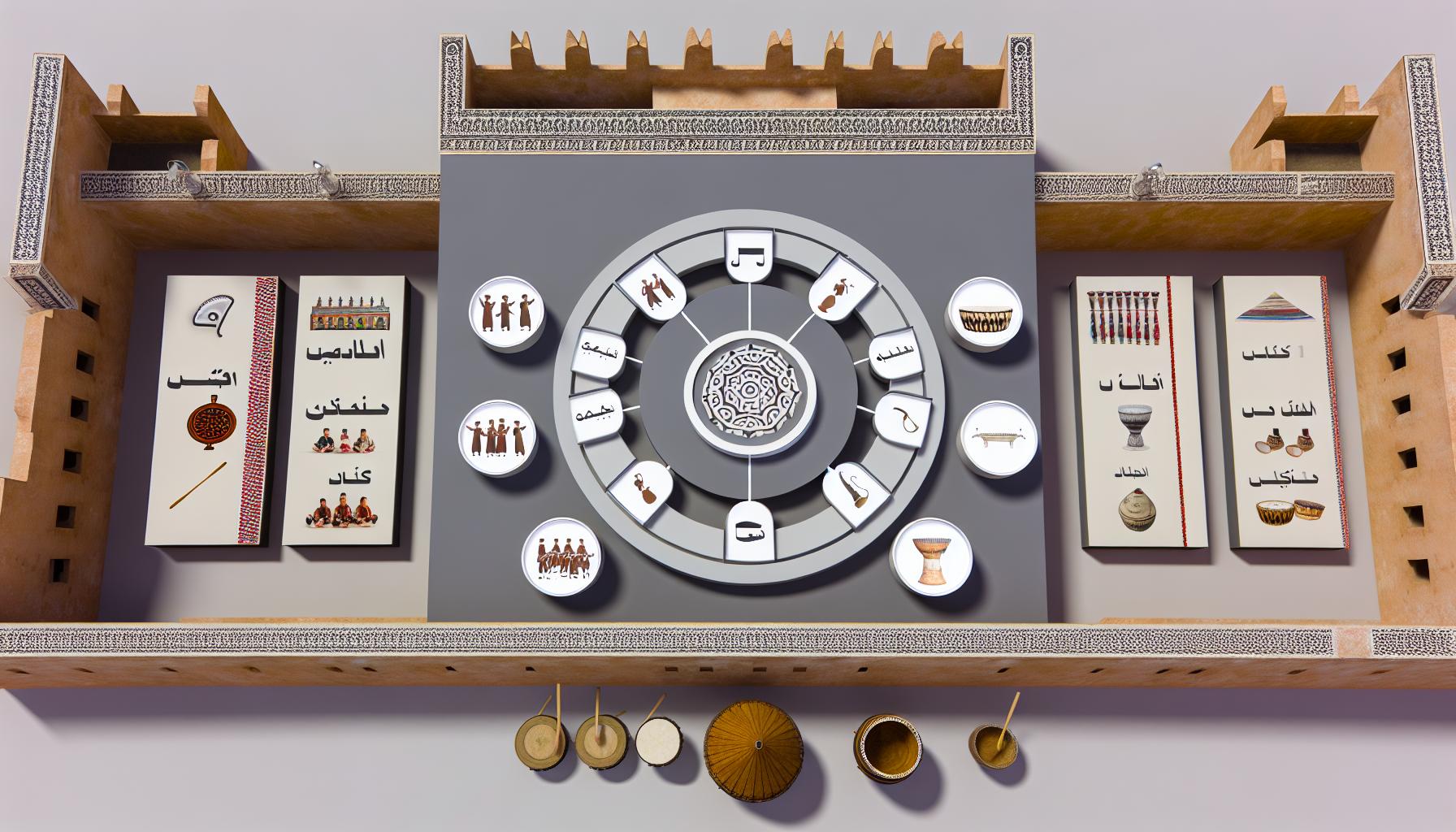
Moroccan music, dance and traditions invite you to dive into the heart of a rich and enchanting culture. Between the enchanting rhythms of Gnawa, the lively melodies of Rais, and the graceful Berber dances, Morocco offers an infinite palette of authentic traditions that captivate the soul.
Discover the Moroccan music in all its splendor, a faithful reflection of the cultural identity of the country. From the sacred blues of the Gnawa maâlems, to the enchanting songs of the Rais musicians, each note resonates like a piece of Moroccan history and folklore.
The Moroccan traditional dances are not left behind, reflecting the diversity and richness of the country's traditions. Berber dances, full of fluid symbols and movements, tell a thousand-year history rooted in Moroccan culture.
At the heart of traditional celebrations, Ahwach and Ahidous dances play a crucial role, bringing together communities around unique rituals and festivities. These traditions, transmitted from generation to generation, are the living witness of Moroccan folk art and its musical heritage.
The influence of the Rai on modern Moroccan music is undeniable, bringing a touch of modernity while preserving the deep roots of the country's culture. Cultural festivals also contribute to the preservation of Moroccan musical traditions, providing a showcase for local and international artists who together celebrate Moroccan cultural festivals.
Dive into the enchanting world of Moroccan music, dance and traditions, and let yourself be carried away by the magic of this country with a thousand colors and a thousand flavors.
What is the meaning of Gnawa music in contemporary Morocco?
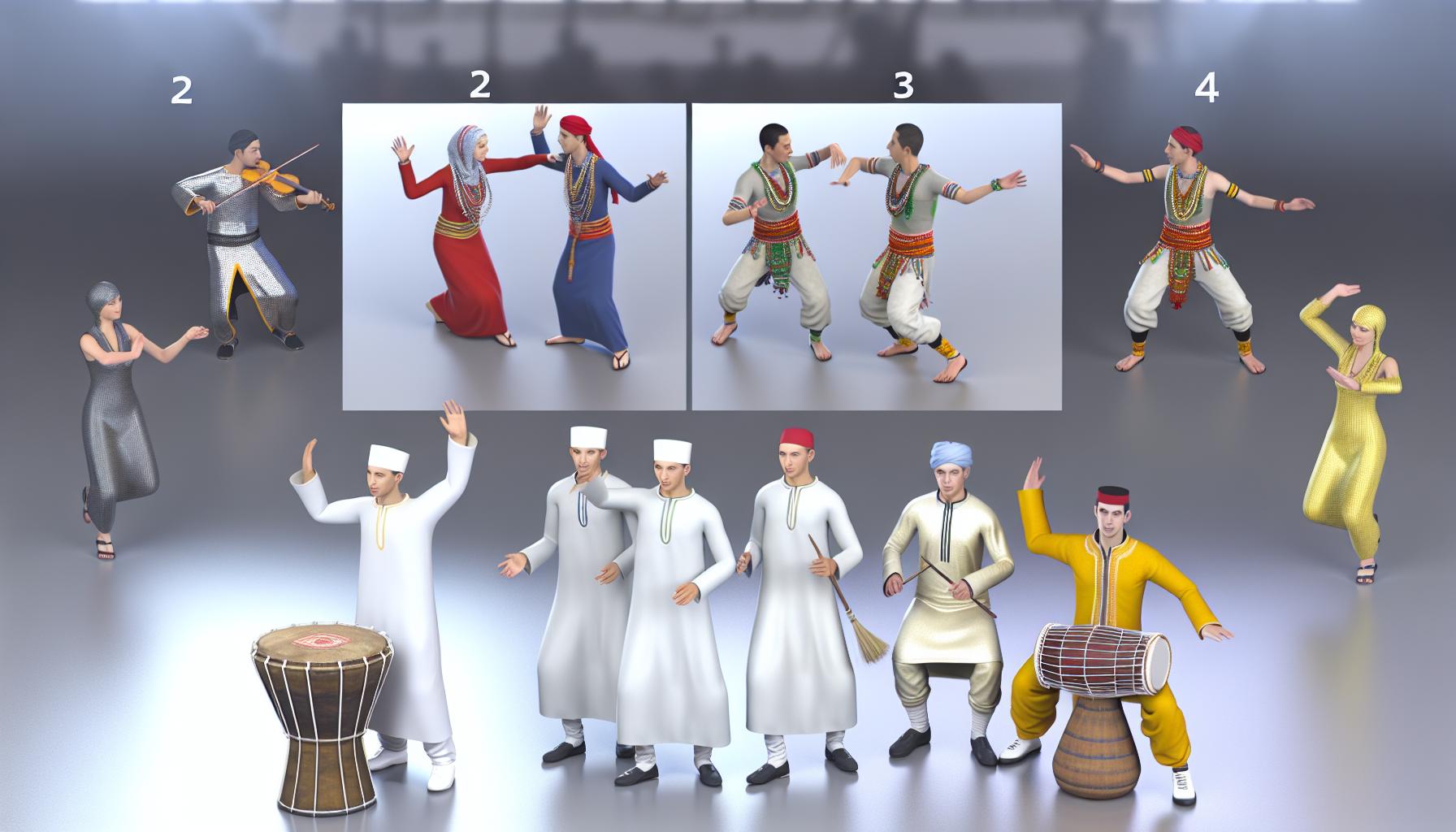
Gnawa music occupies a unique place in the cultural landscape of contemporary Morocco. Inheriting sub-Saharan slave descendants, this spiritual music is much more than just a musical genre: it is a real bridge between visible and invisible worlds.
Originally used in healing and trance rituals, Gnawa music is now a strong symbol of identity and cultural resistance. His hypnotic rhythms and songs intertwine animist beliefs, Sufi Islam and ancestral traditions.
In cities like Meknes and Essaouira, the annual Gnawa Music Festival attracts enthusiasts from all over the world, highlighting this lively and dynamic tradition. To learn more about this iconic festival, discover this external article Gnaoua d'Essaouira Festival.
Gnawa music also influences the modern music scene in Morocco, merging with jazz, blues and electronic music to reach a wider audience and renew traditions.
To better understand the role of music in Moroccan culture, do not hesitate to explore our section dedicated to Moroccan musical traditions, where are detailed the interactions between dance, music and cultural identity.
Beyond music, the Gnawa embodies a true art of living, a manifesto of solidarity and an invitation to the internal journey, still deeply rooted in the present of Morocco.
How do Berber dances reflect Moroccan cultural identity?
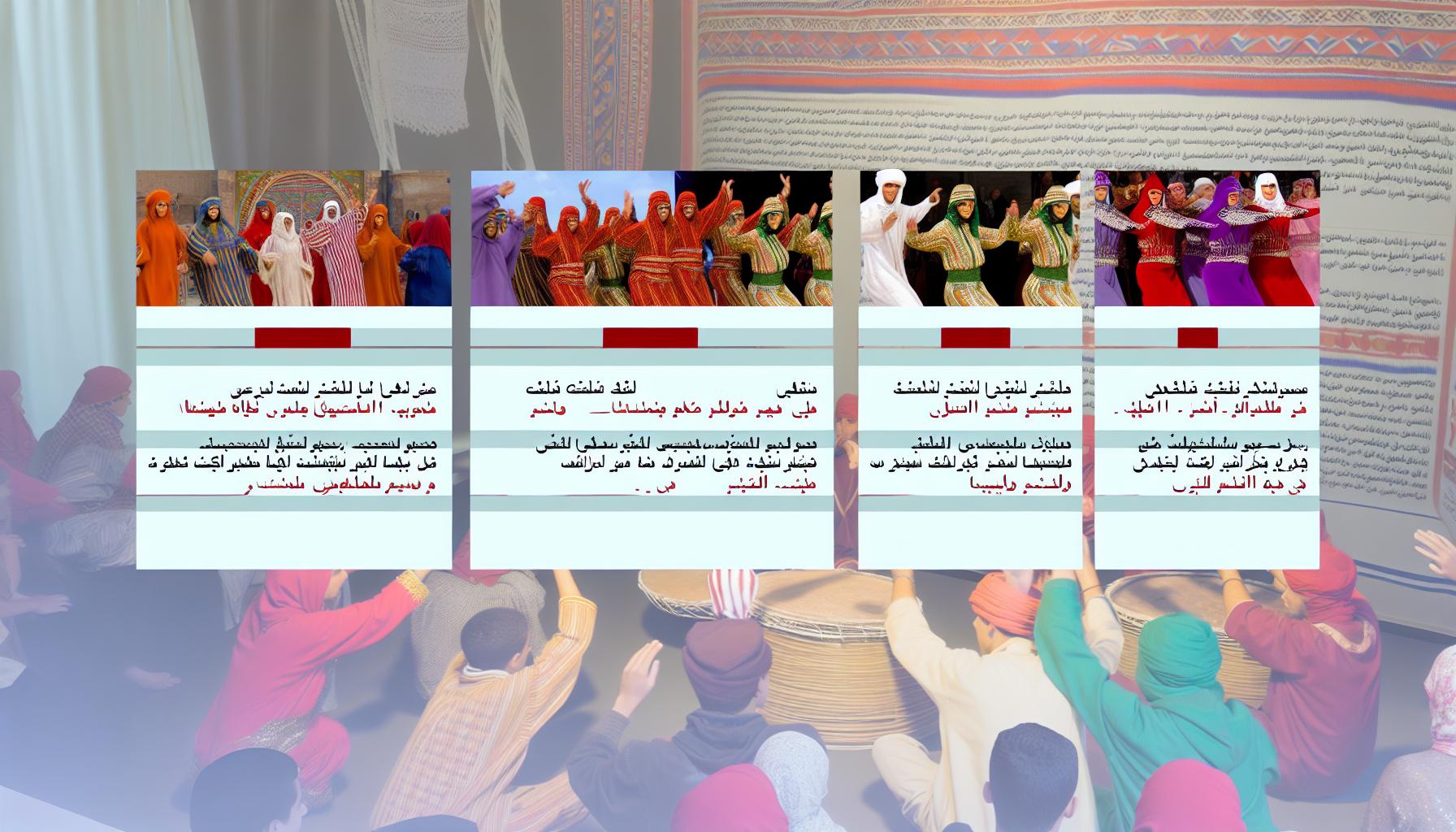
Berber dances are more than just artistic expressions; They are a living mirror of Moroccan cultural identity. Every movement, every rhythm and every costume bears in itself the history and values of Amazigh communities, indispensable to understand the cultural richness of Morocco.
These dances illustrate ancestral traditions, social life and Berber beliefs. For example, they often accompany celebrations such as weddings or seasonal holidays, thereby strengthening community ties. The role of the body in these dances is a true symbolic language, reflecting collective memory and intangible heritage.
The diversity of dance styles throughout the country, from the Rif to the Souss, also reflects the plurality of Berber identities present in the territory. Each has its own specificities, whether in gestures or musical accompaniment, while sharing this same deep cultural root.
To discover other facets of Moroccan heritage, do not hesitate to explore our article on imperial cities, true guardians of Berber traditions and history.
Finally, to deepen the cultural and heritage dimension of these dances, you can consult this information-rich external resource: Reggada: the dance body at the service of an Amazigh heritage culture.
What roles do Ahwach and Ahidous dance play in traditional celebrations?
Ahwach and Ahidous dances occupy a central place in traditional Moroccan celebrations, especially in the mountainous regions of the High Atlas and the Rif. These collective dances transcend mere entertainment to embody a profound expression of the cultural and social identity of Amazigh communities.
During festivities, whether they be weddings, harvests or large community meetings,Ahwach unfolds in the form of songs and dances rhythmic in unison, bringing together men and women in a harmony symbolizing unity and solidarity.
Similarly, dance Ahidous, characterized by a circled choreography and improvised lyrics, plays a role of oral transmission of local values and stories. It is often accompanied by the bendir, a traditional drum that gives the tempo to the synchronized movements of the dancers.
These dances are also a means of strengthening social ties by providing a space where the community celebrates its rites together while affirming its memory and heritage. To learn more about Moroccan traditions, visit our article on Moroccan music, dance and traditions.
Beyond their festive function, Ahwach and Ahidous are live manifestations of a plural Morocco, where each movement and song tell an ancestral history that continues to animate the heart of villages and cities.
What are the influences of the Rai on modern Moroccan music?
The Rai, a musical genre native to Algeria, has profoundly influenced the contemporary Moroccan music scene. Since the 1980s, this rebellious and festive music has found a special echo among young Moroccan artists, who have been able to inspire them while integrating their own traditional sounds.
The mixing of rai rhythms with traditional Moroccan instruments, such as oud or bendir, has created a hybrid sound, modern but rooted in the cultural roots of the kingdom. This musical exchange perfectly illustrates how the cultural boundaries in the Maghreb are porous and enriching.
In addition, the themes and codes of the Rai, often focused on freedom of expression and social criticism, have influenced many contemporary Moroccan artists. They use music to address sensitive topics, while energizing the local music scene.
To better understand this cultural fusion, you can discover how traditional music is expressed in the different regions of Morocco in our article on Moroccan music, dance and traditions.
Finally, the influence of the Rai is not limited to Algeria and Morocco. It also affects the Maghreb diaspora in Europe, contributing to intercultural music that transcends borders. To listen to contemporary examples of this evolution, see this playlist on YouTube.
How do festivals contribute to the preservation of Moroccan musical traditions?
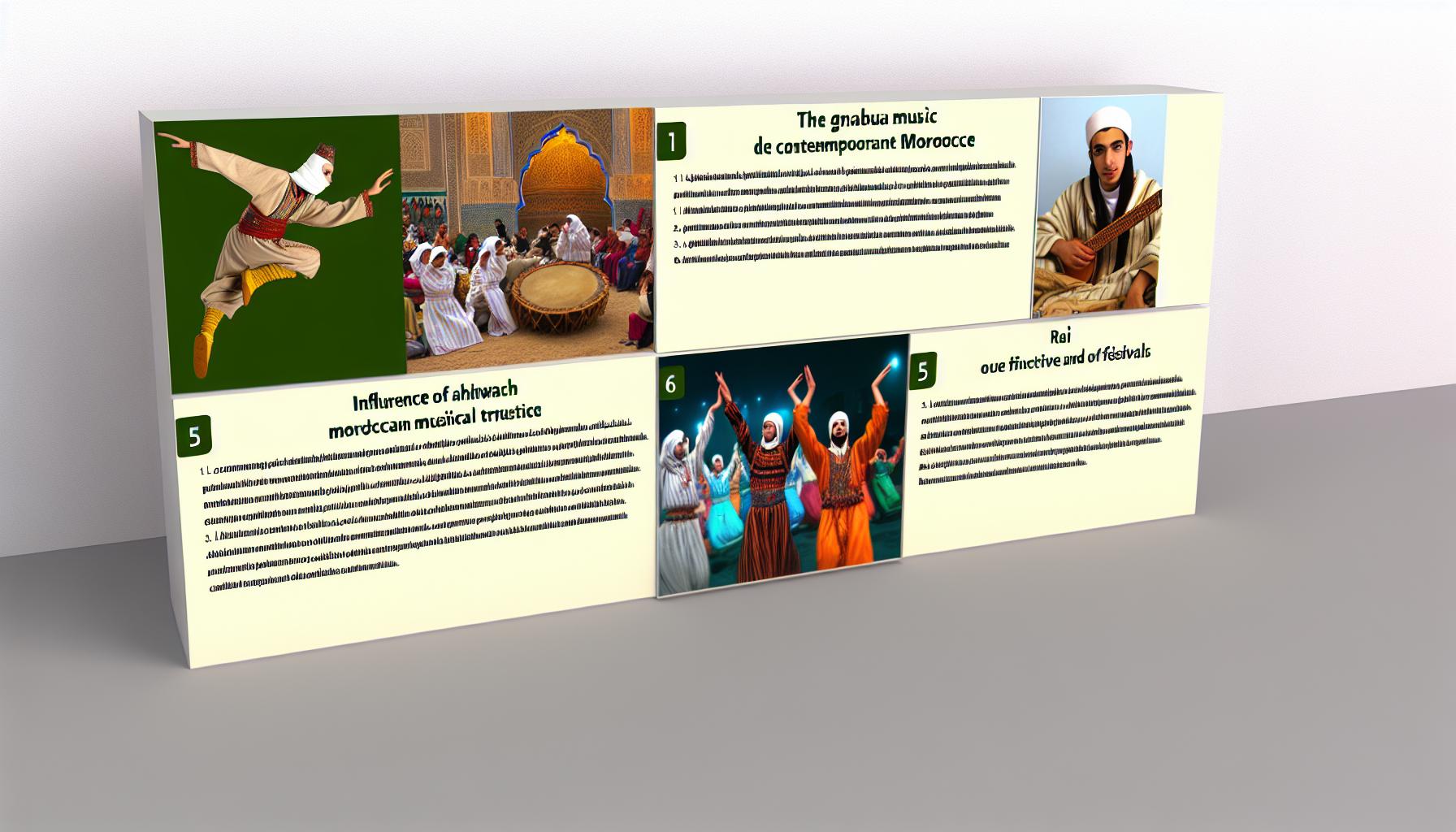
Music festivals in Morocco play an essential role in safeguarding and valuing ancestral musical traditions. They bring together local and international artists around a rich and diverse heritage, thus promoting the transmission of traditional know-how and rhythms to new generations.
These events offer a privileged scene where musicians perform musical genres such as malhoun, gnawa, and Amazigh music. This exhibition helps keep these artistic forms alive, which could otherwise disappear in the face of modernity.
Beyond their musical function, festivals are moments of cultural and popular exchange. They generate a passion for local and tourist audiences, especially in emblematic cities like Marrakech or Fez, where the musical tradition is intimately linked to urban history and identity.
Finally, these gatherings contribute to the economic dynamism of the regions concerned by promoting cultural tourism. For more information on current festivals and their programming, please visit this detailed page on summer festivals in Morocco in 2025.
In conclusion, Moroccan music, dance and traditions are essential elements of the country's cultural identity. Gnawa music, Berber dances, Ahwach and Ahidous dances, as well as Rai's influence on modern Moroccan music, contribute to the richness and diversity of the Moroccan artistic scene.
Festivals play a key role in preserving these traditions, providing a platform for local and international artists to perform and celebrate Moroccan music. In short, Moroccan music, dance and traditions continue to shine throughout the world, witness to the country's cultural richness.
[contact-form-7 id= »6204c24′′ title= »Subscribe to our personalized newsletter »]

