Explore the secrets of Morocco!
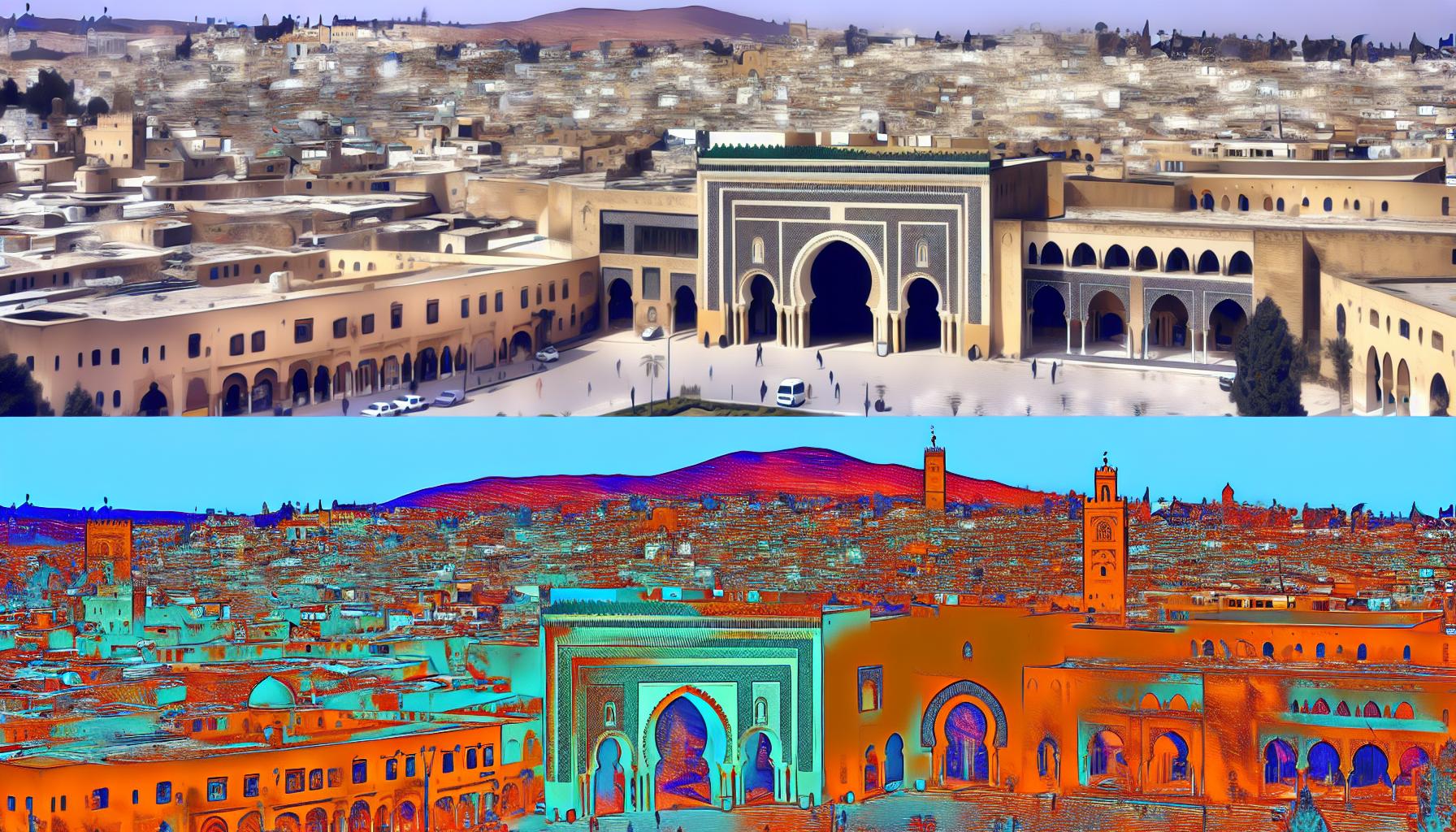
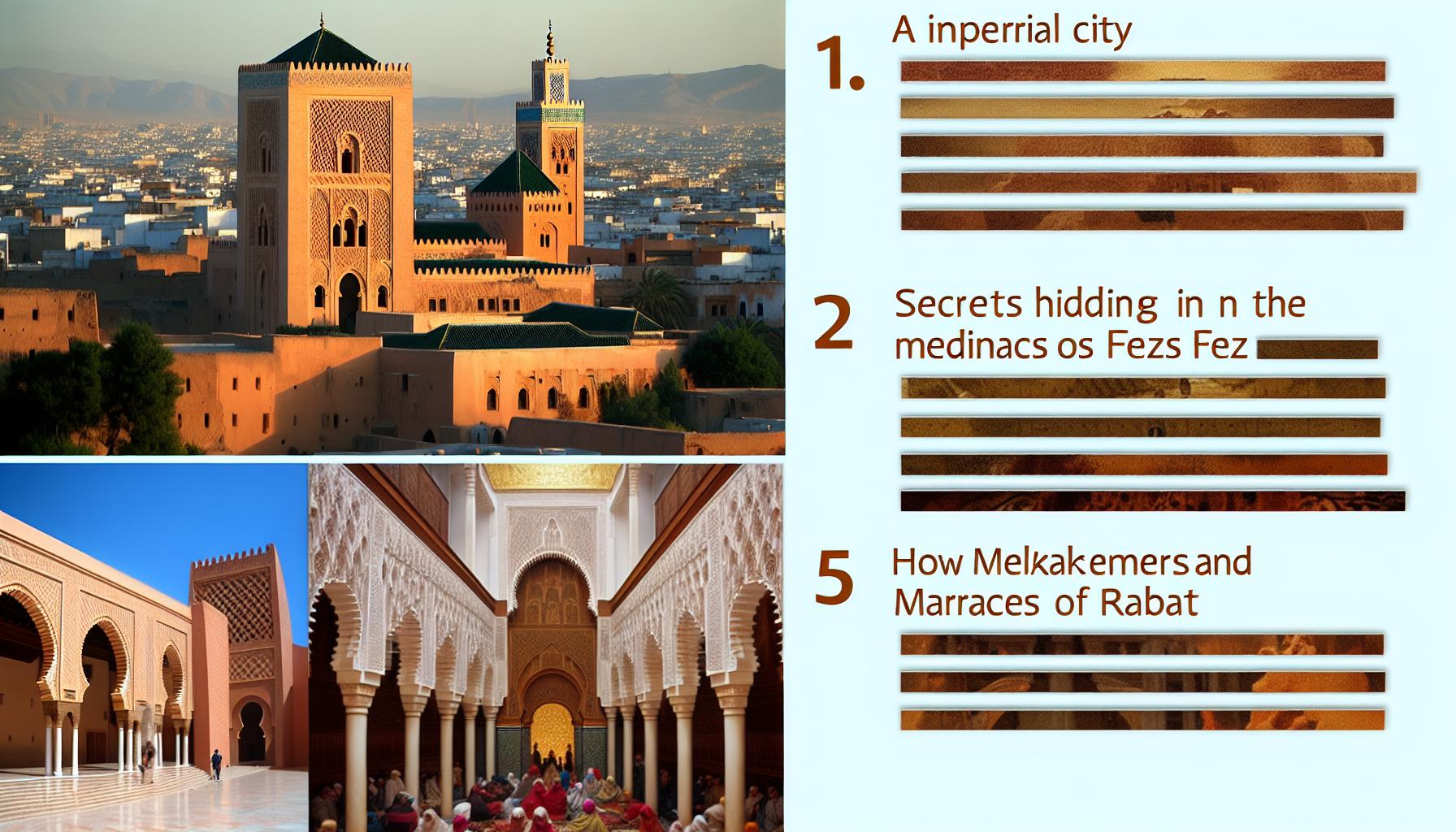
The imperial cities are tourist destinations essential for all lovers of historical heritage and cultural attractions. Among these famous cities, Fez, Marrakech, Meknes and Rabat are distinguished by their rich history, emblematic monuments and well-kept secrets.
Explore these imperial cities comes back to diving into the fascinating history of Morocco, meeting with impressive architectural testimonies. Each city, an ancient capital, offers a unique heritage to discover during a journey to the heart of Moroccan culture.
What is a imperial city ? These cities were once the seat of power and royalty, marked by their greatness and influence. Today, they attract travelers seeking authenticity and change of scenery, offering a total immersion in the glorious past of Morocco.
The medinas of Fez contain many secrets which fascinate visitors in search of authenticity. The narrow streets, lively souks and historical monuments bear witness to the importance of this imperial city in the history of the country.
Marrakech, on the other hand, reveals architectural masterpieces impressive, including its famous Jemaa el-Fna Square and its sumptuous palaces. The red city seduces lovers of urban tourism and history, promising an unforgettable experience.
Meknes combines past and modern, offering a harmonious mix of tradition and modernity. Between its majestic ramparts and lush gardens, this imperial city reveals a unique historical heritage to explore.
Finally, Rabat, the administrative capital of Morocco, plays a key role in the country's history. With iconic monuments and historic sites, it invites travellers to discover another face of the imperial cities.
What is an imperial city?
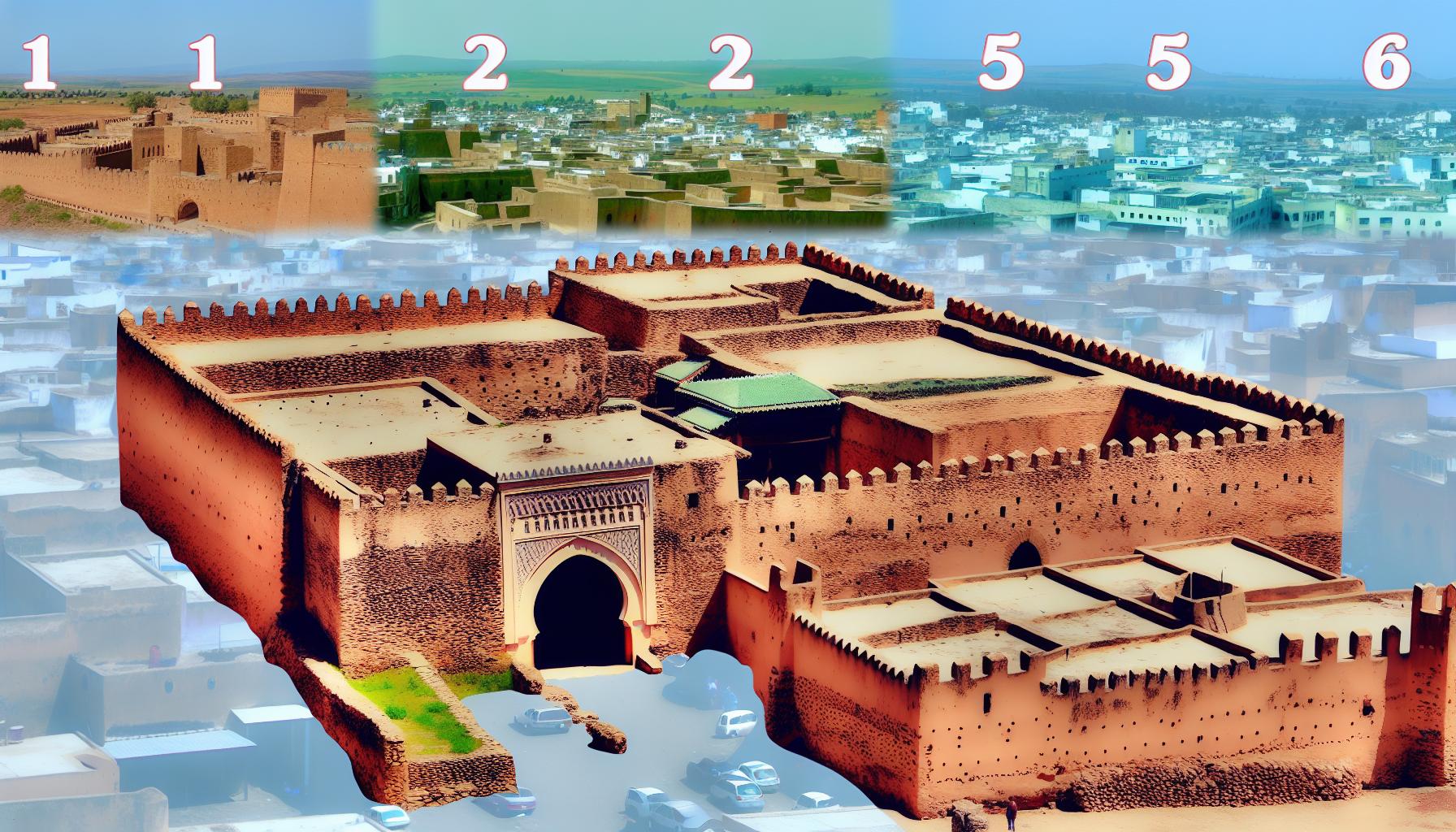
An imperial city refers to a city that has played a major role under an empire or dynasty, usually as a capital or political and administrative centre. These cities benefit from a rich historical heritage, often marked by majestic buildings, palaces, ramparts and monuments bearing witness to their past importance.
In Morocco, imperial cities such as Marrakech, Fez, Meknes and Rabat have been seats of power for various Sultans and dynasties. Today they are a must for travellers wishing to understand the history and culture of the country. To learn more about one of them, discover our full article on Fes, the old medina.
These cities are not only historical heritages, they also vibrate at the rhythm of traditions, crafts and typical markets, offering a unique immersion in the imperial past and contemporary Moroccan life.
For a more academic definition, you can consult the Wikipedia page dedicated to imperial cities.
What secrets hide the medinas of Fez?
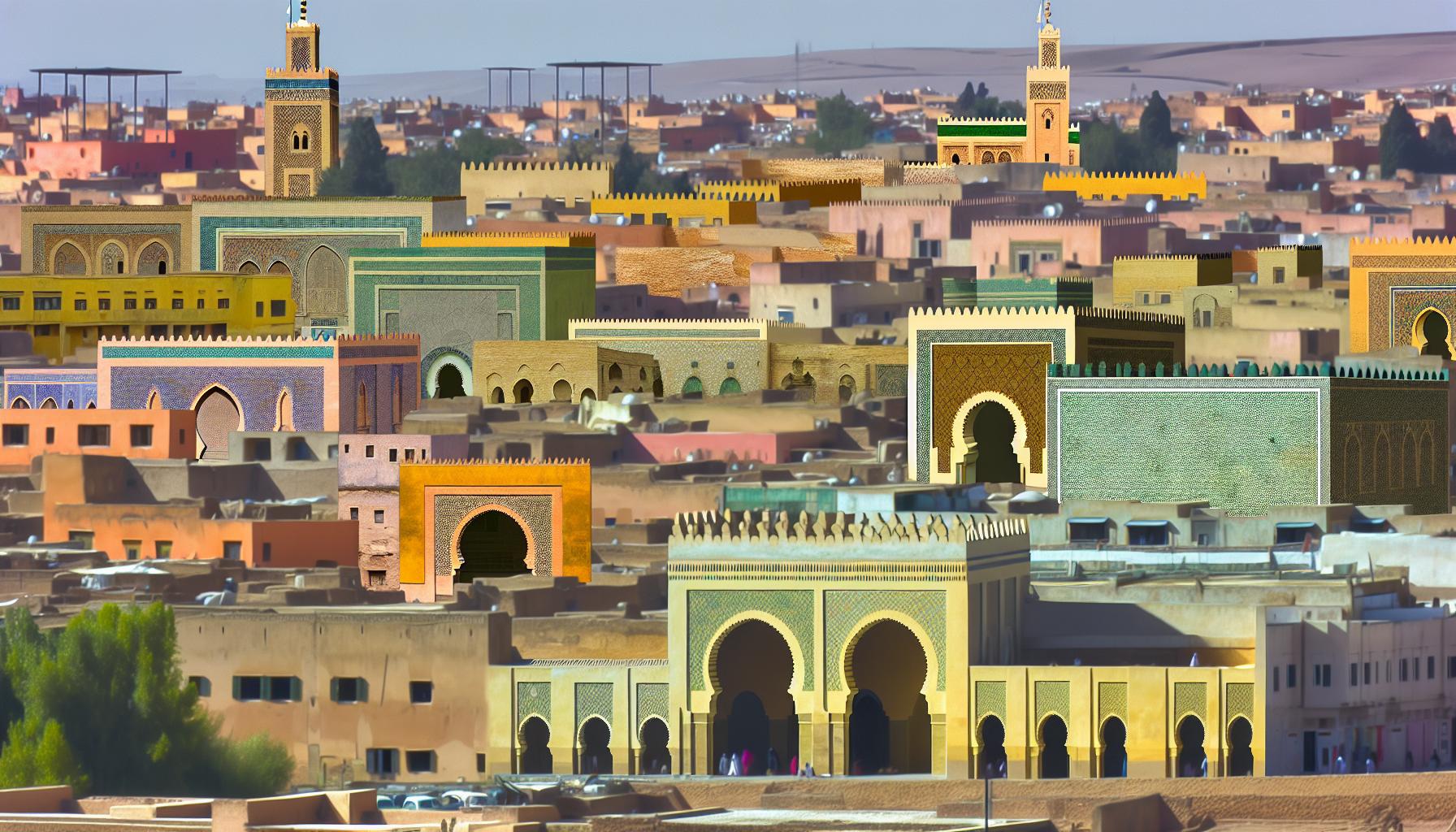
The medina of Fez, a UNESCO World Heritage site, is a veritable maze where each alley tells an ancient history. Behind its walls are cultural treasures and traditions that have remained unchanged for centuries.
Between exceptional crafts, renowned leather workshops, and millennial mosques, the medina invites you to an authentic dive in Morocco in the past. Its remarkable architecture combines carved facades and adorned doors, revealing preserved ancestral know-how.
But beyond its tangible heritage, the medina of Fez also keeps its mysteries: secret passages, hidden souks and legendary anecdotes make this imperial city charming. To learn more about these treasures, you can discover our complete guide on the old medina of Fez.
To deepen your exploration, numerous guided excursions reveal these secrets, in the image of this very well noted cultural tour on TripAdvisor, where a local guide takes you off the beaten track.
Thus, the medina of Fez is not only a tourist site, but a real journey through time, a place full of emotions and stories to discover along its alleys.
What architectural masterpieces does Marrakech offer?
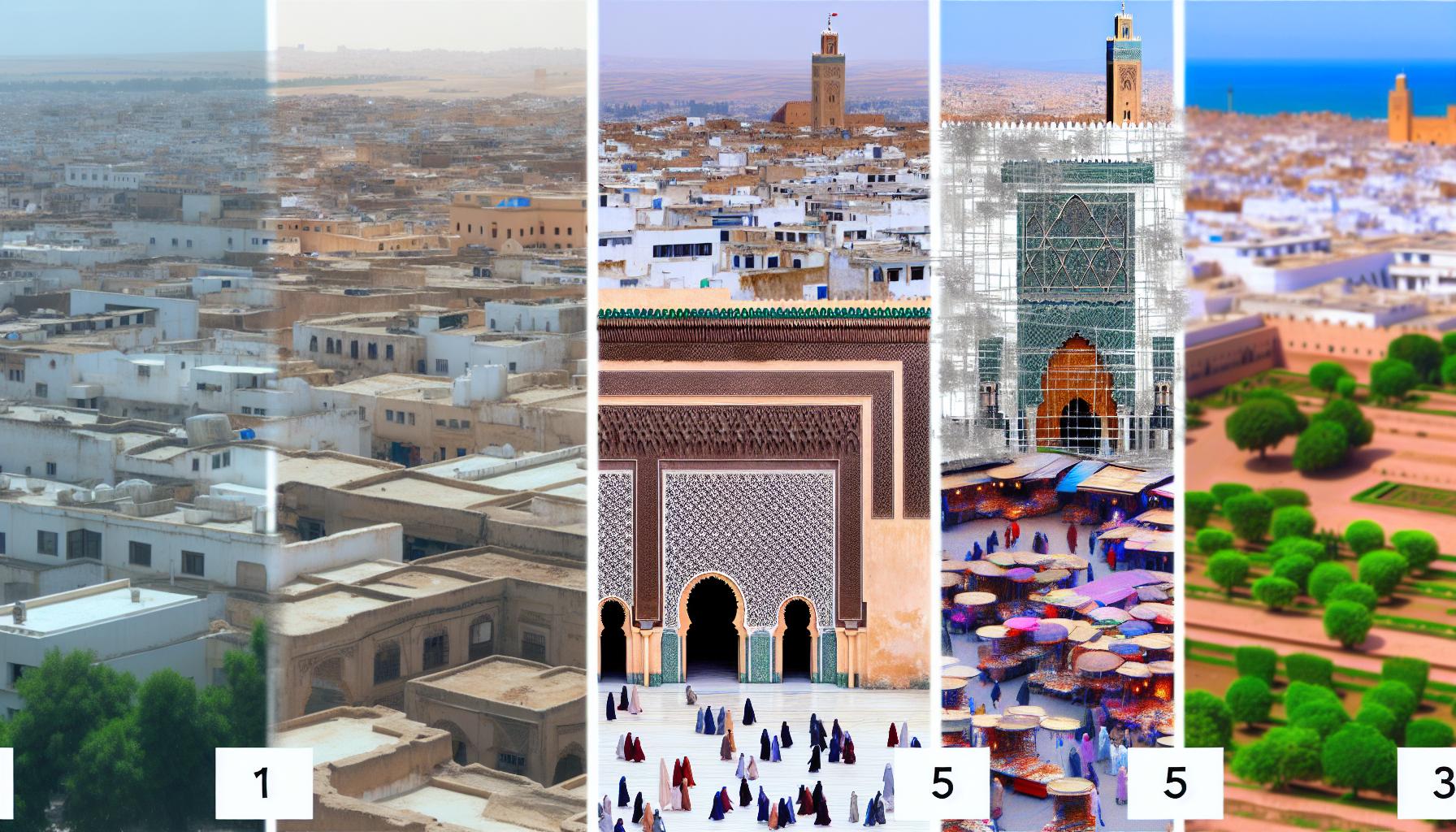
Marrakech, nicknamed the « Red City », is an architectural gem where each corner tells a thousand year history. Among its masterpieces, the Medina is full of sumptuous palaces, majestic mosques and centuries-old ramparts that fascinate visitors.
The Bahia Palace, with its refined décor and lush gardens, is a remarkable example of Arab-Andalous architecture. It bears witness to the wealth and know-how of Moroccan artisans in the past.
The Kutoubia, an emblem of Marrakech, is distinguished by its imposing minaret, visible for miles in the round. It is a perfect model of almohad art, combining elegance and simplicity.
The lively souks, adorned with small traditional craft shops, are also a unique visual spectacle, where colours and shapes contribute to an authentic and vibrant atmosphere.
To go further in the discovery of this fascinating city, do not hesitate to consult our complete guide on Marrakech: the Red City, which explores in detail hidden treasures and must-see places.
You will also find a list of the best architectures not to be missed on Lonely Planet, ideal for preparing your visit.
How does Meknes combine history and modernity?
Meknes, one of the four imperial cities of Morocco, is a perfect example of harmony between glorious past and contemporary dynamics. Founded in the 17th century by Sultan Moulay Ismaïl, it still bears the traces of its history with its impressive walls, monumental doors like Bab Mansour, and sumptuous palaces.
This heritage wealth is carefully preserved, while leaving room for a modern and lively urban life. Traditional alleyways coexist with more modern avenues, integrating shops, cafes and new infrastructure.
The city evolves while valuing its historical identity, thus providing visitors with a unique experience where the past and present meet. To discover other aspects of imperial cities and their evolution, please consult our article on Marrakech, the red city.
For more detailed information on Meknes' history and development, you can consult this comprehensive resource: History of the region Fès-Meknes.
What is Rabat's role in Moroccan history?
Rabat, the administrative and political capital of Morocco, occupies a central place in the country's history. Founded in the 12th century by the Almohads, this imperial city was initially a strategic military port, protecting the Moroccan coasts and serving as a starting point for African conquests.
Over the centuries, Rabat has developed into an essential imperial city, combining ancient architecture, typical medina and modern neighborhoods. Its importance was reinforced in particular in the 20th century, when it became the seat of Moroccan power after independence, embodying national unity and the sovereignty of the kingdom.
The historical heritage of Rabat is palpable through its iconic monuments such as the Kasbah of the Oudayas, the Hassan Tower or the old medina listed as a UNESCO World Heritage Site. Recent preservation initiatives demonstrate the desire to protect this rich heritage while ensuring the cultural and economic dynamism of the city.
To better understand Rabat's role and position among Moroccan imperial cities, don't hesitate to explore our dedicated article Rabat, the capital of Morocco.
Finally, for a complete overview of the other imperial cities that marked Morocco, discover also our articles on Marrakech or Fes, all of which have helped shape the history and culture of the country.
For more historical details, you can visit the Wikipedia page of Rabat, which offers an overview of this millennium city.
By exploring the imperial cities of Morocco, we discover a real treasure of history, culture and architecture. From Fes to Marrakech, Meknes and Rabat, each city offers fascinating secrets to discover.
The medinas of Fez reveal ancient mysteries and an enchanting atmosphere, while the architectural masterpieces of Marrakesh dazzle with their beauty. Meknes, on the other hand, plunges us into a subtle balance between past and present.
Finally, Rabat, the capital of the country, plays a major role in the history of Morocco, testifying to its past grandeur and its present modernity. Imperial cities are truly essential for any traveller seeking authenticity and change of scenery.
[contact-form-7 id= »6204c24′′ title= »Subscribe to our personalized newsletter »]