Explore the secrets of Morocco!
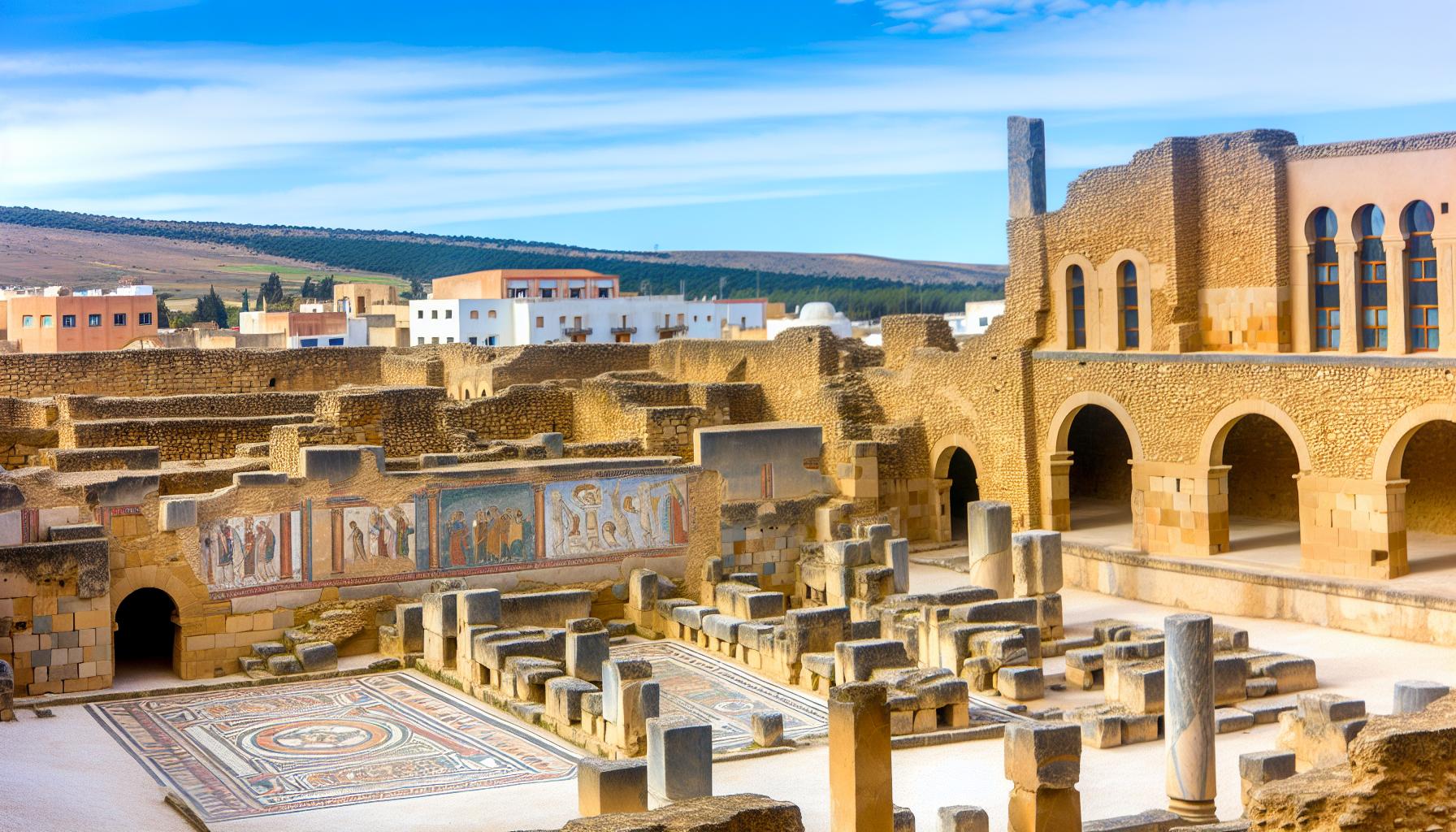
Are you passionate about history, archaeology and cultural travel? Then the archaeological site of Volubilis Morocco is a must for you. Located near Meknès, this ancient Roman city was once the capital of Mauritius and represents a unique testimony of ancient Rome in North Africa.
Visiting Volubilis, you will be immersed in a fascinating universe where Roman remains and native influences mix. The architecture of the city and its impressive mosaics will transport you to the past, offering a striking insight into the fusion of cultures that characterized this region at the time.
Each stone of Volubilis tells a story, and every corner of the archaeological site reveals treasures buried for centuries. From the House of Bacchus to the Basilica, to the thermal baths and triumphal arches, you will discover remarkable remains that bear witness to the past grandeur of this ancient city.
World Heritage SiteUNESCO, Volubilis is recognized for its exceptional historical and cultural value. Every year, thousands of travelers from all over the world come to admire its archaeological treasures and soak up its unique atmosphere, between glorious past and preserved beauty.
Prepare for a time trip to the heart of ancient Rome in the heart of Morocco. Volubilis awaits you for an unforgettable adventure, rich in discoveries and emotions. Ready to let yourself be seduced by this jewel of North African archaeology?
What is the importance of Volubilis?
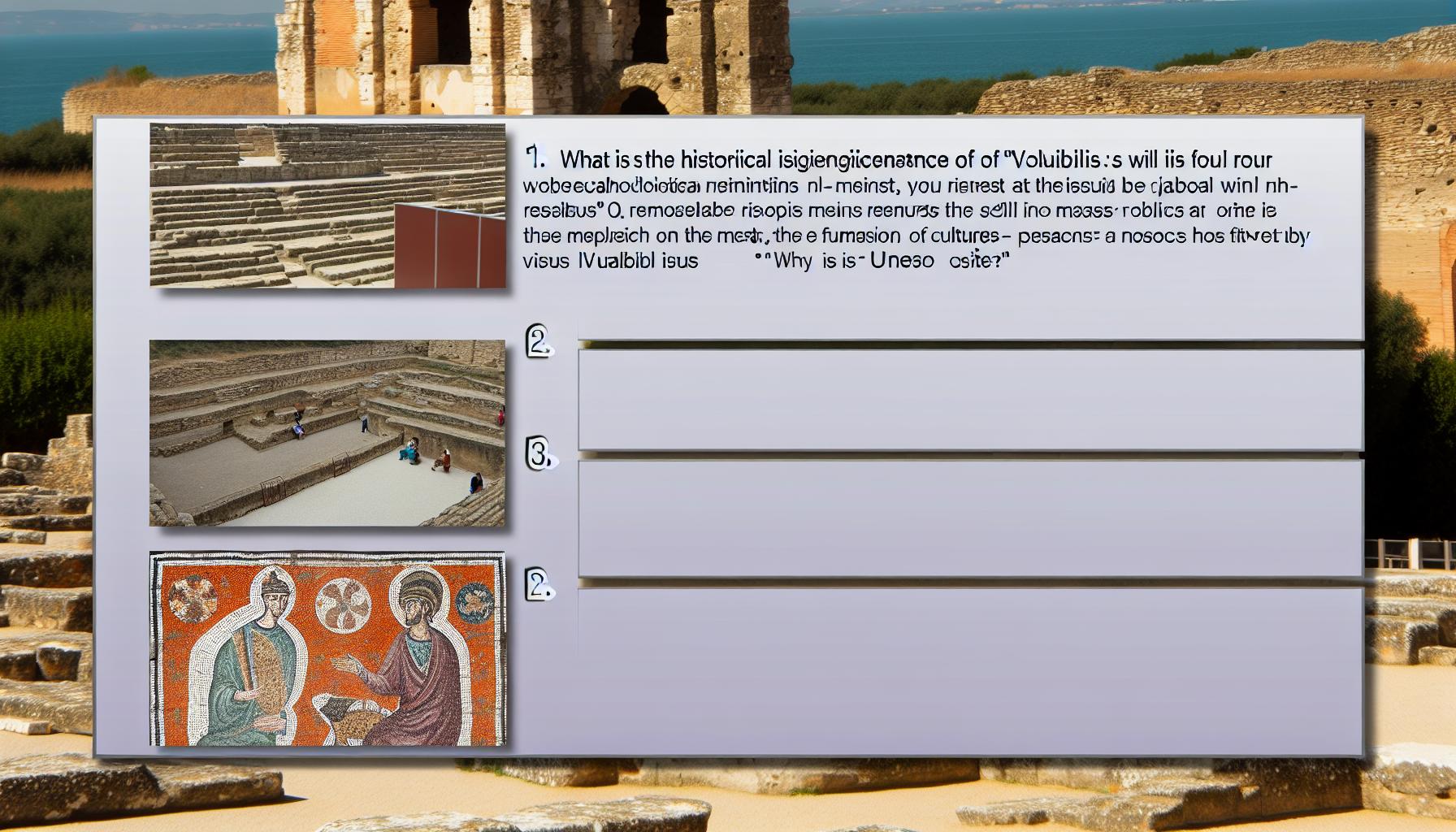
Volubilis is an archaeological site of great richness, bearing witness to Roman history in Morocco. This ancient city, founded in the third century BC, was a major administrative and agricultural centre during the Roman Empire. Its historical importance lies in its strategic role at the crossroads of Mediterranean and African civilizations.
The remarkably preserved ruins of Volubilis plunge us into the daily life of this ancient city: temples, arches of triumph, houses decorated with splendid mosaics, testify to the refinement and prosperity that reigned here. Ranked a UNESCO World Heritage Site, this site is a valuable example of North Africa's romanization.
To visit Volubilis is to discover not only a historical monument, but also a place that tells of the cultural exchange between Rome and Morocco, a fundamental link that has marked Maghreb history. To deepen your discovery of the imperial and unavoidable cities of Morocco, do not hesitate to read our article Imperial and must-see cities.
To learn more about Volubilis, visit its official page Wikipedia or visit UNESCO website Official dedicated to this historical treasure.
What remarkable archaeological remains will you find in Volubilis?
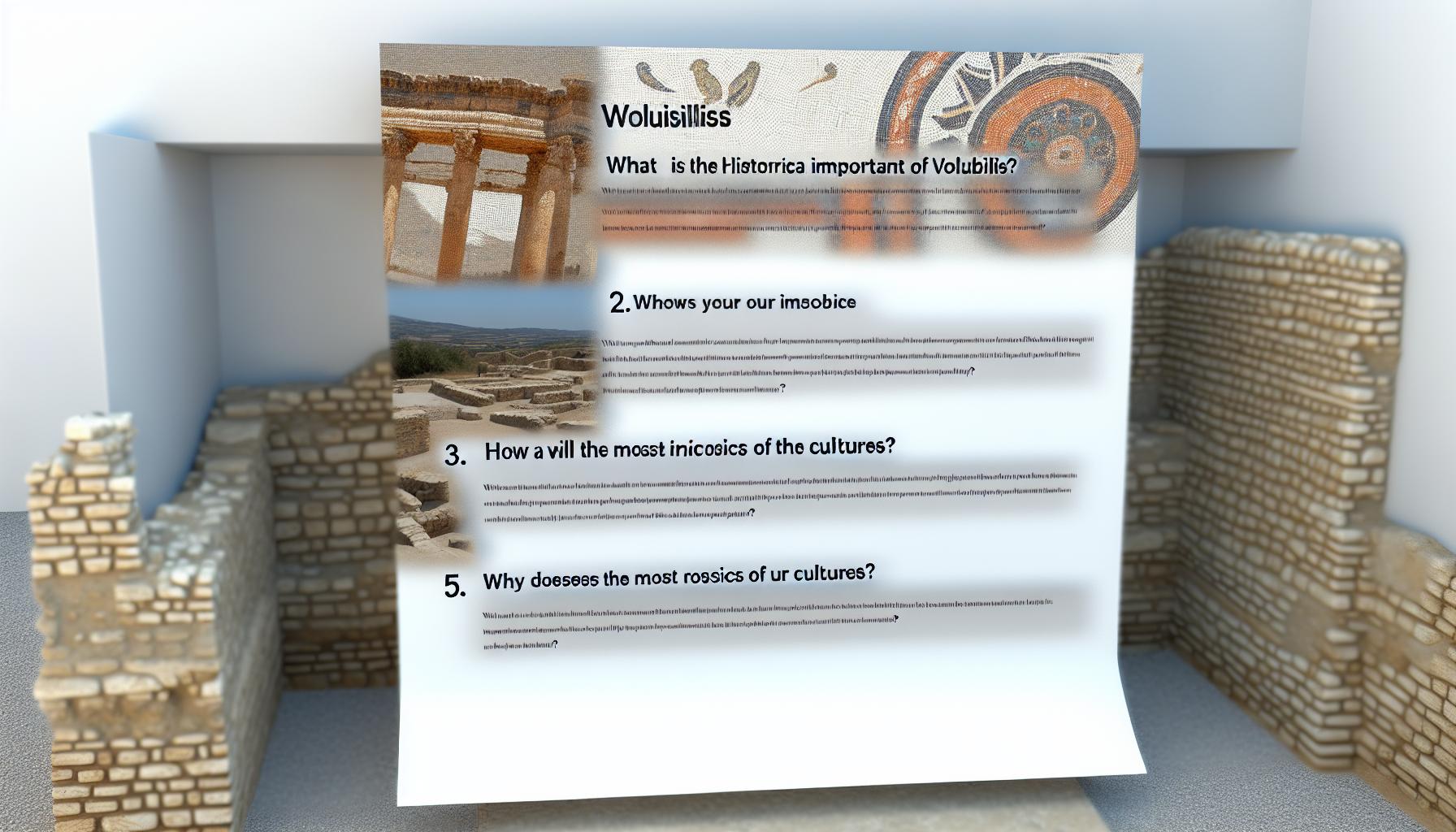
The archaeological site of Volubilis is a historical wonder where well preserved ruins testify to the greatness of the Roman Empire in North Africa. By exploring this place, you will discover impressive remains, witness to a flourishing city between the third and sixth centuries.
Amongst the must-sees, do not miss the splendid Roman mosaics with colourful patterns, especially those of the House of Dionysos, which illustrate the artistic richness of the period.
You can also admire the remains of the Capitol, a magnificent temple dedicated to the Roman gods Jupiter, Junon and Minerva, as well as the imposing arches, including the Arc de Triomphe de Caracalla, which marked the main entrance to the city.
The ruins of the thermal baths, villas decorated with columns, as well as the foundations of the old houses and administrative buildings, offer a complete overview of the daily life in Volubilis.
For those who wish to deepen their visit, do not hesitate to consult our article on Meknes, the historic city, very close and rich in heritage.
To learn more about Volubilis and its heritage importance, you can also visit the official website Volubilis website or the dedicated page on UNESCO.
How does Volubilis reflect the fusion of cultures?
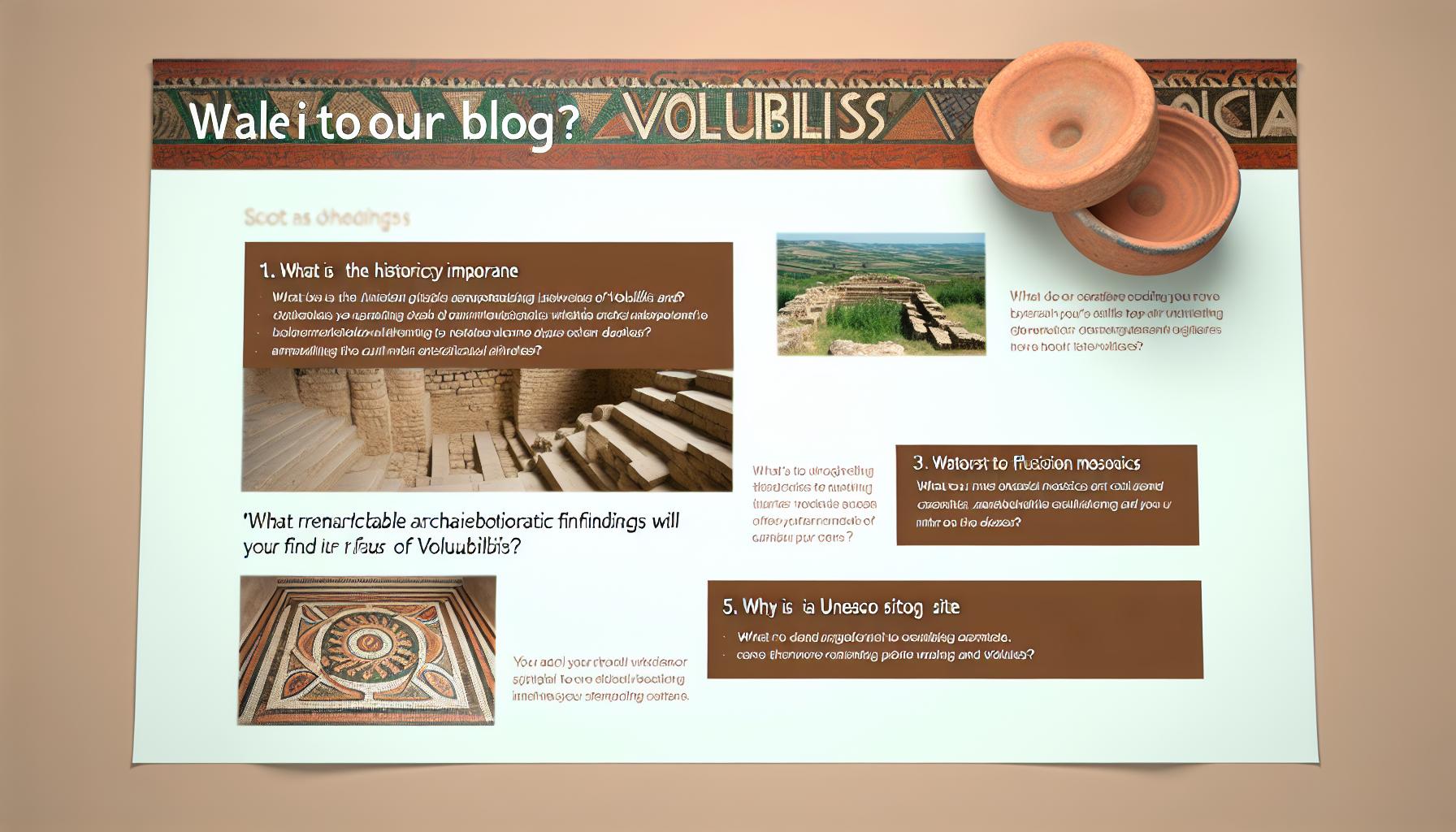
The Volubilis site is a true testimony of the cultural richness resulting from the encounter between several civilizations. Originally founded by the Phoenicians, this city was then deeply marked by the Roman presence, but also by Berber and Mediterranean influences.
The ruins of Volubilis expose mosaics of remarkable finesse and buildings that illustrate a perfect harmony between classical Roman architecture and local traditions. This fusion can be seen in the thermal baths, temples and basilicas where each detail tells a multicultural history.
Volubilis is not only an archaeological site, it is also a symbol of the trade and cultural exchanges that crossed ancient Morocco. This dimension is at the heart of understanding Moroccan heritage and is also found in neighbouring cities such as Meknes, the historic city.
To deepen your knowledge of this historical wonder, we also recommend that you consult the official UNESCO page dedicated to Volubilis, which details its global importance: Volubilis on UNESCO website.
What are the most emblematic mosaics of Volubilis?
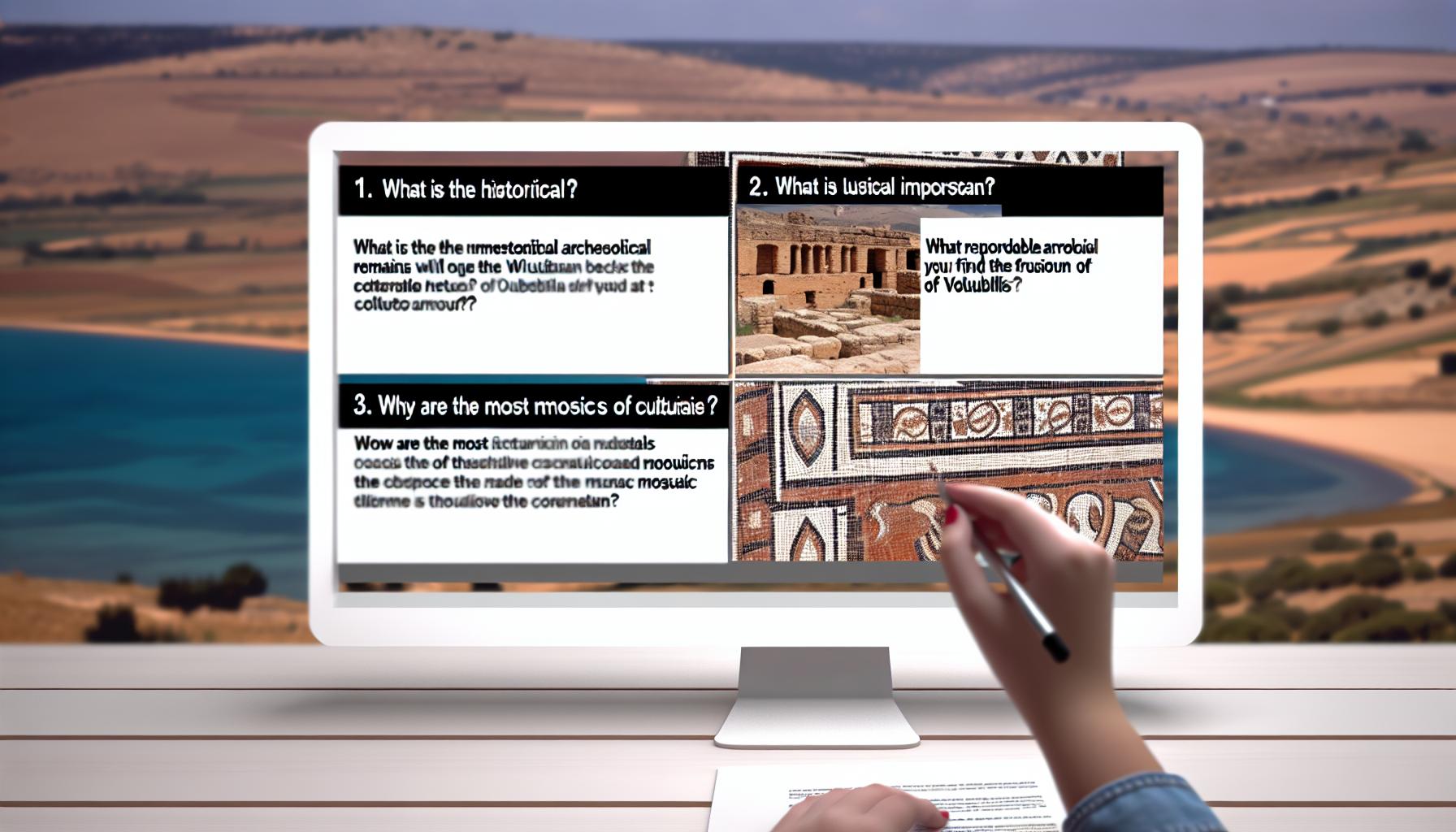
The archaeological site of Volubilis is famous for its exceptional mosaics, reflecting the artistic refinement of Roman civilization in North Africa. These mosaics, well preserved, adorn the floors of several patrician houses and public buildings.
One of the most emblematic mosaics is that of Wine, illustrating the wine-growing richness of the region during the Roman era with scenes of grape harvest and grape harvesters. This work is a true hymn to nature and agricultural work.
Another remarkable mosaic is that of Dionysos, the god of wine, figurative in the center surrounded by festive scenes and mythological creatures. It symbolizes the prosperity and joy of living in this ancient city.
Finally, the mosaic of Zodiac is an ancient masterpiece of astronomy, depicting the signs of the zodiac on a colorful background, a rare motif that fascinates visitors with its precision and aesthetics.
To discover other historical treasures of Morocco, do not hesitate to explore the wonders of Meknes, the historic city, located not far from Volubilis.
To learn more about these mosaics, you can also consult a complete documentation on Wikipedia – Archaeological site of Volubilis or visit the official website A mosaic of beliefs.
Why is Volubilis a UNESCO site?
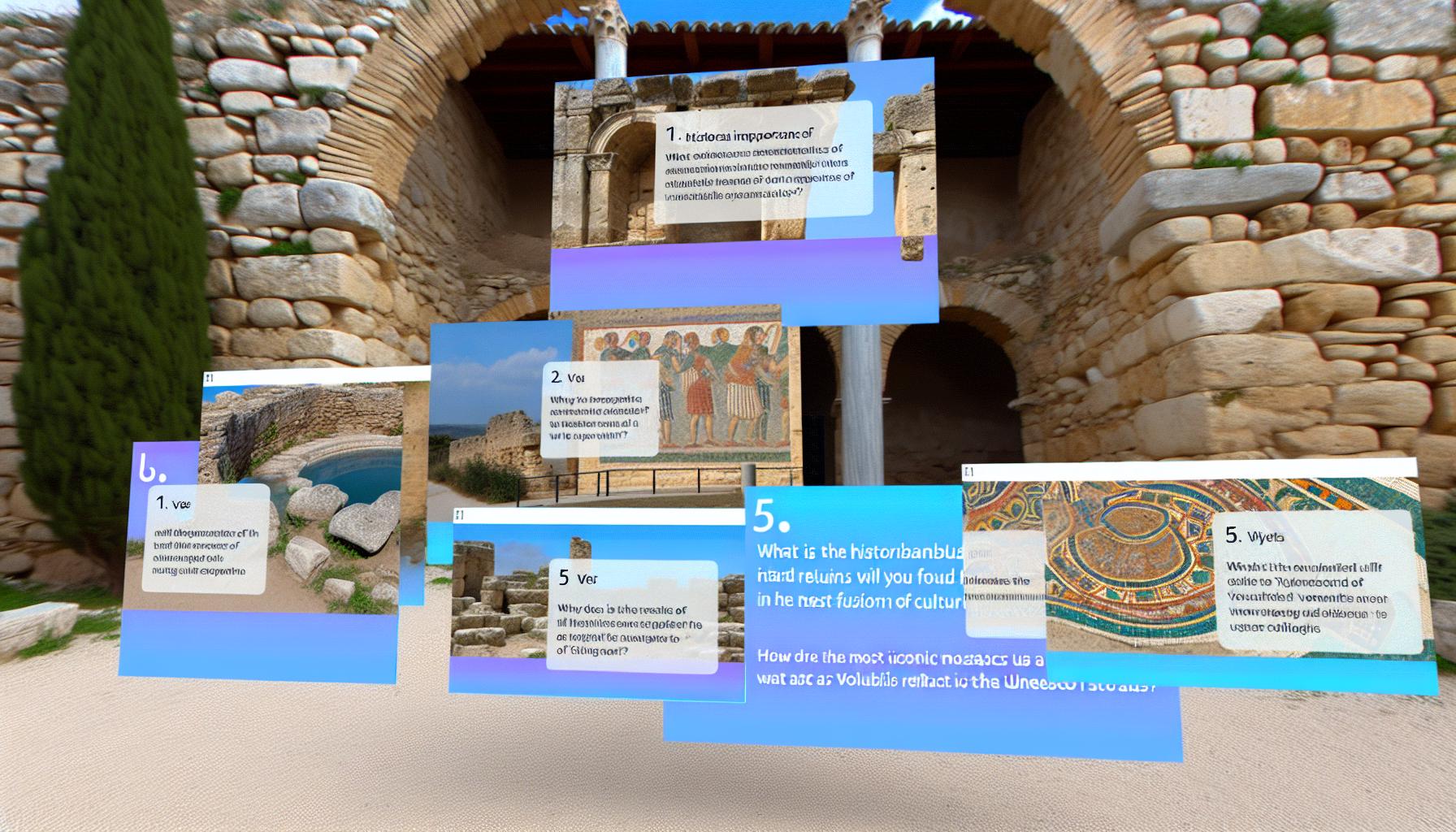
Volubilis is a UNESCO World Heritage Site for its exceptional historical and cultural value. This archaeological site bears witness to one of the most important Roman cities in North Africa, offering a unique overview of Roman life and urban planning in the 2nd century AD.
The ruins of Volubilis are remarkably well preserved, allowing you to discover colourful mosaics, imposing temples, as well as remains of public and private buildings. This exceptional heritage illustrates the exchanges and coexistence between the Roman, Berber and Christian cultures.
The UNESCO ranking also underlines the importance of Volubilis in understanding the history of Morocco and the region. By visiting this site, you are immersed in the foundations of Moroccan civilization, as evidenced by the rich archaeological discoveries.
To better plan your stay and discover other historic cities, do not hesitate to explore our complete guide on Meknes, the historic city, located nearby and offering a perfect complement to a visit to Volubilis.
To learn more about its history and UNESCO status, you can consult the official fact sheet on the UNESCO website: Volubilis – UNESCO World Heritage.
In conclusion, visiting the Volubilis site is an essential experience for history and culture lovers. Its historical significance, remarkable archaeological remains, fusion of cultures, emblematic mosaics and UNESCO site status make it a fascinating place to discover. Through its well preserved ruins, you will be transported into ancient times and can imagine the grandeur of this ancient Roman city. Wait more to discover this jewel of Moroccan history and let yourself be seduced by the beauty and richness of Volubilis.
[contact-form-7 id= »6204c24′′ title= »Subscribe to our personalized newsletter »]