Explore the secrets of Morocco!
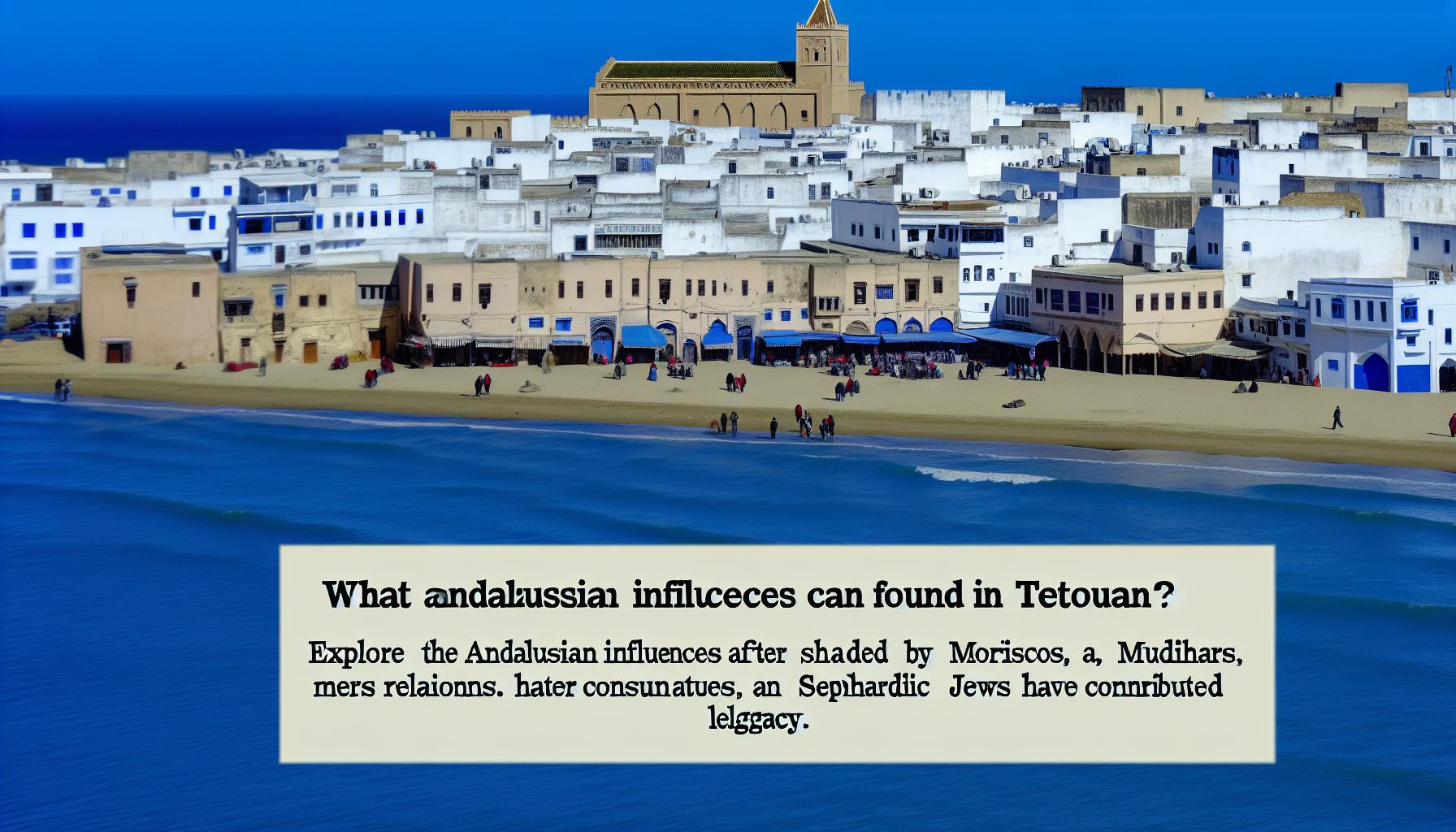
Welcome to our blog dedicated to Andalusian influences in Tetouan, a Moroccan city rich in history and culture. Over the centuries, Tetouan has been shaped by Andalusian refugees fleeing the Reconquest, leaving behind them a unique cultural heritage.
The medina of Tetouan is a real gem where Andalusian architecture blends harmoniously with local traditions. The influences of Andalusia are felt in every alley of this historic centre, a UNESCO World Heritage site.
The Morisks, Mudejars and Sephardic Jews all helped shape the city and enrich its cultural heritage. The El Ensanche district is particularly renowned for its magnificent examples of Andalusian architecture, a testament to this unique blend of Hispanic and Moroccan culture.
On this blog, we will explore the origins of these Andalusian influences in Tetouan, how the Reconquest influenced the city, as well as the leading role of the Morisks, Mudejars and Sephardic Jews in its development.
We invite you to dive into the fascinating world of Andalusian art through the streets of the medina of Tetouan and discover how this Andalusian-Maroccan heritage still manifests itself today in the daily life of the inhabitants of the city.
What are the origins of the Andalusian influences in Tetouan?
The Andalusian influences in Tetouan have their main origin in the massive exile of Muslims and Jews fleeing the Christian Reconquest of Spain in the 15th century. In 1492, the fall of Granada marked the end of the Muslim presence in Andalusia, pushing many people to seek refuge in North Africa, especially in the Tetouan region.
Tetouan, then a small port, saw its importance grow thanks to the arrival of these Andalusian refugees. They brought with them their know-how, their cultural, artistic and architectural traditions, which made the city's identity lasting. The medina of Tetouan, a UNESCO World Heritage site, still bears witness to this Andalusian heritage through its urban planning and decors.
This Andalusian influence is not limited to architecture. It also extends to music, cooking and the arts, making Tetouan a real bridge between North African and European cultures. To better understand this cultural richness, do not hesitate to discover also cultural influences of Chefchaouen, another Moroccan city marked by Andalusian history.
To go further, you can consult detailed historical resources such as this Wikipedia page on Tetouan or the in-depth analysis of The book on Tetouan, Andalusian city of Morocco.
How did the Reconquest shape the city?
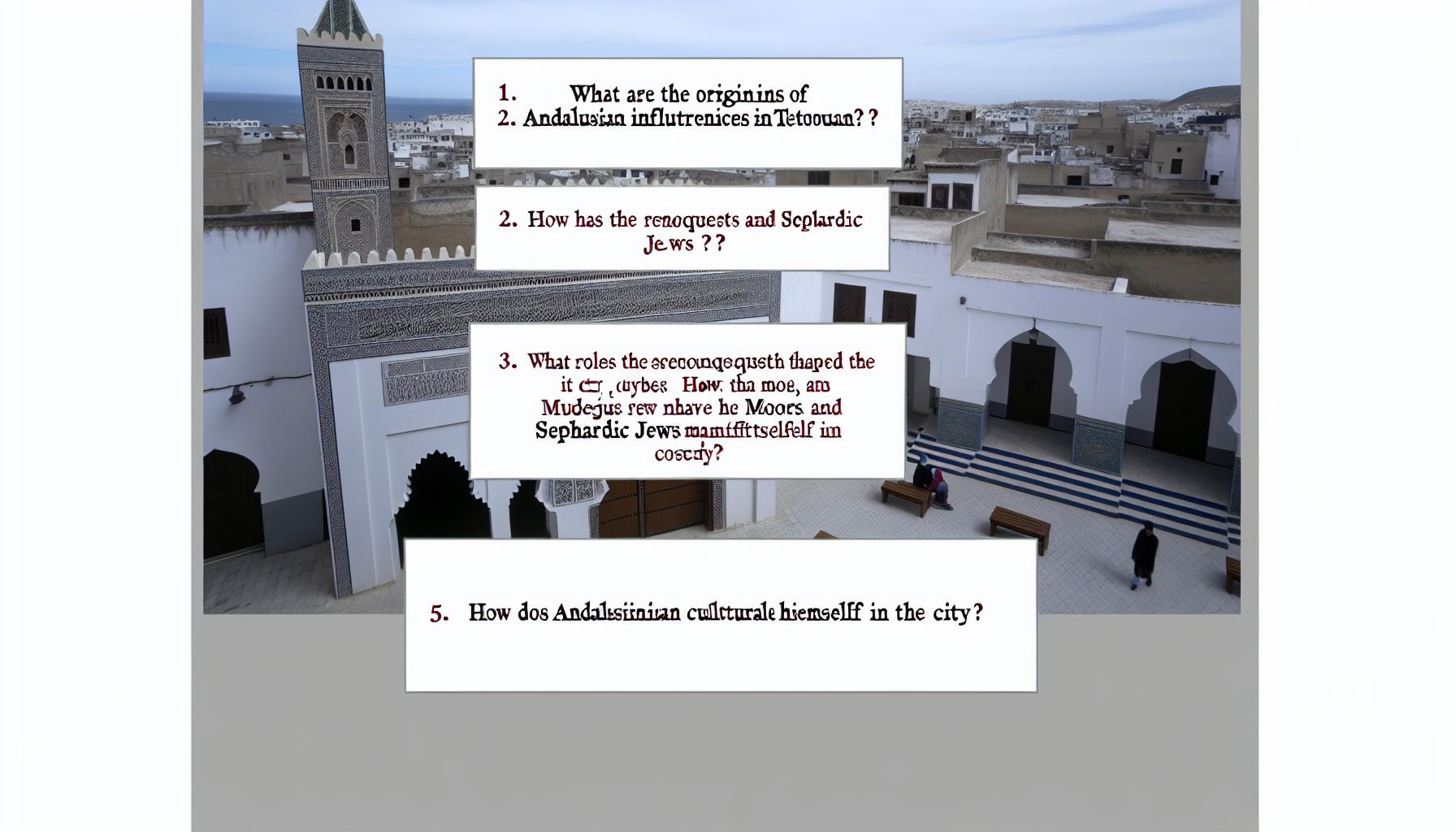
The Reconquest in Tetouan is not limited to a simple historical period: it has profoundly influenced the city's urban planning and architecture. After the departure of the Andalusians, the new inhabitants rebuilt and adapted the city, giving rise to a unique amalgam of Arab and Andalusian elements.
The organization of narrow alleys, typical interior patios and whitewashed facades attest to this pivotal period. The city has been structured around this multicultural identity that continues to exist today.
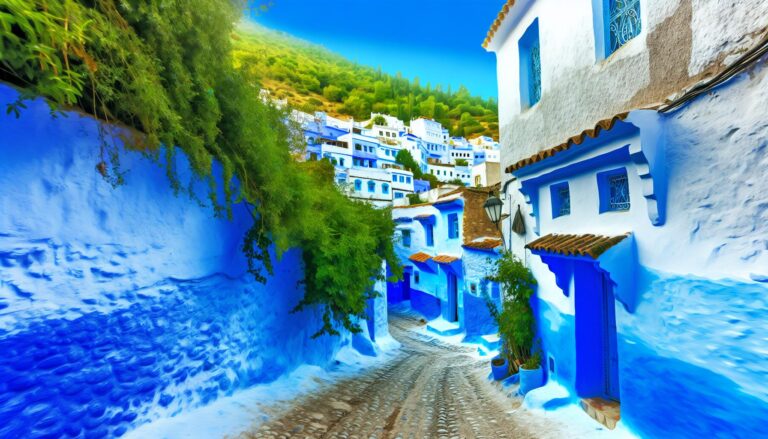
This process of Conquest also strengthened Tetouan's role as a major cultural hub. To go further in the discovery of urban influences, you can compare with the charm of the streets of ChefchaouenAnother city in northern Morocco with a rich history.
Finally, this urban transformation highlighted by the Reconquest is part of a dynamic that can be found in other urban contexts, as explained in this in-depth study on urban recovery policies: Urban recovery and culture.
This alliance between history, architecture and identity makes Tetouan a living example of the Andalusian heritage in Morocco.
What roles did the Morisks, Mudejars and Sephardic Jews play?
The Morisks, descendants of Muslims expelled from Spain at the end of the 16th century, played an essential role in the transmission of agricultural, artistic and artisanal know-how to Tetouan. They have contributed to enriching the cultural heritage of the city, especially in traditional architecture and irrigation techniques that still persist today.
As for the Mudejars, these Muslims remained in Christian land before their exile, they brought their unique artistic and architectural heritage. Their influence can be seen in stucco decorations, carved wooden ceilings and geometric motifs found in the medina of Tetouan, reflecting a remarkable cultural mix.
The Sephardic Jews, on the other hand, contributed greatly to the economic and cultural dynamism of the region. By fleeing the Inquisition, they brought with them their traditions, crafts and commercial networks. Their presence has fostered an environment of relative tolerance and exchanges between communities, influencing both trade and local arts.
These groups have thus been the vectors of an Andalusian cultural wealth that has been harmoniously integrated into Tetouan, making the city a veritable crossroads of civilizations. To discover other cities with a unique heritage in Morocco, do not hesitate to explore Chefchaouen, the blue city, which is also full of fascinating historical testimonies.
Finally, these influences are not limited to art or economics: they have shaped Tetuana society in its diversity and capacity to accommodate different cultures, a living heritage that continues to exist today.
Which Andalusian architectures characterize the medina of Tetouan?
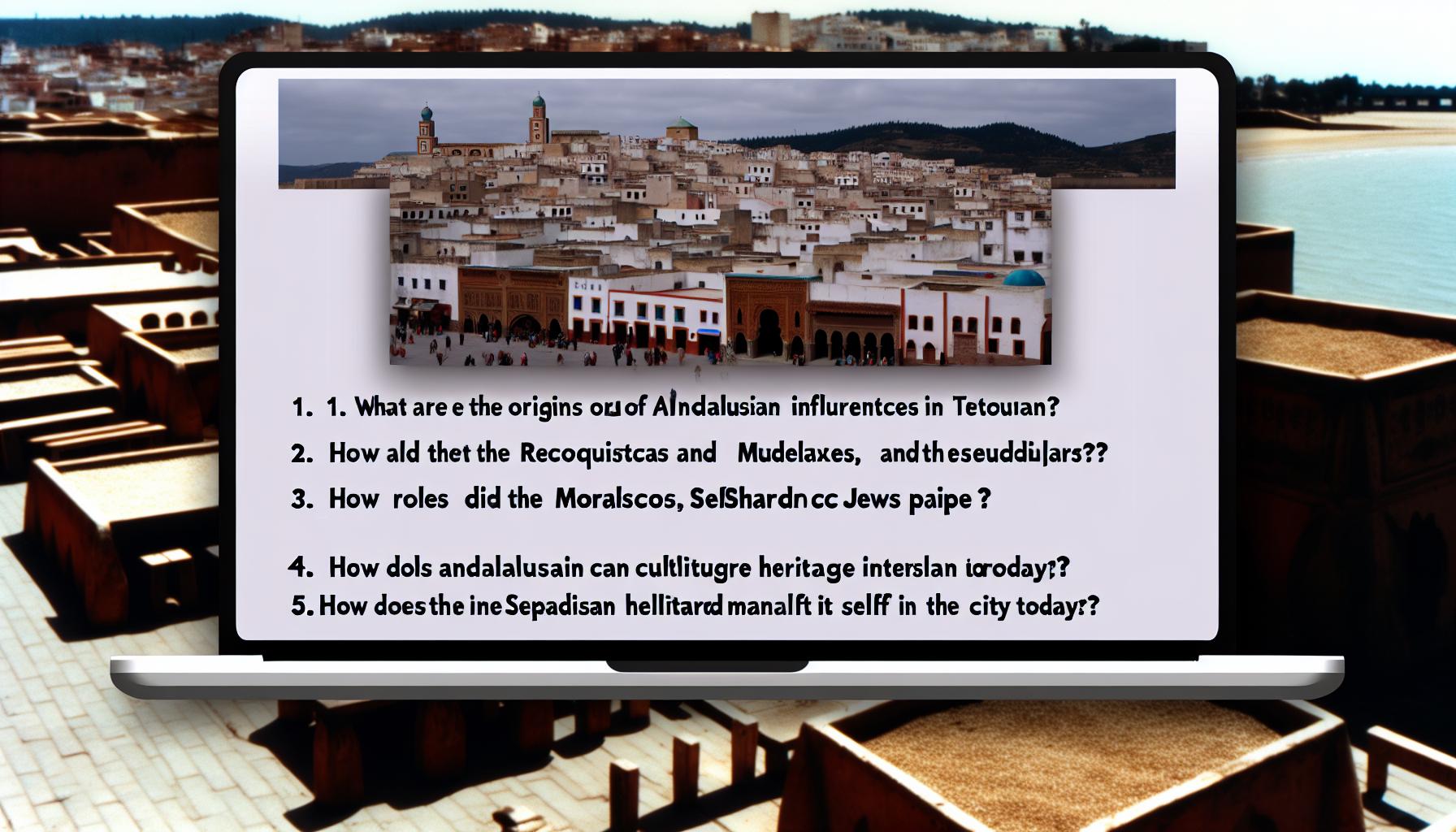
The medina of Tetouan is a real architectural gem where Andalusian influences appear at every corner of the street. Its winding alleys and whitewashed houses testify to the know-how of the Andalusian artisans installed here after the expulsion of the Moors from Spain.
In particular, it is recognized the abundant use of carved stucco decoration, as well as the colourful zelliges, mosaics typical of mudejar art, which adorn the walls and fountains. These elements give the medina a unique charm and typical Andalusian elegance.
Public fountains and riads with their interior patios, often decorated with chiseled wood and fine plaster, also reveal this strong Andalusian identity. These open spaces, rich in light and ornaments, offer a haven of peace in the heart of the city.
To discover a little more the architectural treasures of Morocco, do not hesitate to explore also the historical medina of Fez by following this link Fes, the old medina, another wonder listed as UNESCO World Heritage.
Finally, to learn more about the cultural richness and Andalusian influence in Tetouan, see this detailed article on The Andalusian footprint in the culture of Tetouan.
How does Andalusian cultural heritage manifest itself today in the city?
The Andalusian cultural heritage remains deeply rooted in the soul of Tetouan, reflecting itself through local streets, architecture, and traditions. Even today, this influence manifests itself in white houses decorated with flowered patios, typical of Andalusian style, which punctuate the medina and recall the heritage of Andalusian refugees.
Handcrafted know-how perpetuates the techniques transmitted from generation to generation, especially in the manufacture of ceramics, leather work, and embroidery. These elements echo the history shared with Andalusia and contribute to the unique identity of the city.
In addition, the tetouana cuisine also bears the traces of this cultural alchemy, with traditional dishes evoking Andalusian flavours. For those who want to dive more into the different cultural facets of northern Morocco, the discovery of Tangier, the pearl of the North is an exciting complementary adventure.
Finally, local cultural events and festivals regularly celebrate this Andalusian heritage, energizing the artistic and cultural scene of Tetouan. For more information on cultural events in Andalusia, please visit the official website of regional events: andalucia.org.
In short, the city of Tetouan is a real living museum where Andalusian heritage is expressed daily, constituting a bridge between two banks charged with history and cultural sharing.
After exploring the complex origins of Andalusian influences in Tetouan, it is clear that the Reconquest has had a major impact on the city, shaping its history and architecture. The Morisks, Mudejars and Sephardic Jews also played key roles in the cultural development of the region. The medina of Tetouan is a real Andalusian architectural treasure, full of symbols and characteristic details. Today, Andalusian cultural heritage continues to manifest itself through the traditions, crafts and festivals of the city, recalling its rich past.
[contact-form-7 id= »6204c24′′ title= »Subscribe to our personalized newsletter »]