Explore the secrets of Morocco!
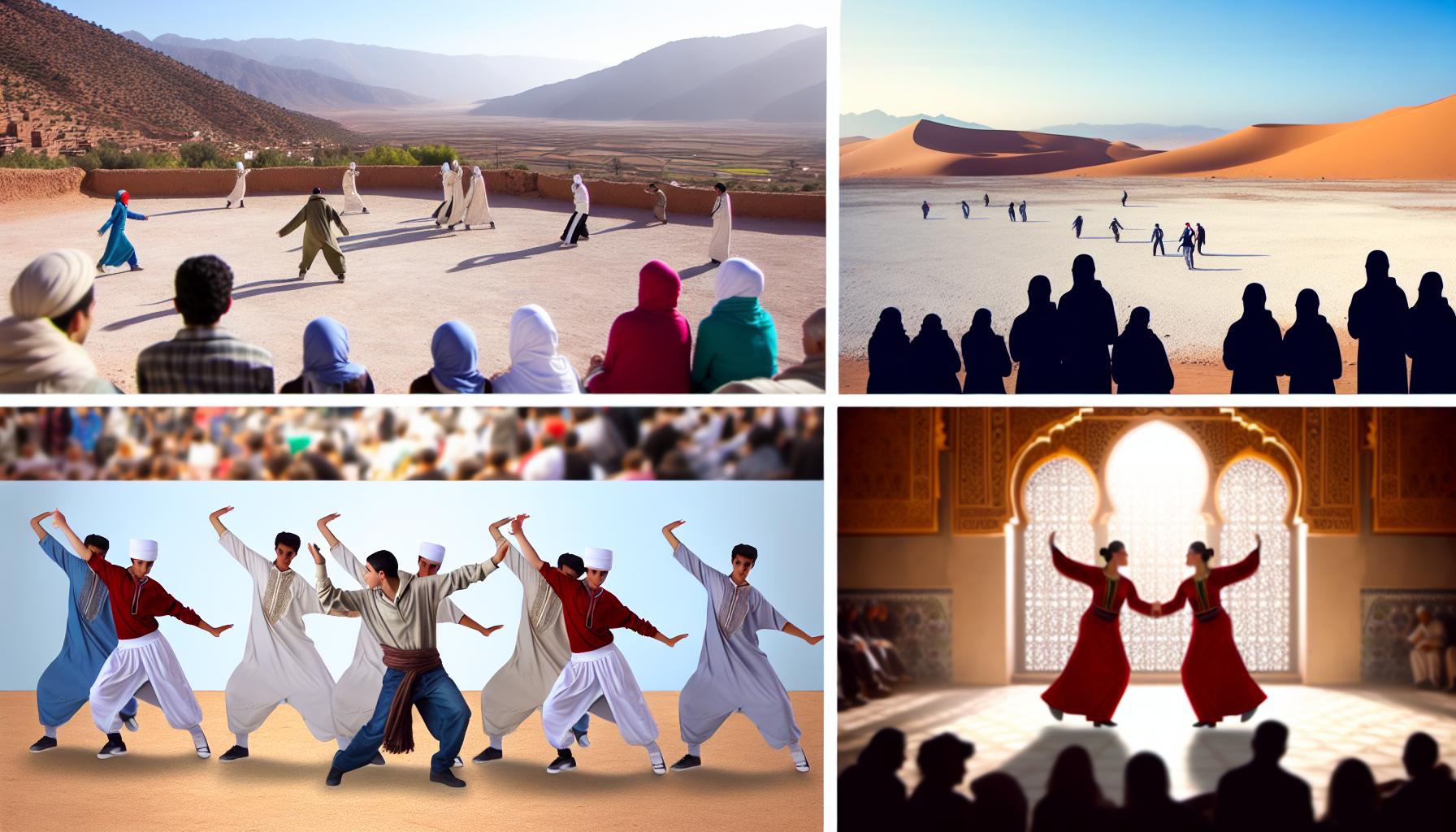
Welcome to our blog dedicated to the discovery of traditional Moroccan dances, a true mix of culture and captivating folklore. Morocco is rich in ancestral traditions and dances that reflect the authenticity and diversity of this beautiful country. From the Ahidous to the Chaabi through the Guedra and the Shikhat, each dance tells a unique and enchanting story.
Ahidous, native to the Atlas mountains, is much more than just a dance. It is a festive ritual that celebrates community unity and highlights the values of solidarity and sharing. The dancers' synchronized steps, accompanied by songs and percussion, carry the spectators into a world full of tradition and emotion.
The Chaâbi, on the other hand, is the soul of the festivals and urban streets of Morocco. This popular and joyful dance is synonymous with good humor and conviviality. Chaâbi's lively rhythms and moving movements resonate through the lively streets of Moroccan cities, inviting everyone to join in the dance.
La Guedra, from the Sahara, is a sacred and spiritual dance that draws its origins from the nomadic traditions of the desert. Practised during religious ceremonies and rituals, the Guedra is a true communion between man and the divine, where trance and meditation blend harmoniously.
Finally, the Shikhat, with their vibrant and expressive dance, symbolize joy and celebration. Originally from northern Morocco, these talented dancers embody grace and vivacity through their graceful movements and colourful costumes. The Shikhat stage parties and ceremonies with passion and virtuosity.
Stay with us to learn more about the regional specificities that influence the different traditional Moroccan dances, and discover a whole world of fascinating cultures, festivities and traditions.
What is Ahidous dance and what is its origin in Atlas?
The Ahidous is a traditional Amazigh dance from the Atlas Mountains in Morocco. It is particularly popular in the Middle Atlas regions, especially among the Berber tribes that have lived there for centuries.
This collective dance is characterized by rhythmic, elegant and synchronized movements made in circles by dancers, men and women, who often wear colorful costumes typical of Amazigh culture.
Ahidous is much more than just a dance: it is a real social ritual that accompanies major celebrations, weddings and community celebrations. The strength of this dance also lies in its traditional music, played with instruments such as tambourine (bendir) and flutes, which guides the band throughout the choreography.
To learn more about Moroccan cultural traditions and other typical dances, please visit our dedicated section on music and dance in Morocco.
Finally, if you want to deepen the history and meaning of the Ahidous, an interesting resource is available on Wikipedia, where you will find a complete overview of this fascinating cultural expression.
How does Chaâbi animate Moroccan urban festivals and streets?
The Chaâbi is much more than just a musical genre in Morocco: it is a real popular celebration that breathes life and energy into traditional festivals as well as the lively streets of cities. Thanks to his lively rhythms and joyful melodies, he invites participants to dance, sing and share friendly moments.
In weddings, religious celebrations or neighbourhood events, the Chaâbi creates a festive atmosphere where all generations meet to express their joy. Its melodic simplicity and the power of its percussions favour direct interaction between musicians and the public, a distinctive feature of Moroccan cultural events.
In urban streets, especially in metropolitan areas such as Casablanca or MarrakechChaâbi's performances combine with daily activities, transforming the public space into an open stage. Dancers improvise, voices rise, and music becomes a universal language that connects people.
To better understand the origins and sociocultural importance of this music, you can consult this rich article on the subject: The Chaâbi: an heiress of Arab-Andalous music. This external link offers an exciting insight into the roots and evolution of Chaâbi in Morocco.
The Chaâbi, with its dynamism and authenticity, is essential for anyone who wishes to soak up Moroccan cultural wealth through its music and dances. To discover even more about Moroccan musical traditions and plan your trip, do not hesitate to explore the section dedicated to Moroccan music, dance and traditions.
How is the Guedra a sacred and spiritual dance of Moroccan Sahara?
The Guedra is much more than just a dance in the Moroccan Sahara: it embodies a true ceremony with deep village and spiritual origins. Practised by women, this dance is both a purification ritual and a form of sacred expression that celebrates life, nature and community.
What makes the Guedra unique is its close link with the mystical beliefs of the Saharan people. Every gesture, every movement of hands and feet has a symbolic meaning, aiming to invoke protection, fertility and harmony. The Gedra thus becomes a bridge between the material world and that of the spirits.
The music that accompanies the Guedra, composed of percussion and traditional songs, amplifies the hypnotic effect of dance. This ensemble creates an atmosphere conducive to collective meditation and deep spiritual communion.
To discover this dance is also to understand an essential facet of Moroccan Saharan culture. To learn more about Morocco's other musical dances and traditions, please consult our article dedicated to Moroccan music, dance and traditions.
To deepen your knowledge of the Guedra, you can also explore detailed resources on Wikipedia or watch this video who beautifully illustrates his rituals.
Who are the Shikhat and what is the meaning of their vibrant and expressive dance?
The Shikhat are traditional Moroccan dancers and singers, often from popular backgrounds, who play an essential role in preserving Morocco's cultural heritage. Their art mixes dance, singing and poetry, often expressing deep emotions and stories of daily life.
Shikhat dance is known for its energetic and expressive movements, which reflect both the joy, sadness and strength of the women who practice it. This form of artistic expression is a true language of the body, which invites celebration and communion with the public.
Beyond performance, this dance embodies a form of emancipation and cultural resistance. To discover more about the traditions and heritages of Morocco, do not hesitate to explore our section dedicated to Moroccan music, dance and traditions.
For full immersion, you can also consult external resources such as this specialized site which presents the history and richness of the art of Shikhat.
What are the regional specificities that influence the different traditional Moroccan dances?
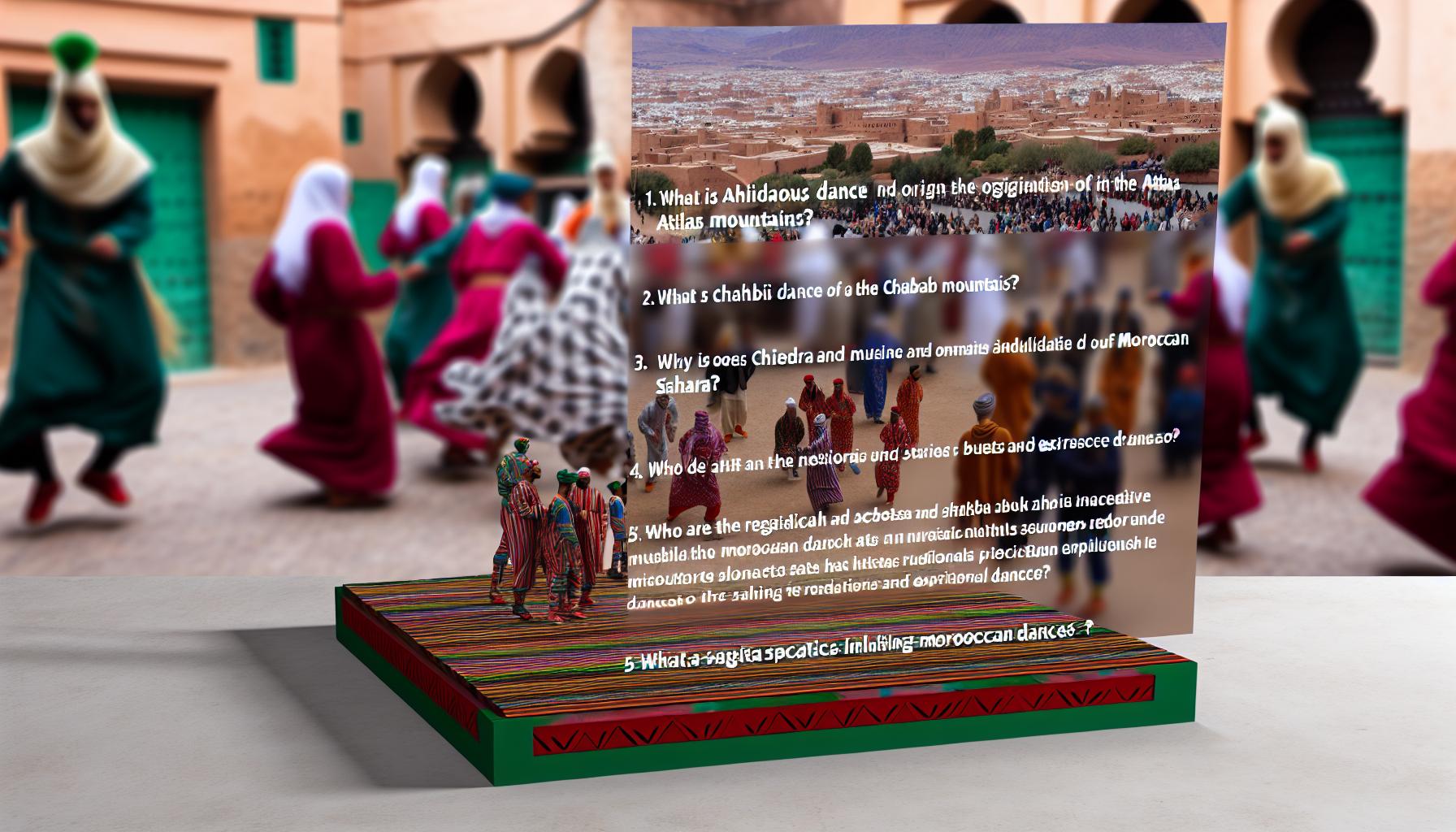
Morocco, rich in its multiple regions and cultures, offers a unique diversity in its traditional dances. Each region brings its own colour, influenced by its history, geography and ethnic identity. These regional specificities shape dances with varied rhythms, costumes and styles that reflect the richness of Moroccan heritage.
To the north, in the Rif region, the Reggada is an iconic dance that combines strength and spirituality. It perfectly illustrates Amazigh culture and often accompanies traditional rituals.
In the South Saharan, dances like the Guedra, of Tuarègue origin, are characterized by hypnotic circular movements and a rhythm deeply rooted in the traditions of the desert, as detailed on Wikipedia.
As for the Marrakech region, it is famous for the local folk dance, often festive and accompanied by gnaoua music, which symbolize the encounter between several cultural influences.
The traditional dances of Morocco are therefore not only a means of artistic expression but also a living testimony to the landscapes, customs and stories of each region. To deepen your discovery, do not hesitate to explore Moroccan music, dance and traditions which will plunge you into the heart of this fascinating cultural diversity.
In conclusion, Morocco's traditional dances offer a fascinating overview of the country's cultural richness and diversity. From the energetic Ahidous in the Atlas to the lively rhythms of Chaâbi in urban streets, to the sacred and spiritual dance of the Sahara Gedra, each dance tells a unique and captivating story. The Shikhat, with their vibrant and expressive dance, add a touch of grace and power to the Moroccan artistic scene. In addition, regional specificities greatly influence the development and variation of traditional dances in Morocco, giving them unparalleled depth and authenticity.
[contact-form-7 id= »6204c24′′ title= »Subscribe to our personalized newsletter »]