Explore the secrets of Morocco!
Welcome to the bewitching universe of Moroccan cuisine, a real explosion of flavors, aromas and colors that amazes taste buds around the world. Prepare to be transported on an unforgettable culinary journey in the heart of Morocco, to discover authentic recipes, enchanting spices and fascinating stories.
The Moroccan cuisine is a reflection of the country's cultural richness, harmoniously mixing Berber, Arab, Jewish and African influences. Each dish tells a story, each spice reveals a secret, each ingredient awakens your senses. Among the emblematic dishes not to be missed, the tajine and couscous are distinguished by their unique taste and subtle flavor alliances.
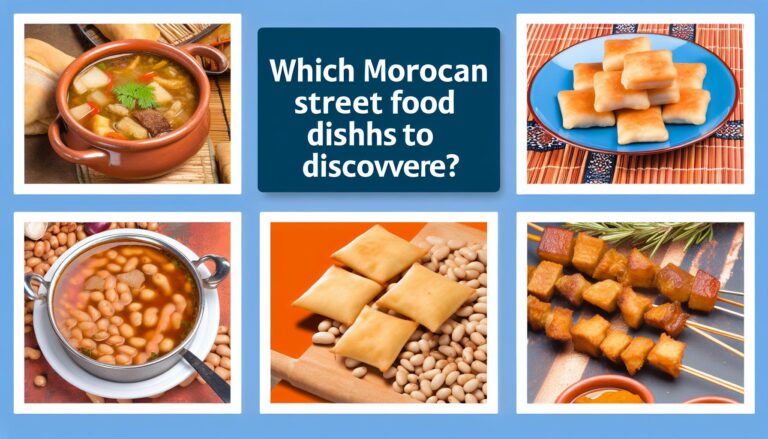
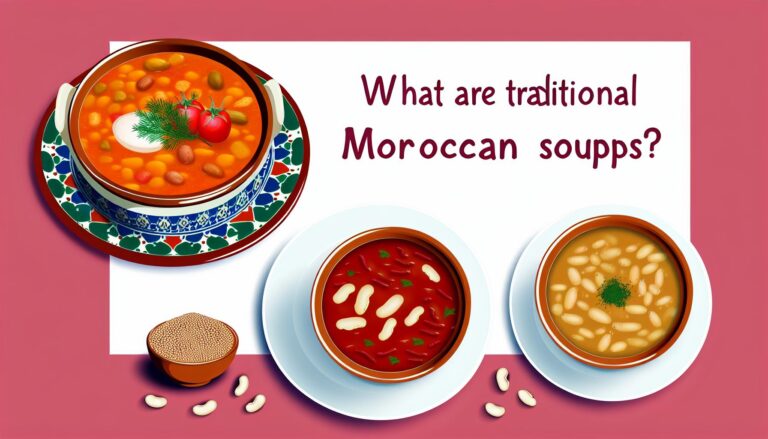
How not to succumb to the delicious pastilla, traditional soup harira or velvety bissara ? The Traditional income Moroccan cuisine is a real treasure to discover, carrying centuries of know-how and passion for gastronomy.
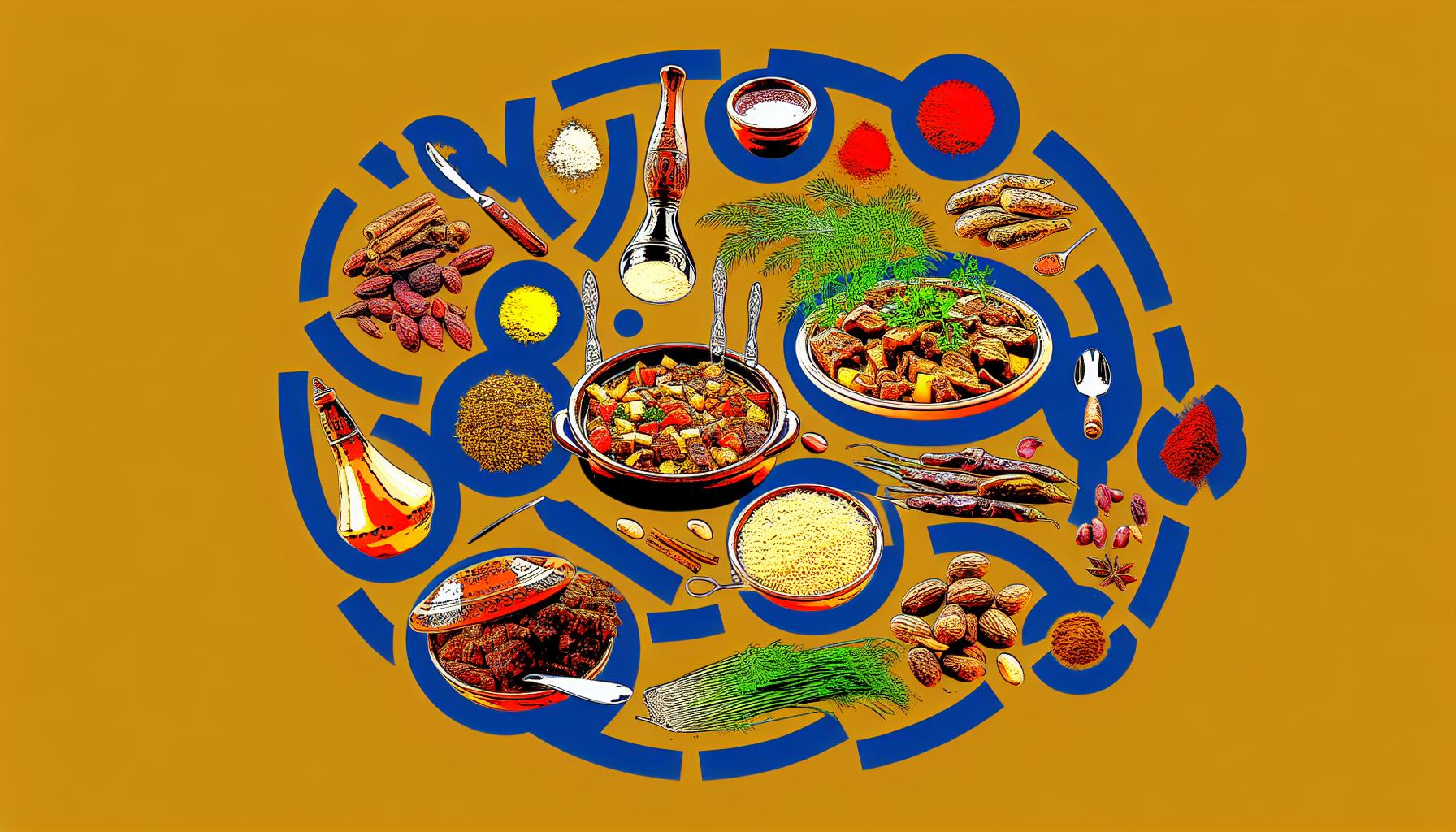
The spices play an essential role in Moroccan cuisine, bringing unique nuances and fragrances to each dish. Cumin, coriander, saffron, cinnamon, ginger... as many typical ingredients that sublimate the preparations and enchant the most demanding palates.
Through this blog, you will dive into the heart of Morocco's regional diversity, discovering the culinary specificities of each region, local preparation techniques and ancestral traditions that make Moroccan cuisine a true taste symphony.
What are the cultural origins of Moroccan cuisine?
Moroccan cuisine is the fruit of a rich cultural mix, shaped by centuries of diverse influences. It derives its origins from Berber, Arab, Andalusian, Jewish and Mediterranean traditions.
Berbers, the first inhabitants of Morocco, have laid the foundations for cooking with the use of local ingredients such as cereals, legumes and dried vegetables, enriching traditional recipes such as tajine.
With the Arab conquest in the 7th century, new spices, cooking methods and culinary preparations arrived, including the introduction of cumin, saffron and cinnamon, which are now essential to Moroccan gastronomy.
The exile of Andalusian Muslims and Jews in Morocco in the 15th century also brought its lot of artistic and culinary influences, with sophisticated recipes and refined desserts, making the cuisine evolve towards an art of living.
The regional diversity of the kingdom is also visible in its dishes. To discover the culinary specificities of different cities, do not hesitate to read our article on Marrakech, the Red City, a must-see gastronomic capital.
Each Moroccan meal tells a story where traditions and conviviality mix, offering a true cultural and tasteful journey. To learn more about this rich history, see this detailed article on The fascinating history of Moroccan gastronomy.
What are the essential spices and ingredients of Moroccan gastronomy?
Moroccan gastronomy is famous for its aromatic richness, the fruit of a subtle blend of spices and traditional ingredients. Among the most emblematic spices, cumin, coriander, turmeric and ginger occupy a place of choice, bringing flavors and colours unique to dishes.
Ras el hanout, a complex mixture of several spices, is often used to perfume tajines and couscous. This secret mixture varies by region and family, but usually includes cinnamon, clove, black pepper, and sometimes saffron.
In addition to spices, fresh mint, garlic, olive oil and olives are essential ingredients that enhance the fineness of recipes. Lemon confit, on the other hand, brings an acidic and unique touch to many Moroccan dishes.
To discover how these tastes marry in an iconic dish, do not hesitate to consult our article dedicated to Moroccan couscous, true symbol of local cuisine.
If you want to deepen your knowledge of these ingredients and their benefits, you can also visit external resources such as this complete article on the 15 ingredients of Moroccan cuisine.
How do you prepare iconic dishes like tajine and couscous?
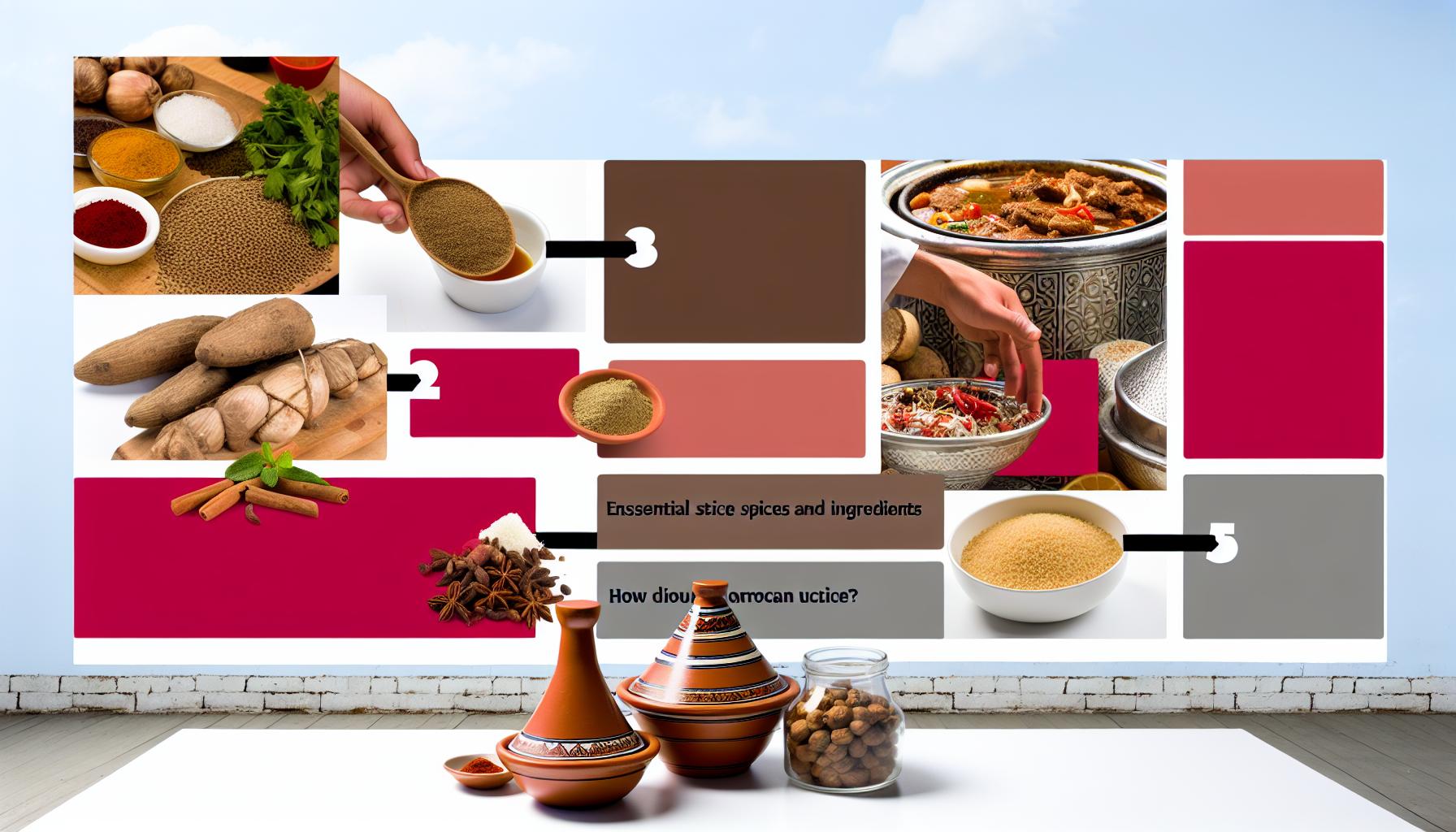
Tajine and couscous are two of the most emblematic dishes of Moroccan cuisine, known for their rich flavours and their careful preparation. Tajine is a simmered dish slowly cooked in a conical terracotta container, allowing the ingredients to preserve their aromas and develop a melting texture.
To prepare a tajine, you usually start with onions, meat (lamb, chicken, or beef) and spices such as ginger, turmeric, cumin or cinnamon. Vegetables, dried fruits or fresh fruits are then added before simmering gently for several hours.
The couscous, on the other hand, is a traditional dish based on steamed durum wheat meal. It is usually served with a stew of vegetables, meat or chicken fragrant with coriander, ras-el-hanout and saffron. The couscous is often cooked in two stages thanks to a couscouser, which ensures a light and aerial texture.
These dishes are as much a culinary experience as a moment of sharing, typical of Moroccan culture. Want to know more about couscous? Visit this dedicated page: What is Moroccan couscous?
To discover detailed recipes and preparation tips, you can consult recognized sources such as Marmion – Traditional Moroccan Tajine, which will guide you step by step in the realization of these tasty dishes.
What stories and traditions tell traditional Moroccan recipes?
Moroccan cuisine is much more than just a taste experience: it reflects a rich cultural heritage and stories transmitted from generation to generation. Each traditional recipe bears in it the traces of Berber, Arab, Andalusian, and Mediterranean influences, making each dish a true journey through time.
For example, the famous couscous tells a story of sharing and conviviality, often prepared to celebrate important moments such as family or religious holidays. The careful succession of preparation stages illustrates the patience and know-how transmitted by Moroccan women.
The spices used in these dishes, such as ras el hanout or saffron, are also loaded with stories related to trade between Morocco and other civilizations. These unique mixtures illustrate Moroccan identity and its openness to the world.
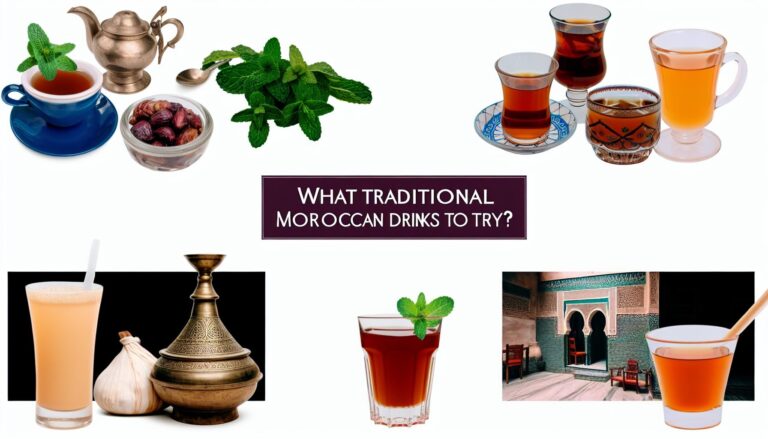
Finally, culinary traditions can also be found in mint tea rituals, a symbol of hospitality. This moment of sharing around a sweet drink often accompanies meals and lively discussions, thus marking an essential part of Moroccan culture.
To discover even more about the cultural richness of Morocco, explore the beauties of its emblematic cities like Marrakech which inspires both its gastronomy and its history.
To learn more about Moroccan cuisine and its traditions, you can also consult this very complete article on Wikipedia.
How does Moroccan cuisine reflect the country's regional diversity?
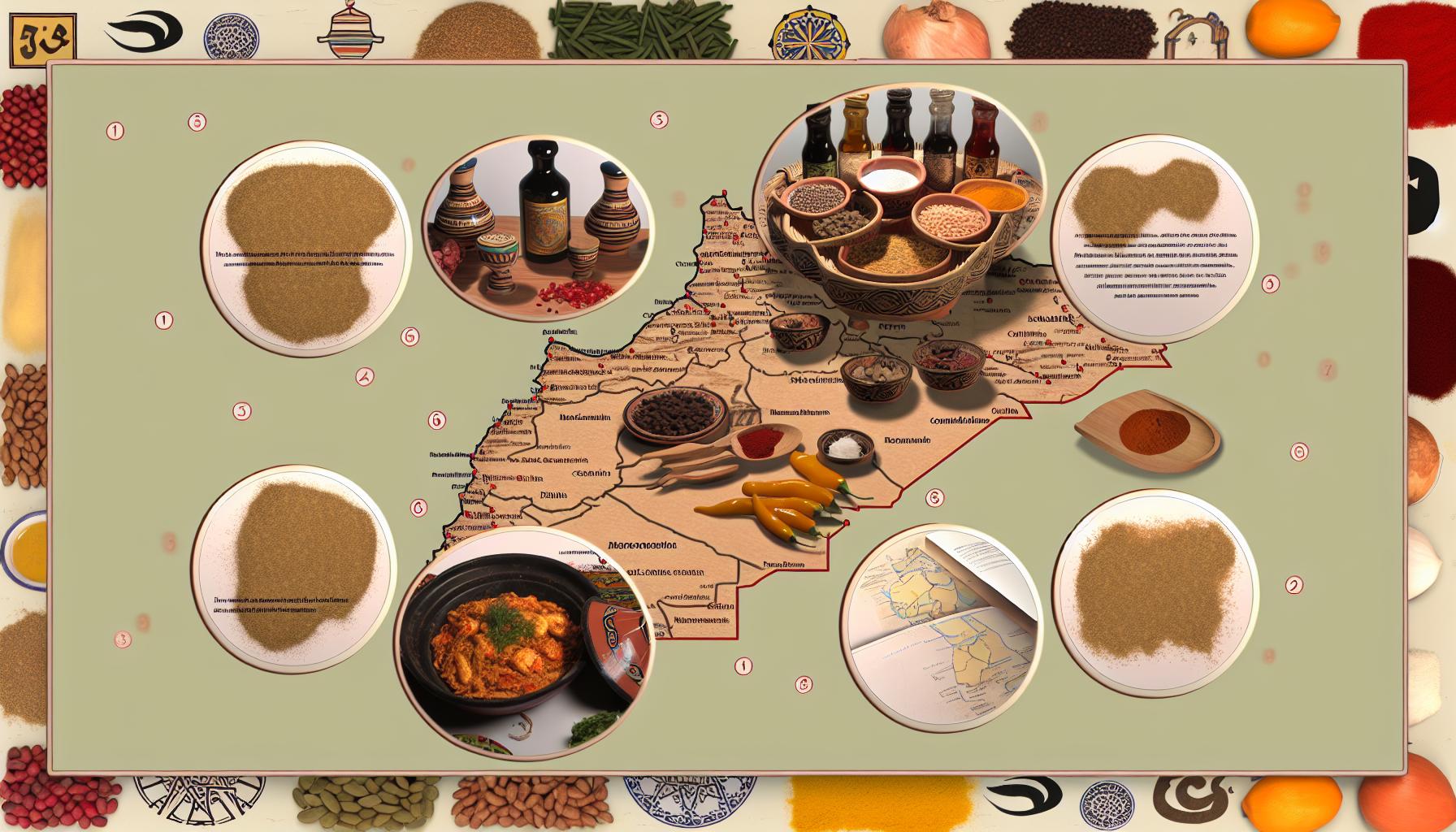
The richness of Moroccan cuisine lies above all in its regional diversity. Each region of Morocco brings its unique touch to gastronomy, influenced by its history, climate and natural resources.
For example, the spicy and sweet flavours of Marrakech reflect the ancestral traditions of the red city, where the palates and souks are full of exotic goods. To learn more about this emblematic region, discover Marrakech, the red city.
In the coastal region of Tangier, the cuisine is enriched by seafood, offering fresh and tasty dishes for Mediterranean and Atlantic influences. This diversity is also manifested in the Rif with Chefchaouen, where Berber influences mix with local culinary methods, generating recipes with marked and authentic flavours.
Further south, in oasis and desert areas like Ouarzazate, the dishes are simpler but full of depth, often prepared with dry vegetables, dates and desert spices. The couscous, an essential national dish, is thus offered differently from one region to another, which you can deepen in our article What is Moroccan couscous?.
Finally, Moroccan gastronomy is also a bridge between the past and the present, between tradition and modernity, as highlighted in this article dealing with the challenges and influence of Moroccan cuisine today: Specificities and challenges of Moroccan gastronomy.
Thus, to discover Moroccan cuisine is to travel through its different regions and terroirs, each telling in its own way a rich and lively culinary history.
In conclusion, Moroccan cuisine is much more than just food, it is a real art of living that combines history, tradition and diversity. Made from a mixture of cultures, it is rich in spices and essential ingredients such as saffron, cinnamon and cumin.
The iconic dishes like tajine and couscous are prepared with passion and know-how, and tell stories and traditions passed on from generation to generation.
Through its regional variety, Moroccan cuisine reflects the diversity and culinary richness of the country, offering an incomparable gastronomic experience to those who have the chance to discover it.
[contact-form-7 id= »6204c24′′ title= »Subscribe to our personalized newsletter »]