Explore the secrets of Morocco!
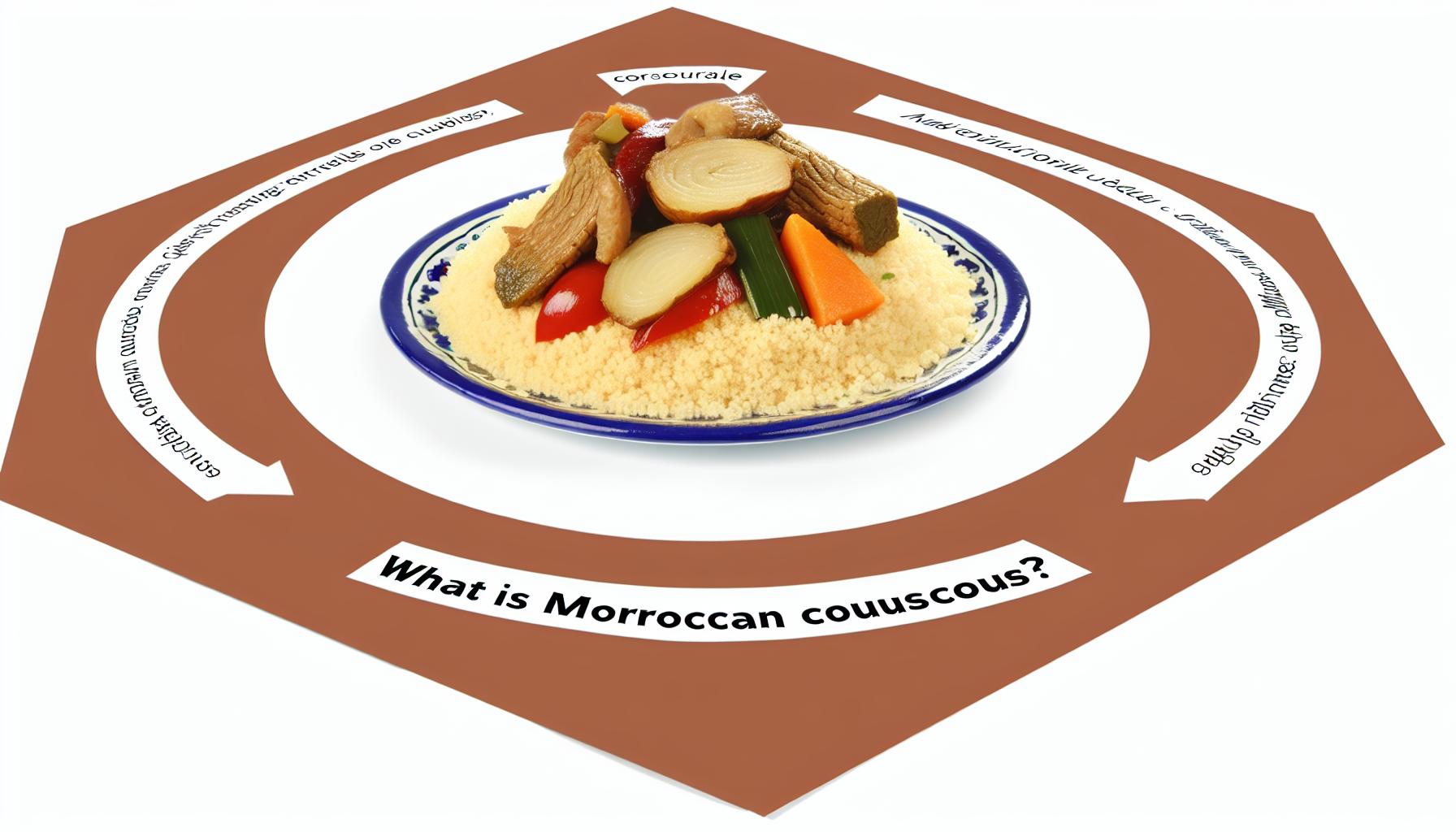
The Moroccan couscous is much more than just a dish, it is a symbol of North African cuisine and a true pillar of Moroccan tradition. Originally from Berber culture, this tasty dish consists of durum wheat meal, seasonal vegetables, meat and Moroccan spices, all steamed for an explosion of flavours on the palate.
Each region of Morocco offers its own version of the Moroccan couscousmaking this dish a truly unique and diverse culinary mosaic. From the Atlantic coast to the Atlas mountains and the Sahara desert, each couscous plate reflects a rich and varied gastronomic history.
For Moroccans, the couscous is not only a meal, it is a real symbol of theMoroccan hospitality and the festive atmosphere around the table. It is also an emblematic dish of the Maghreb culture, carrying an ancestral tradition transmitted from generation to generation.
If you want to discover the traditional recipe of the Moroccan couscous, learn how to handle Moroccan spices with subtlety and cook the meal to perfection. But above all, don't forget that the secret of a good couscous lies in the love and the care that one puts there, for a result to match the reputation of this National dish.
What is the origin of Moroccan couscous?
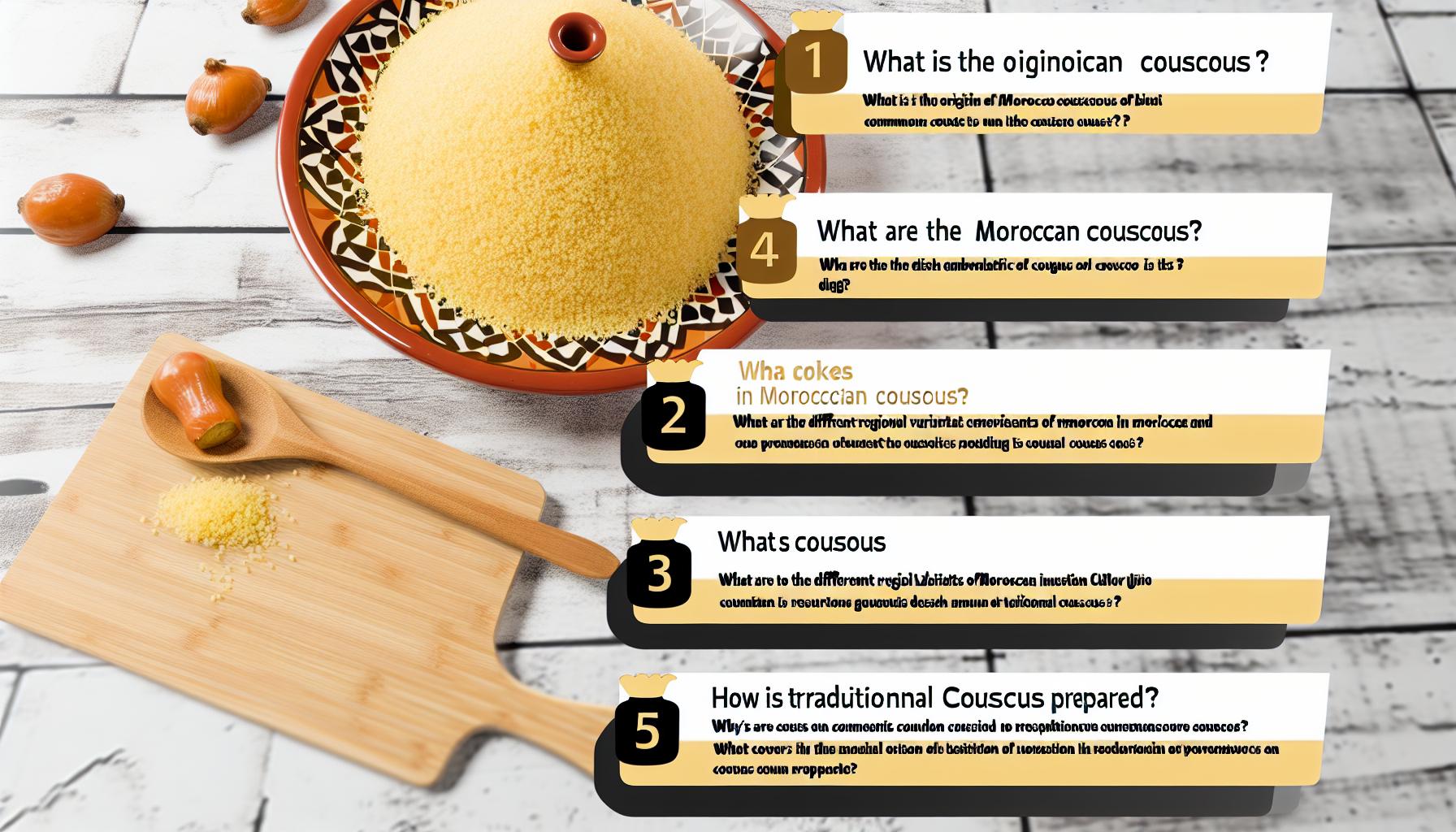
Moroccan couscous is much more than just a dish: it is a strong symbol of Morocco's culture and history. Its origin dates back centuries, with roots deeply linked to Berber traditions, which are the first inhabitants of the region.
The traditional couscous preparation uses a hand-rolled durum meal, an ancestral technique transmitted from generation to generation. This craft method reflects a unique know-how, always present in Moroccan families.
Couscous has been able to enrich over the centuries through trade and cultural exchanges with the various civilizations that have frequented the Maghreb, including the Arabs, the Moors and even the Romans. This cultural fusion explains the diversity of regional revenues found today in Morocco.
To better understand the importance of this iconic dish in the Moroccan culinary landscape, don't hesitate to discover our full article What is Moroccan couscous? which plunges you into the heart of its preparation and its variations.
To learn more about history and couscous stories, you can also consult a detailed resource on Wikipedia Here.
How is Moroccan couscous composed?
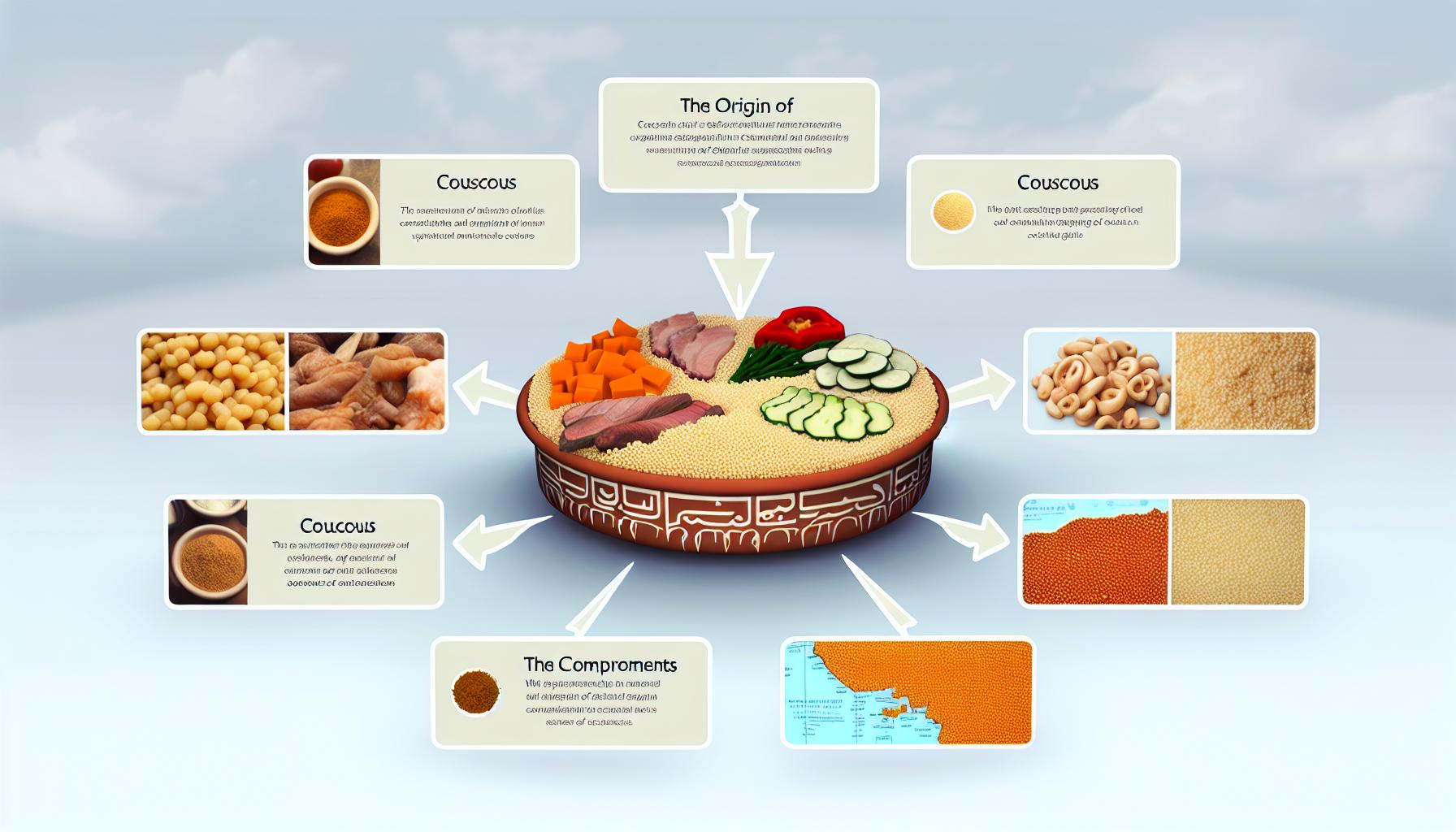
Moroccan couscous is a dish rich in flavors and textures, composed mainly of steamed durum wheat meal. This light and crispy meal forms the basis of the dish, to which various ingredients are added that vary according to the regions and family traditions.
Traditionally, couscous is accompanied by an assortment of seasonal vegetables often called « the seven vegetables » : carrots, turnips, zucchini, pumpkin, chickpeas, tomatoes and onions. These vegetables are simmered in a perfumed broth with spices such as cumin, cinnamon, ginger or coriander.
Meat also plays an essential role in the composition of Moroccan couscous. Chicken, lamb or sometimes beef are frequently found, cooked slowly with vegetables and spices. Some variants also include minced meatballs or merguez for a higher taste.
For an authentic experience, couscous is often served with spicy tomato sauce and some broth. It is also common to add dried grapes or grilled almonds to bring a sweet and crispy touch that balances the flavors.
If you would like to discover more in detail the regions of Morocco where couscous is a must-see specialty, please consult our article on imperial and must-see cities. This iconic dish is at the heart of Moroccan culture and heritage.
To deepen the recipe and secrets of traditional Moroccan couscous, you can also visit this specialized site aide-en-cuisine.fr, which details each step of this delicious dish.
What are the different regional variants of couscous in Morocco?
Moroccan couscous is available in a multitude of variants depending on the region, reflecting the richness and cultural diversity of the country. Each region brings its personal touch, playing with spices, vegetables, meat and cooking methods.
In the North, especially around Chefchaouen, there is often a couscous decorated with fresh seasonal vegetables and fragrant with coriander and parsley, with light but tasty broth.
In the centre, imperial cities like Fez and Meknes offer a couscous rich in flavours, combining lamb, chickpeas and a sauce raised with cinnamon and ginger, a true delight that symbolizes tradition.
In the South and especially near Marrakech, couscous is often accompanied by roasted vegetables, raisins or almonds, creating a sweet and salty balance that is much appreciated. The version with lamb meat and chicken is very popular and tasty.
Further east, in desert areas such as Ouarzazate, couscous is sometimes embellished with dried meat, chickpeas and local spices, reflecting a kitchen adapted to the climate and resources available.
To discover more about the wealth of Moroccan cities that influence these recipes, please visit the page dedicated to Marrakech, the red city, a true gastronomic and cultural crossroads.
Finally, to learn more about the history and culinary traditions of Moroccan couscous, this article Wikipedia offers a complete perspective on this iconic dish.
Why is couscous an emblematic dish of Moroccan culture?
The couscous is much more than just a dish in Morocco. It symbolizes hospitality, conviviality and sharing, values deeply rooted in Moroccan culture.
Traditionally prepared from wheat meal, accompanied by vegetables, meat or fish, it embodies the richness of Moroccan land and the diversity of its culinary resources.
Each region of Morocco brings its special touch to couscous, making it an evolutionary dish and a living witness to cultural exchanges across the country. To better understand this unique link between cuisine and identity, discover the imperial and must-see cities where couscous takes on a very strong symbolic dimension.
Beyond its delicious flavour, couscous is part of UNESCO's intangible cultural heritage, highlighting its importance in the region's oral tradition and culinary practices. To learn more about this international recognition, you can consult this UNESCO official page.
In short, couscous is a federative element that unites Moroccans through their differences, celebrating with each meal a part of their history and their art of living.
How is Moroccan couscous traditionally prepared?
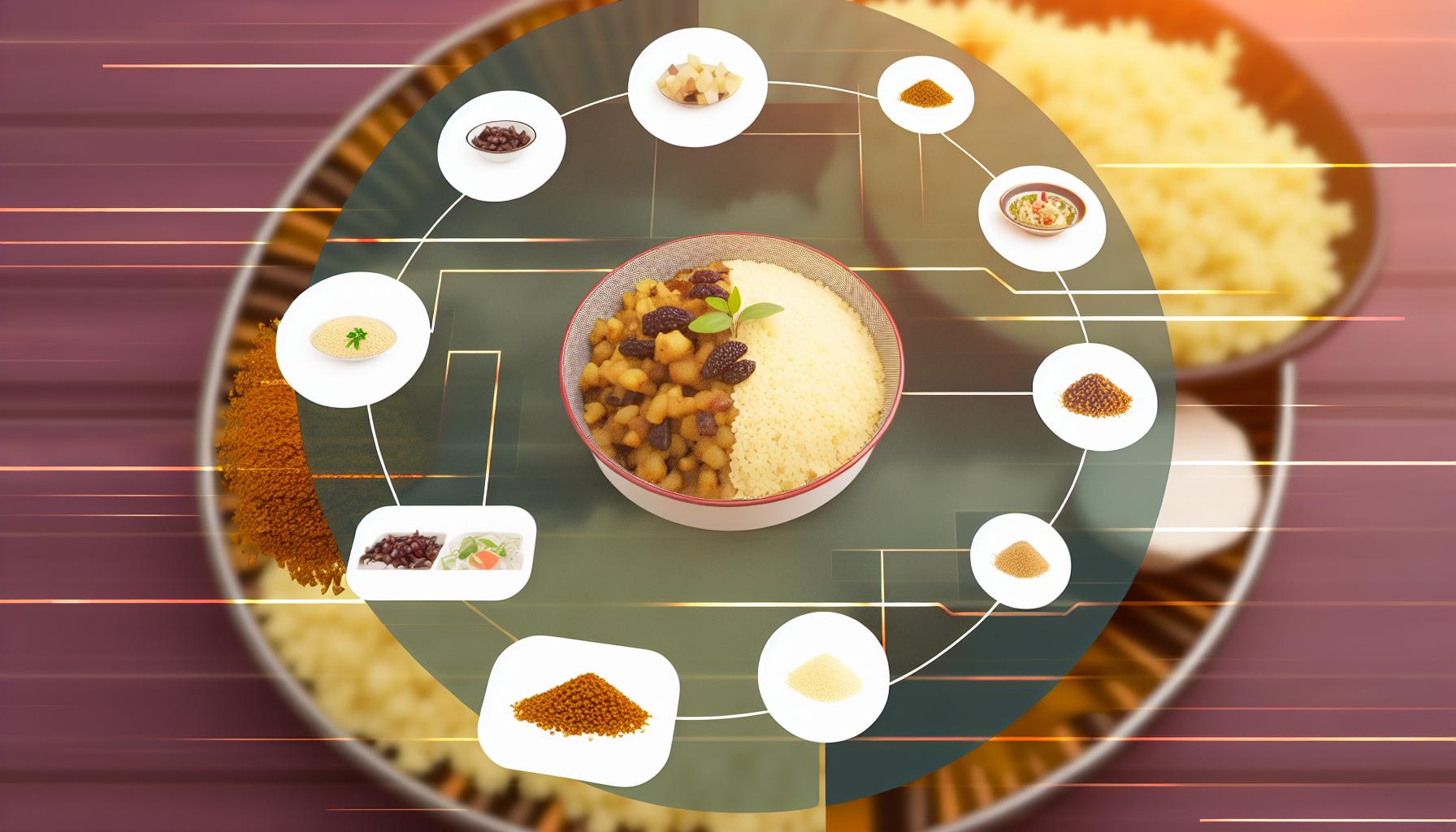
Moroccan couscous is a meticulous preparation that requires patience and know-how. Traditionally, it starts with the choice of fine wheat meal, which is delicately rolled by hand to obtain a light and airy texture.
The semolina is then steamed in a couscouser, a specific ustensil composed of two parts: a broth maker and a perforated part for semolina. This steam cooking allows the couscous to inflate while keeping its lightness.
The broth is made with a selection of seasonal vegetables – often carrots, zucchini, turnips and pumpkin – and pieces of meat, usually sheep, chicken or beef. The whole is simmered with spices such as cumin, ginger, cinnamon and ras-el-hanout, to delicately perfume the dish.
Once the vegetables are tender and the meat fragrant, the meal is mixed with a little butter or olive oil, then steamed again for a final cooking. This step ensures that each grain is perfectly cooked and well separated.
To discover more about the art of living and Moroccan gastronomy, do not hesitate to visit Imperial cities of Morocco, where couscous is tasted in all its splendor.
For a detailed recipe, you can also consult this full guide available on Kitchen Help.
In conclusion, Moroccan couscous is much more than just a traditional dish. It embodies the history, culture and conviviality of Morocco. Originally from the Berber region, this tasty dish consists of wheat meal and different vegetables and meat, depending on the region. Each regional variant offers a unique culinary experience, while remaining faithful to ancestral traditions. The couscous is therefore a symbol of sharing and generosity, bringing together families and friends around a delicious and rich plate. Enjoy without moderation!
[contact-form-7 id= »6204c24′′ title= »Subscribe to our personalized newsletter »]