Explore the secrets of Morocco!
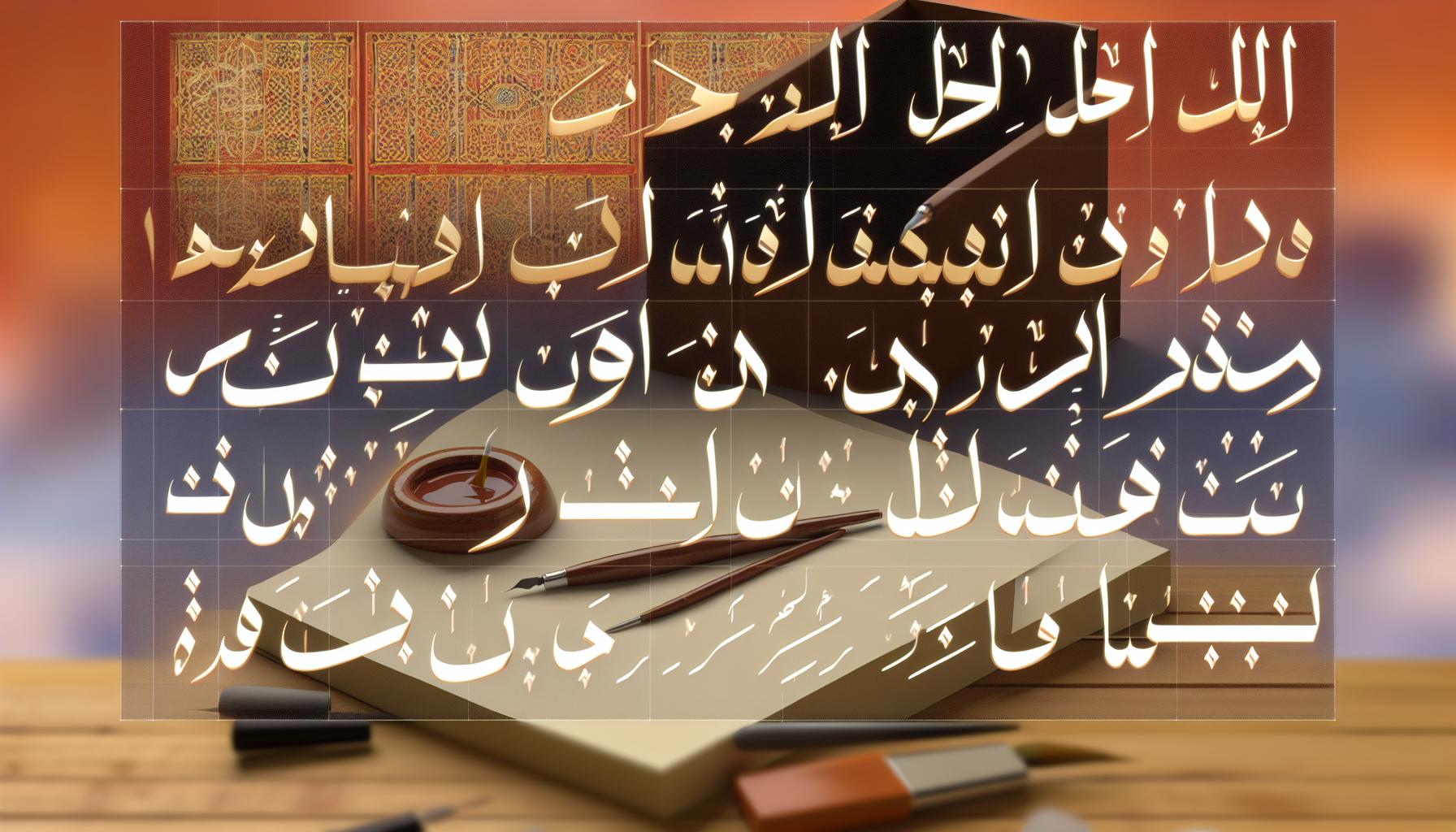
The Moroccan calligraphy is a rich and complex art that draws its origins from kufic writing, one of the oldest forms of the Arabic calligraphy. This ancestral art is an integral part of the Moroccan cultural heritage, and its practice requires not only a great precision, but also a profound understanding of the aesthetics and symbolism of Arab letters.
To practice Moroccan calligraphy successfully, it is essential to have the necessary traditional tools such as calam, china ink and special paper used for this type of writing. These tools are essential to create beautiful and authentic works, while respecting the techniques specific to Moroccan kufic writing.
Mastering the Calligraphic technique of the Moroccan calligraphy requires patience, practice and understanding of different styles such as Al-Mabsout, Diwani, Naskh and Thuluth. Each of these styles has its own characteristics and subtleties, and their exploration allows to enrich its practice and express its creativity in a unique way.
Learning Moroccan calligraphy Today is more accessible than ever, thanks to a multitude of online methods and resources. Whether you are a beginner or experienced, there are courses, tutorials and online communities that will help you improve your technique and explore new horizons in this fascinating art.
By exploring the different styles of Moroccan calligraphy, you will learn to recognize the subtleties and nuances of each style, while developing your own aesthetic and artistic sense. This unique Moroccan craft offers a wonderful opportunity to explore the beauty of Arabic writing and dive into a world of creativity and infinite artistic expression.
What is Moroccan calligraphy and what are its kufic origins?
Moroccan calligraphy is an ancestral art that embodies the aesthetic expression of Arabic letters, often used to decorate monuments, manuscripts, but also traditional handicrafts. It reflects the cultural richness and finesse of Moroccan heritage.
Its roots are deeply rooted in the kufic tradition, one of the first styles of Arabic calligraphy that appeared in the city of Koufa in Iraq from the seventh century. This style is characterized by its geometric, angular shapes and graphic rigor, which influenced artistic creation in the Maghreb, including Morocco.
The kufic calligraphy has been adapted and enriched by Moroccan calligraphers, taking a unique local flavor combining Andalusian, Berber and Islamic influences. To find out more about this iconic art, do not hesitate to consult our section dedicated to Moroccan crafts and markets.
To learn more about the origins of the kufic style, you can also visit this enriching page on Wikipedia – Koufic Calligraphy.
What are the traditional tools needed to practice Moroccan calligraphy?
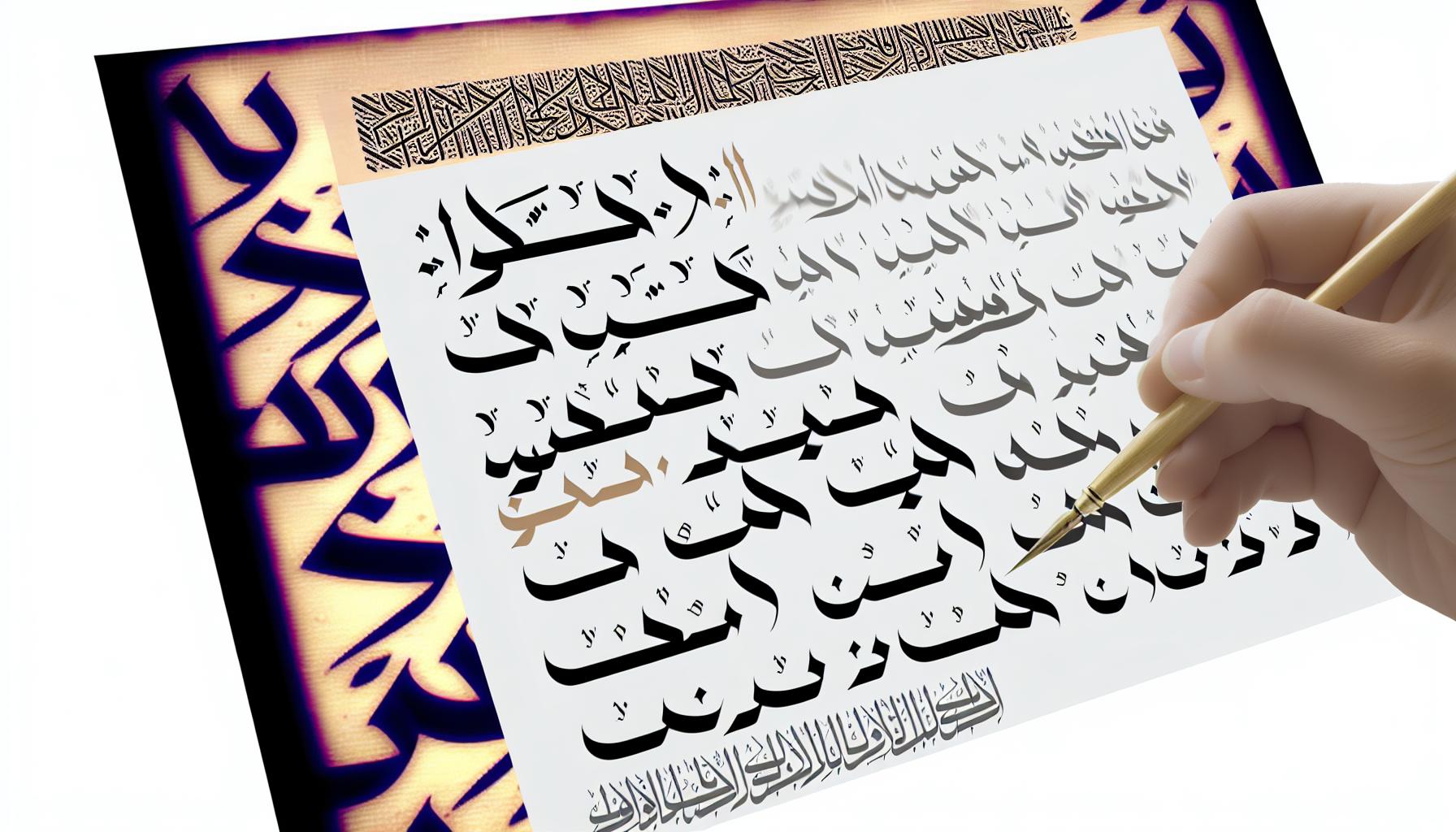
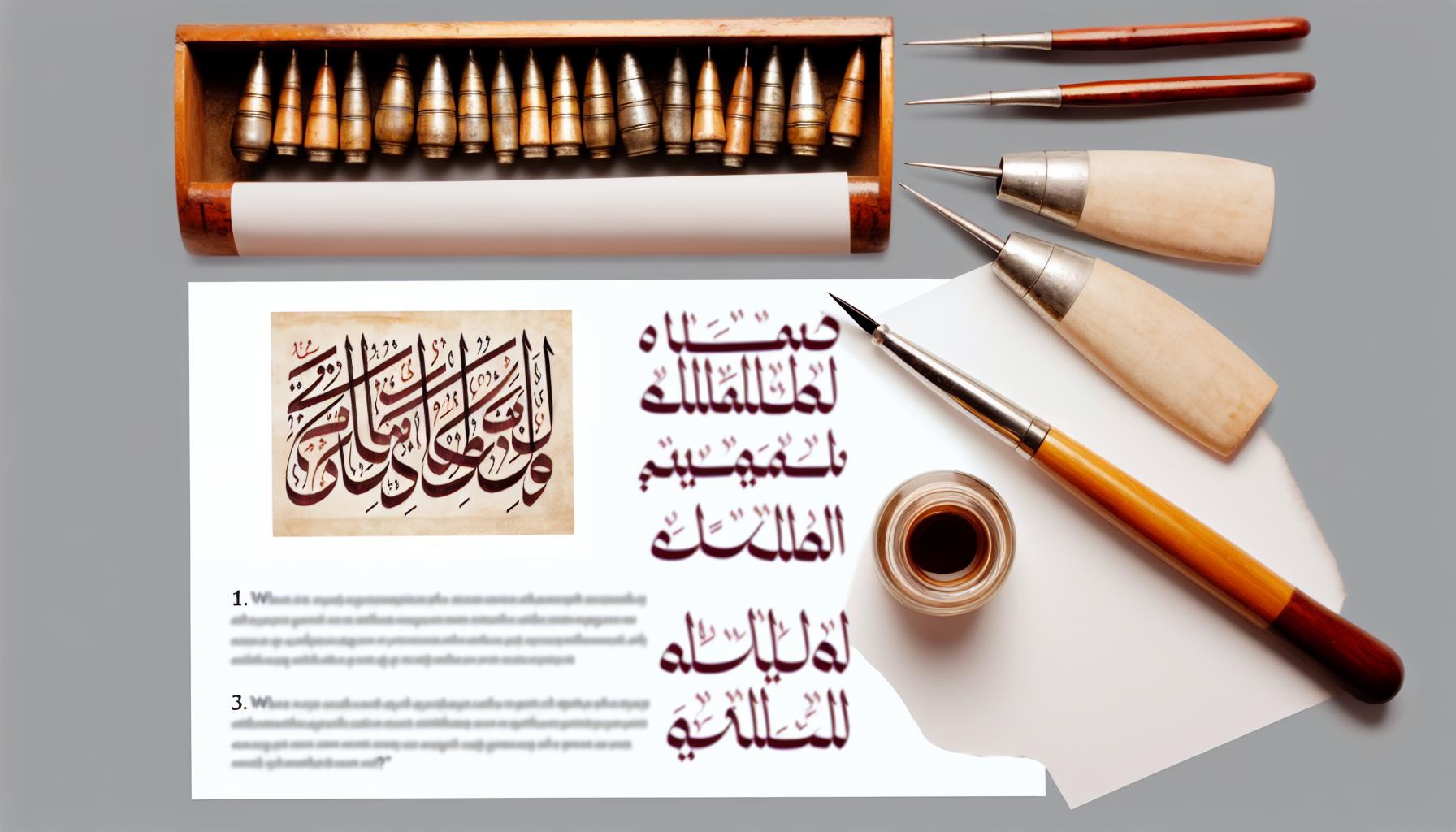
Practice Moroccan calligraphy requires the use of specific tools that respect the artistic tradition of this unique form of writing. Among the essentials, calame, a feather carved from a reed or bamboo, is at the heart of this practice. Its particular shape allows to trace fine or thick arabesques according to the pressure exerted.
In addition to calam, traditional ink, often soot-based and natural binder, plays an essential role. It offers a deep black, perfect for bringing out the beauty of calligraphic characters. Ink is usually deposited in an ink that facilitates the precise handling of the calame.
Writing support is also important. Hand-made paper, usually thick and with a slightly granular texture, is preferred to absorb the ink well and highlight the details of Moroccan calligraphy. Some artists also use parchment for older or prestigious works.
For those who wish to deepen their knowledge of tools and techniques, it is recommended that more information be obtained from specialized sources. For example, this site Scriptural Counter offers a wide range of Arabic calligraphy materials that include traditional Moroccan tools.
Finally, for a complete learning, do not hesitate to consult our article on Traditional Moroccan crafts where calligraphy holds a privileged place, allowing a better understanding of the cultural and historical context in which this practice takes place.
What are the specific techniques to master Moroccan kufic writing?
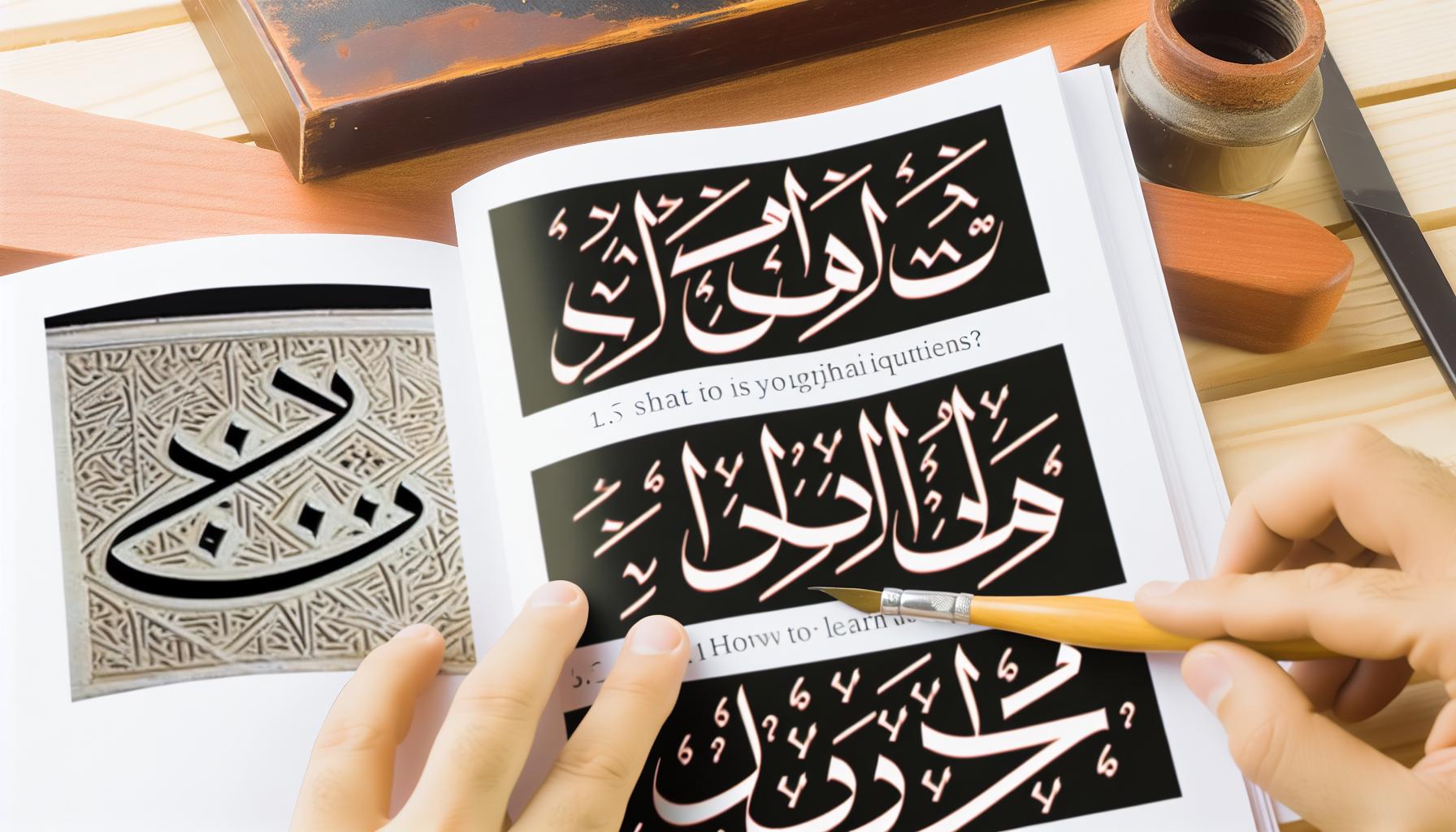
Moroccan kufic writing, one of the oldest and most distinctive forms of Arabic calligraphy, is characterized by its angular lines and its rigorous geometric compositions. To control it, it is essential to understand its strict rules and precise proportions.
First, the use of bevel-cut calam is essential. This tool makes it possible to reproduce the thick and fine features typical of the kufic style. It is necessary to learn how to manage the pressure and angle of the calamum in order to obtain a coherent and balanced plot.
Second, regular practice of geometric grids is recommended. These grids help to build the letters and their variations by respecting the symmetries of this style. Rigor in the grid is fundamental to preserve the harmony of the calligraphic text.
Finally, the choice of ink and support plays a key role. Traditionally, a dense black ink on paper or parchment ensures a powerful contrast, preserving the beauty of the shapes with clarity and legibility.
To deepen your knowledge of the many facets of Moroccan calligraphy and discover other styles and techniques, do not hesitate to visit our article dedicated to Moroccan crafts and markets.
To enrich your understanding of the historical and artistic context of this writing, visit this Wikipedia page dedicated to the Arabic calligraphy.
How to learn Moroccan calligraphy today: methods and resources?
Learning Moroccan calligraphy is now accessible through a multitude of modern methods adapted to all levels. Whether you are a beginner or a passionate person seeking to deepen your knowledge, many resources can guide you in this ancestral art.
A traditional approach is to follow workshops or internships offered in different Moroccan cities. Marrakech, for example, offers training in Arabic calligraphy, including the styles of Moroccan culture. For more information on this type of experience, please consult opinions on TripAdvisor.
In addition, many free online tutorials and mobile apps facilitate home learning. Specialized sites such as Drawing Arabic Calligraphy propose detailed and accessible methods.
If you are looking to discover the cultural context in which Moroccan calligraphy fits, don't hesitate to explore our articles related to local crafts and markets, such as the one dedicated to Moroccan crafts and markets. This will allow you to better understand the richness and diversity of styles used.
Finally, for regular practice, use the traditional tools adapted: calames, natural inks and specific papers. An apprenticeship combining theory and practice will allow you to fully appreciate this delicate art.
To learn more and prepare your immersion in Moroccan culture, discover also our practical tips to prepare your trip.
What styles of Moroccan calligraphy can we explore and how to recognize them?
Moroccan calligraphy is inspired by several traditional styles of Arabic writing, each style having its unique characteristics. Among the best known are the Maghribi style, the Thuruth, and the Naskh, each with a distinct aesthetic that is easy to recognize once initiated.
The Maghribi style, typically Moroccan, is characterized by its rounded letters and broad features. It is easily identified by its fluid forms and small ornaments at the ends of the letters. This style is often used in ancient manuscripts and decoration of religious works.
Then, the Thuruth style is distinguished by its elegance and complexity. Its letters are long with pronounced rounded, often superimposed to create impressive visual effects. This style is particularly popular for banners and decorative inscriptions.
The Naskh style is simpler and readable, with more angular shapes. It is commonly used in the writing of daily texts, making it accessible to beginners wishing to learn the basics of Arabic calligraphy.
To start well, it is advisable to observe and practice based on traditional models. You can explore more the beauties of Moroccan culture by visiting places rich in heritage, such as Fes and his old medina, where calligraphy adorns many buildings.
To deepen your knowledge of Arabic calligraphy in general, do not hesitate to consult this Wikipedia page which presents the different styles and their history.
In conclusion, Moroccan calligraphy is an ancient art form rich in history, derived from kufic origins. To practice this magnificent form of writing, it is essential to have the appropriate traditional tools and to master the specific techniques of Moroccan kufic writing. Today, there are many methods and resources for learning Moroccan calligraphy, whether online or in specialized workshops. By exploring the different styles of Moroccan calligraphy, one can not only appreciate its beauty, but also understand its profound cultural significance. Start this artistic adventure and let your creativity flow!
[contact-form-7 id= »6204c24′′ title= »Subscribe to our personalized newsletter »]