Explore the secrets of Morocco!
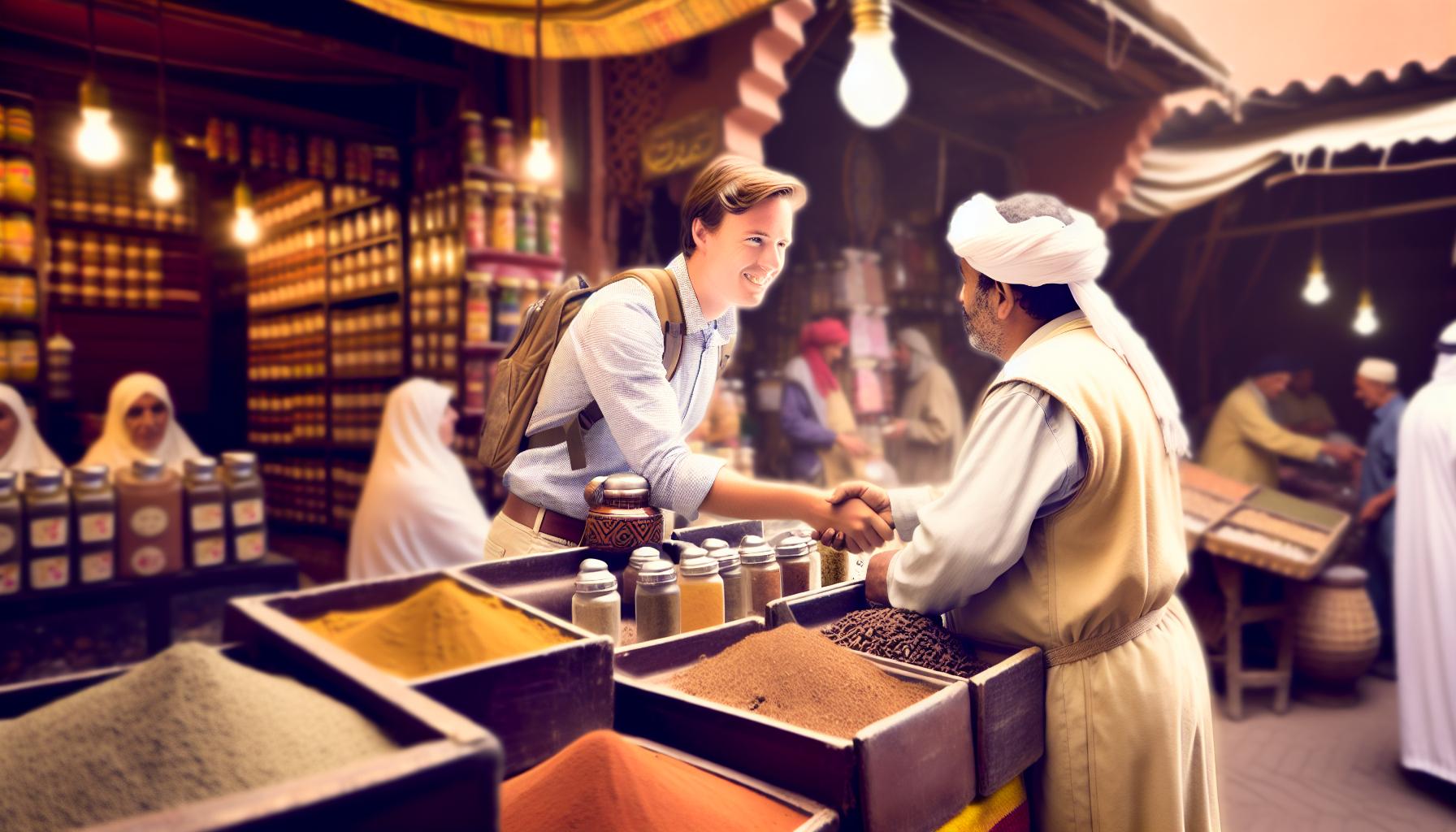
Have you always dreamed of mastering the art of merchandising in a Moroccan market? Don't look anymore, because we have gathered for you the best techniques to negotiate efficiently and get the best prices. Whether you walk in a traditional souk or visit a more modern market, these tips will be valuable.
In a Moroccan marketEverything is negotiable. Whether it is beautiful Berber carpets, enchanting spices or hand-made jewellery, it is essential to know how to approach the negotiations in Morocco. Learn how to use smile and patience to create a favorable climate, and above all, do not underestimate the importance of speaking darija.
Divide the initial price by two to start trading and take advantage of it to buy several cheap items. Use these trading tricks to get the best price while maintaining a friendly but firm attitude. Staying calm and polite throughout the transaction is the key to success.
This blog will guide you through the various stages to negotiate as a pro in a Moroccan souk. Learn what are the most tradable goods, how to use body language to your advantage and why it is essential to know a little darija before you venture into Moroccan markets.
Prepare to become an expert in negotiation strategy in Morocco by following our practical advice for successful transactions. Whether you are a regular in traditional markets or a curious novice, here you will find the keys to success to get the best prices and shop with confidence.
What are the marketable prices in a Moroccan market?
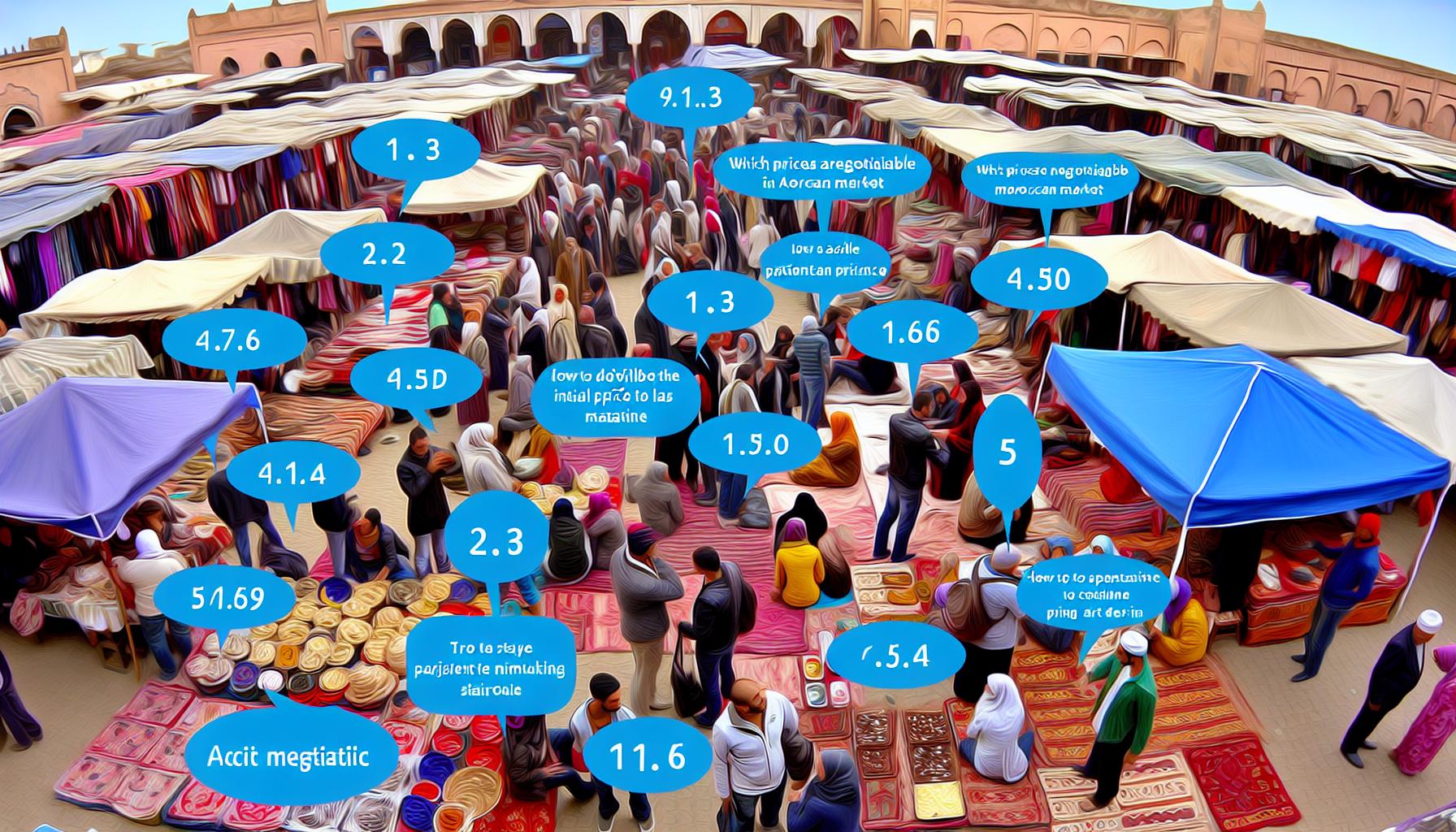
In Morocco's traditional souks and markets, negotiation is an integral part of the experience. Almost all prices are likely to be discussed, but some products offer more margin than others.
Handcrafted objects, such as carpets, pottery, jewellery or textiles, are generally very negotiable. Sellers often wait for negotiation and set a high initial price to allow for bargaining.
Food products such as spices, dried fruits or vegetables can also see their price adjusted, especially if you buy in quantity. On the other hand, some prices, such as those for prepared foods sold on the street, are often fixed.
For new items or clothing, the trading margin is more limited, although some traders still accept a discount if you can tactfully argue.
Finally, rates for services, such as taxi drivers or local guides, are often negotiable and it is advisable to set the price before the service to avoid surprises.
To learn more about trading tricks and discover the treasures of Moroccan markets, please visit our detailed page on and Moroccan markets.
To deepen the economic and strategic implications of negotiations, particularly in real estate, here is a very useful resource: Strategies for negotiating real estate in Morocco.
How to use smile and patience to negotiate?
In Moroccan markets, a smile is much more than just a gesture of politeness: it creates a climate of trust and facilitates dialogue. Addressing the seller with a real smile shows your respect and openness, which can often positively influence the negotiation.
Patience is just as essential. Trading in these markets can take time and often requires several exchanges. Do not rush, listen carefully and show that you are ready to discuss at length often gives better results than sudden bargaining.
These two qualities combined — smile and patience — contribute to a human relationship rather than a simple trade exchange. This will give you a better understanding of local culture and seller expectations, which will give you a certain advantage when you purchase.
To deepen your experience of visiting and negotiating, do not hesitate to discover the tips for and Moroccan markets to better understand local specificities.
Finally, if you want to further develop your negotiating skills, this external article offers excellent professional tips: How to bargain like a pro: 10 tips.
What is the importance of speaking darija in Moroccan markets?
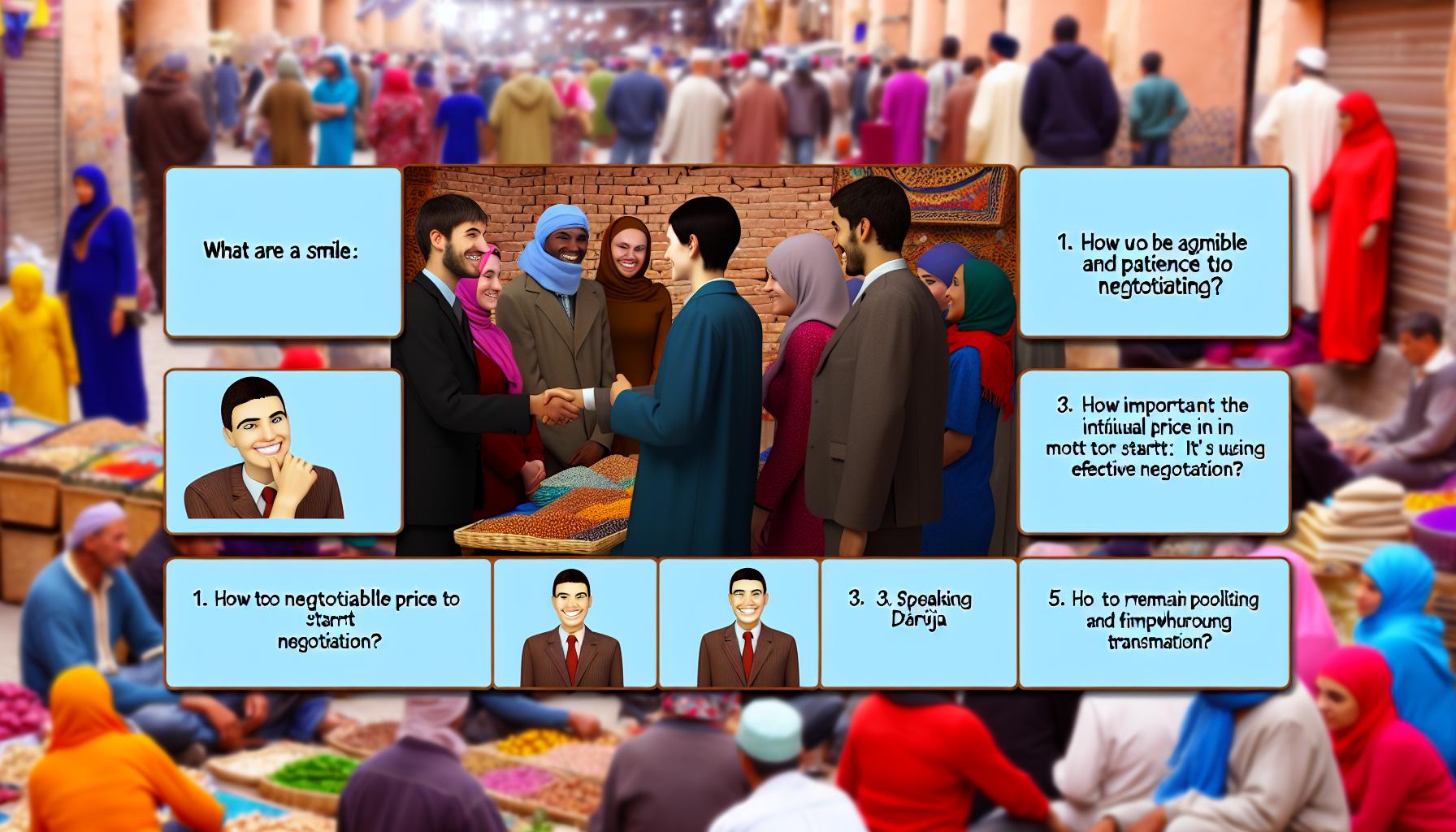
Talking darija, the Moroccan dialect, is a real asset when visiting the traditional markets of Morocco. This local language greatly facilitates exchanges and establishes a relationship of trust with traders.
Speaking in darija, even in a basic way, shows respect for the inhabitants, which can improve the atmosphere of negotiations and often lead to better prices.
Moroccan markets are places of cultural as well as commercial exchanges. Mastering a few phrases in darija also allows you to better understand the products offered and their particularities, especially the typical handicrafts of the country.
Remember that a good knowledge of the local dialect values your experience and plunges you into the authentic souk atmosphere. To deepen your discovery of Moroccan cities and their social dynamics, you can consult our guide on imperial and must-see cities.
To learn more about the language and its evolution, this very informative external article will give you a complete overview: From Darija to English: Moroccanos Language Map Events in 2025.
How to divide the initial price to start an effective negotiation?
In the context of Moroccan markets, dividing the proposed initial price is a key strategy for successful negotiation. Starting by expressing an offer far below the price charged may surprise the seller, but it is also a way of laying the foundations for constructive discussion.
An effective method is to estimate the real value of the product and then propose a price corresponding to about 50 to 70 % of the original price. This division allows dialogue to be opened without looking excessively aggressive. It is important to remain respectful while showing that you know the value of the object.
The importance of verbal exchanges and the cultural context must also be taken into account. In a Moroccan market, negotiation is a real art where listening and respect play a crucial role. To better understand local specificities, you can consult our full guide on Moroccan crafts and markets.
In addition, to deepen your trade negotiation skills, we recommend reading this very informative external article: The 9 golden rules for successful trade negotiations in 2025.
Finally, remember that negotiation is a dynamic exchange. Take care of your attitude, be prepared to make concessions, and above all, know when to conclude so that everyone will go back satisfied.
How can we stay kind and firm throughout the transaction?
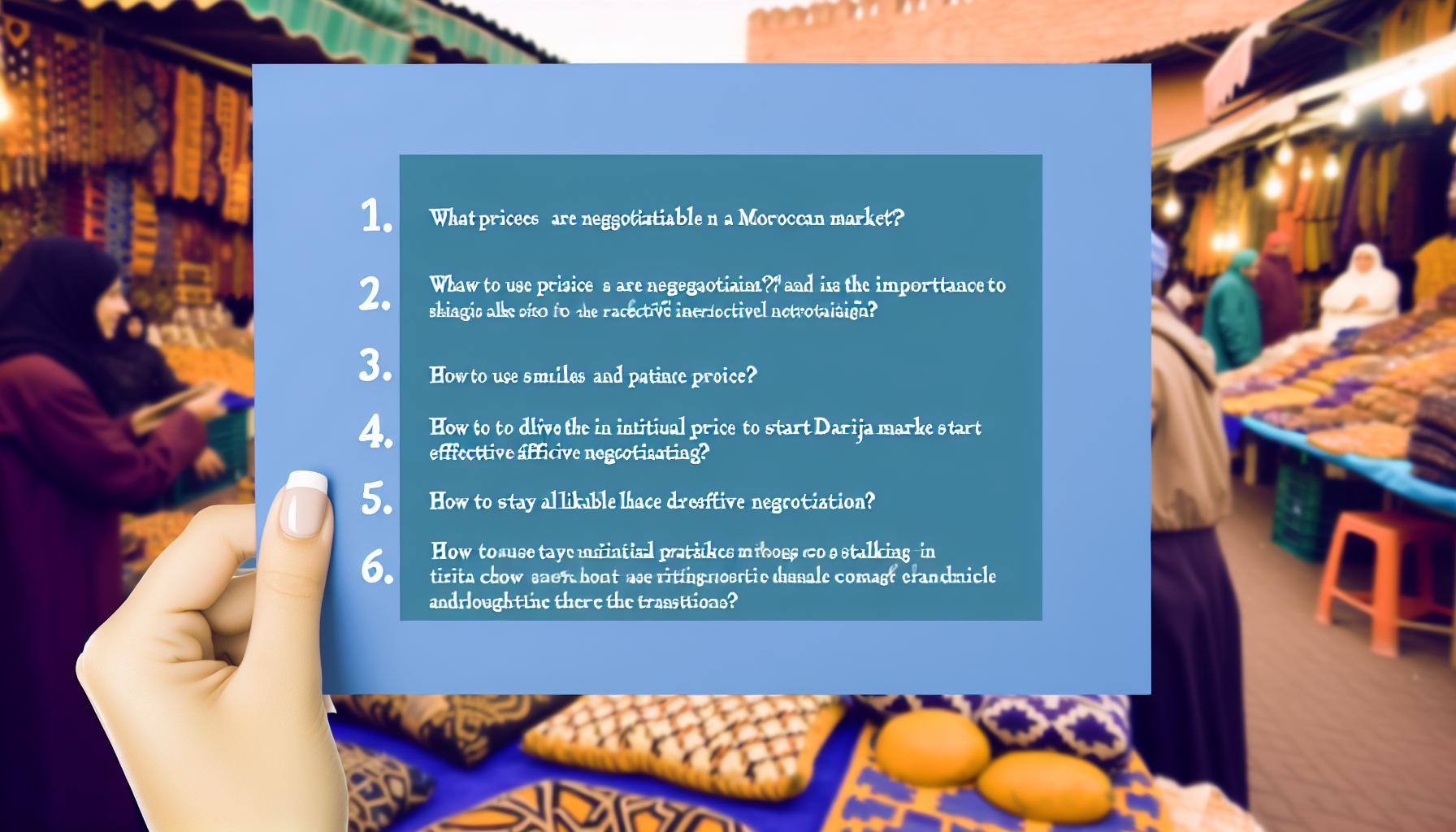
In a Moroccan market, keeping a balance between friendliness and firmness is essential for a successful negotiation. The attitude you adopt influences not only the course of the transaction, but also the relationship you build with the seller.
To remain kind, start by warmly greeting your interlocutor and show respect throughout the exchange. Listening is just as important: let the seller express his arguments and show your sincere interest in his product.
However, being kind does not mean giving in to all requests. Be firm by setting your limits clearly and calmly. Don't hesitate to repeat your conditions without aggressiveness, which will demonstrate your seriousness and willingness to reach a fair deal.
If you want to deepen your knowledge of the cultural and commercial context, please consult our article on and Moroccan markets to better understand local codes.
Finally, stay flexible but never lose sight of your goal. The firmness well combined with friendliness often allows not only to get a good price, but also to experience an enriching and respectful experience. For further strategies, you can visit this external site which details the best negotiating practices in 2025.
In conclusion, negotiating in a Moroccan market requires a combination of tactics and specific skills. It is essential to know which prices are negotiable, to use smile and patience, to speak Darija, to divide the initial price wisely, and to remain kind but firm. These elements are essential for successful negotiations in Morocco. By applying these tips, you will be able to navigate successfully in local markets and get advantageous prices while respecting Moroccan trading traditions.
[contact-form-7 id= »6204c24′′ title= »Subscribe to our personalized newsletter »]