Explore the secrets of Morocco!
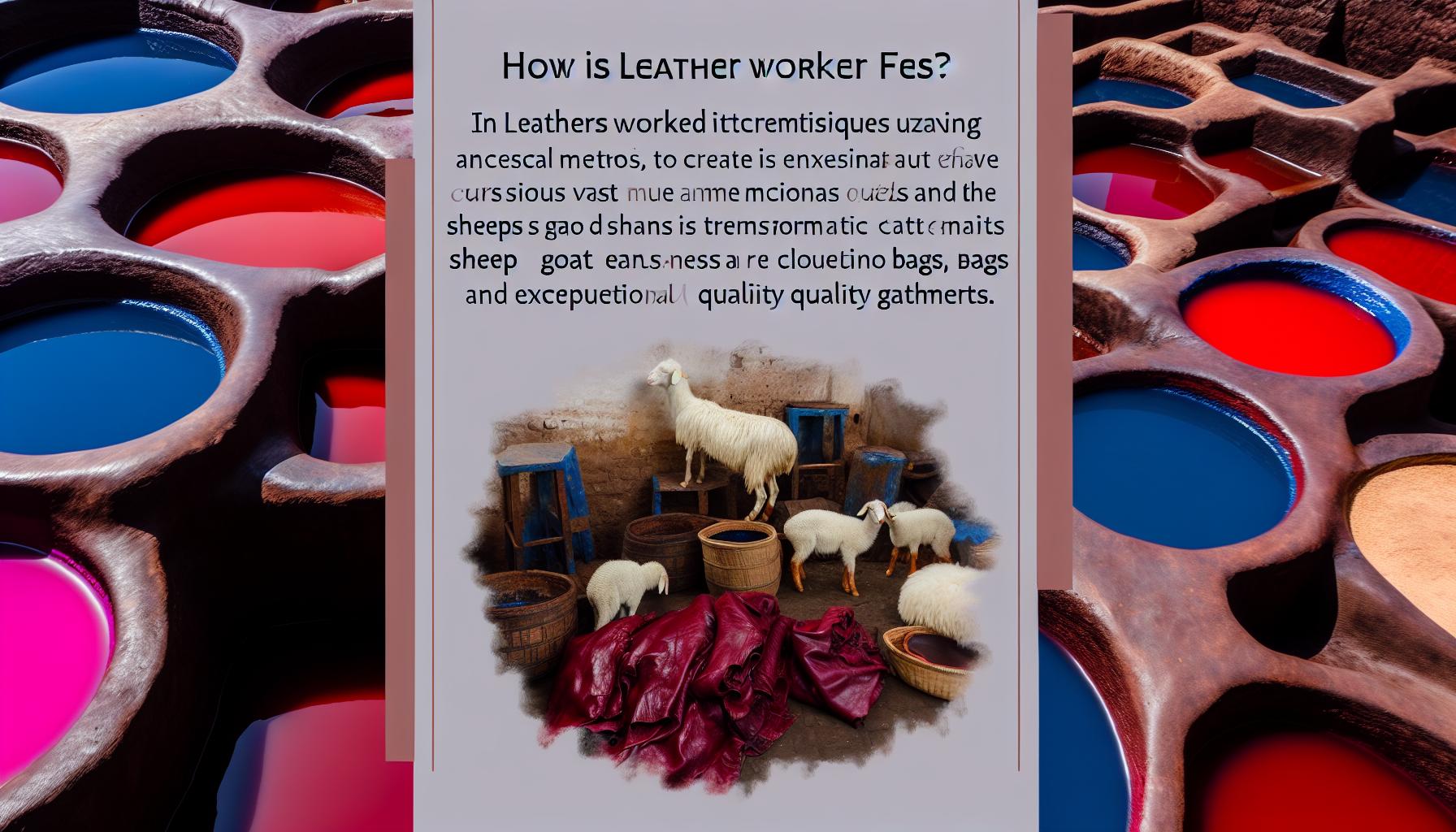
If you have already visited Fes, Morocco, you know how ubiquitous leather is there. The traditional tanneries of the medina are a true symbol of Moroccan craftsmanship and attract many visitors every year.
When you walk around the tanners' district, you can see artisans working leather with ancestral know-how transmitted from generation to generation. Sheep and goat skins are transformed into beautiful bags, shoes and clothes of exceptional quality.
Fez tanneries are renowned for their natural dyeing techniques. Coloured tanks in which the skins are soaked add a unique visual dimension to the tanning process. Tanners use natural ingredients such as saffron, indigo and henna to obtain rich and deep colours.
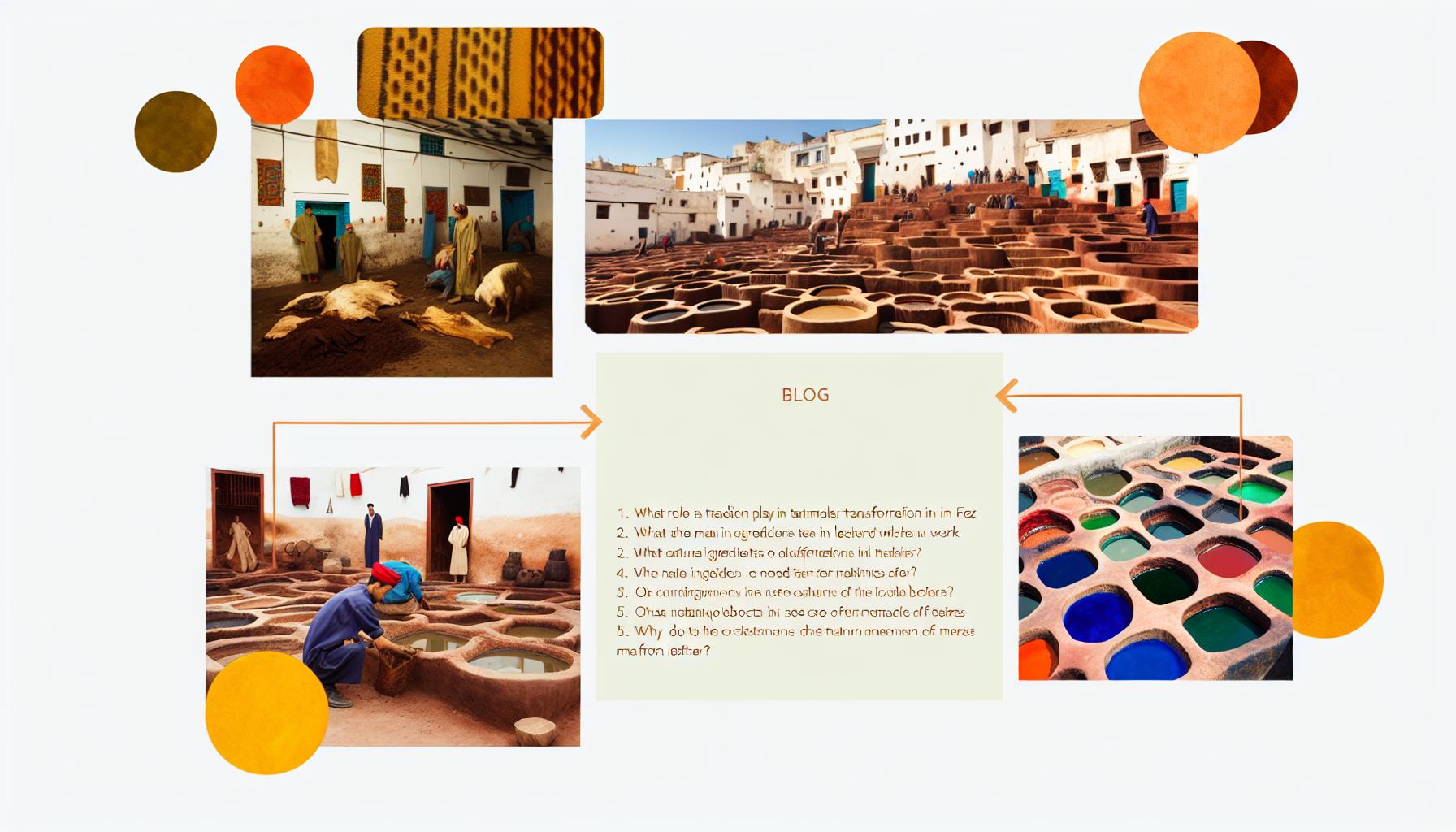
The Chouara tannery is one of the oldest and most emblematic of Fez. Its tanning ponds have become an unmissable attraction for visitors curious to discover this ancestral trade.
The artisans of Fez manufacture a wide variety of leather objects, ranging from bags to shoes to belts and babouches. Each piece is unique and reflects the talent and know-how of Moroccan artisans.
What role does tradition play in leather work in Fez?
Tradition is at the very heart of the leather work in Fez. For centuries, this craft has been passed on from generation to generation, preserving ancestral methods that make the richness and authenticity of local products.
The craftsmen of Fez still use manual techniques, especially in the famous tanneries of the medina. These processes involve delicate know-how that respects the nature of the materials while ensuring exceptional quality.
This perpetuation of traditional practices is not limited to technology, but also extends to cultural and social aspects. Leather work is a strong symbol of the fesian identity, celebrated in various events and recognized throughout Morocco.
To better understand this link between tradition and crafts, you can discover more in detail the old medina of Fez, where each alley reveals fascinating stories about this unique know-how.
To deepen the topic of Moroccan leather and its history, this external article offers a complete overview of the artisanal work in Morocco: Leather crafts in Morocco.
What are the main stages of animal skin processing in Fez?
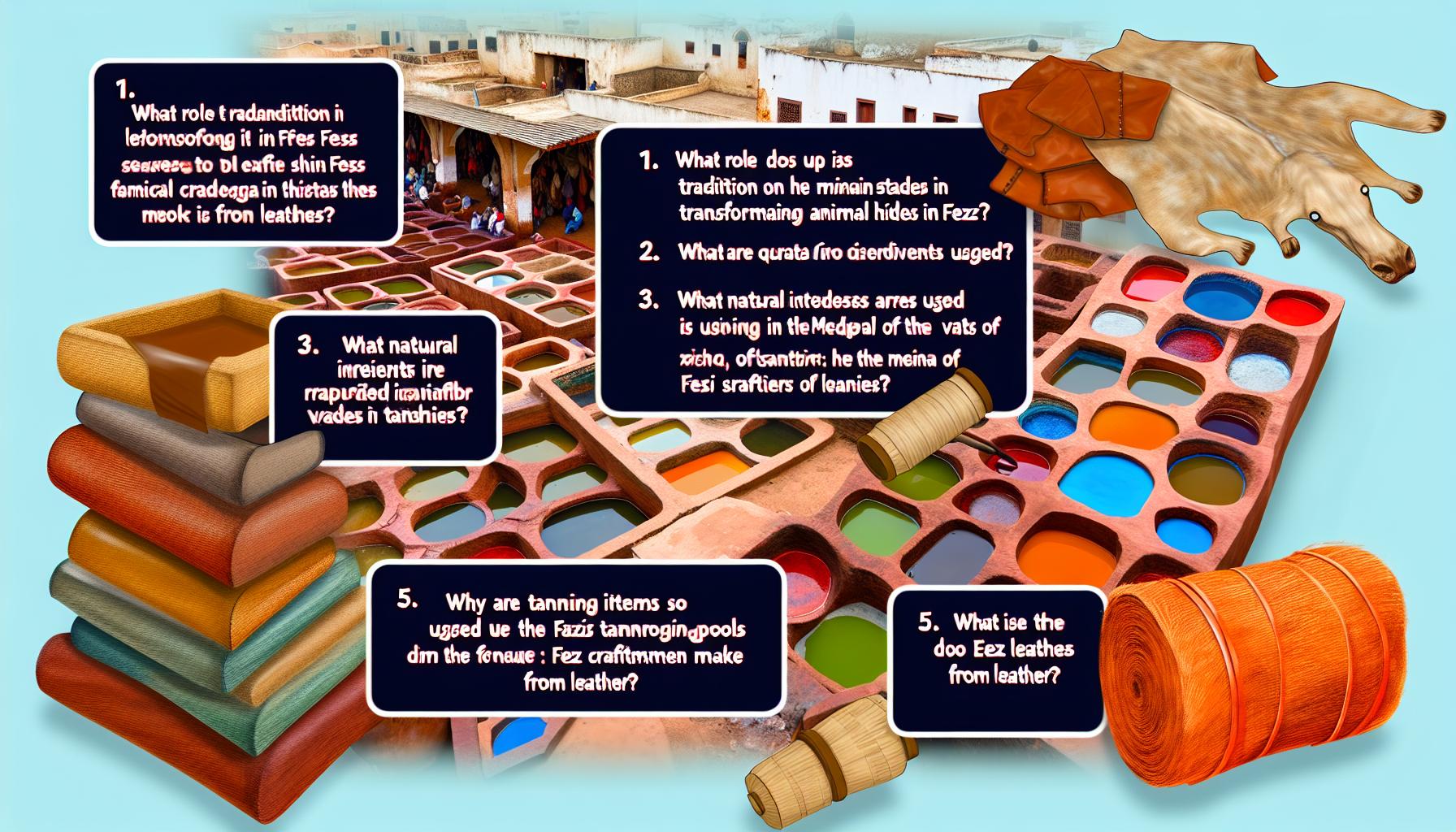
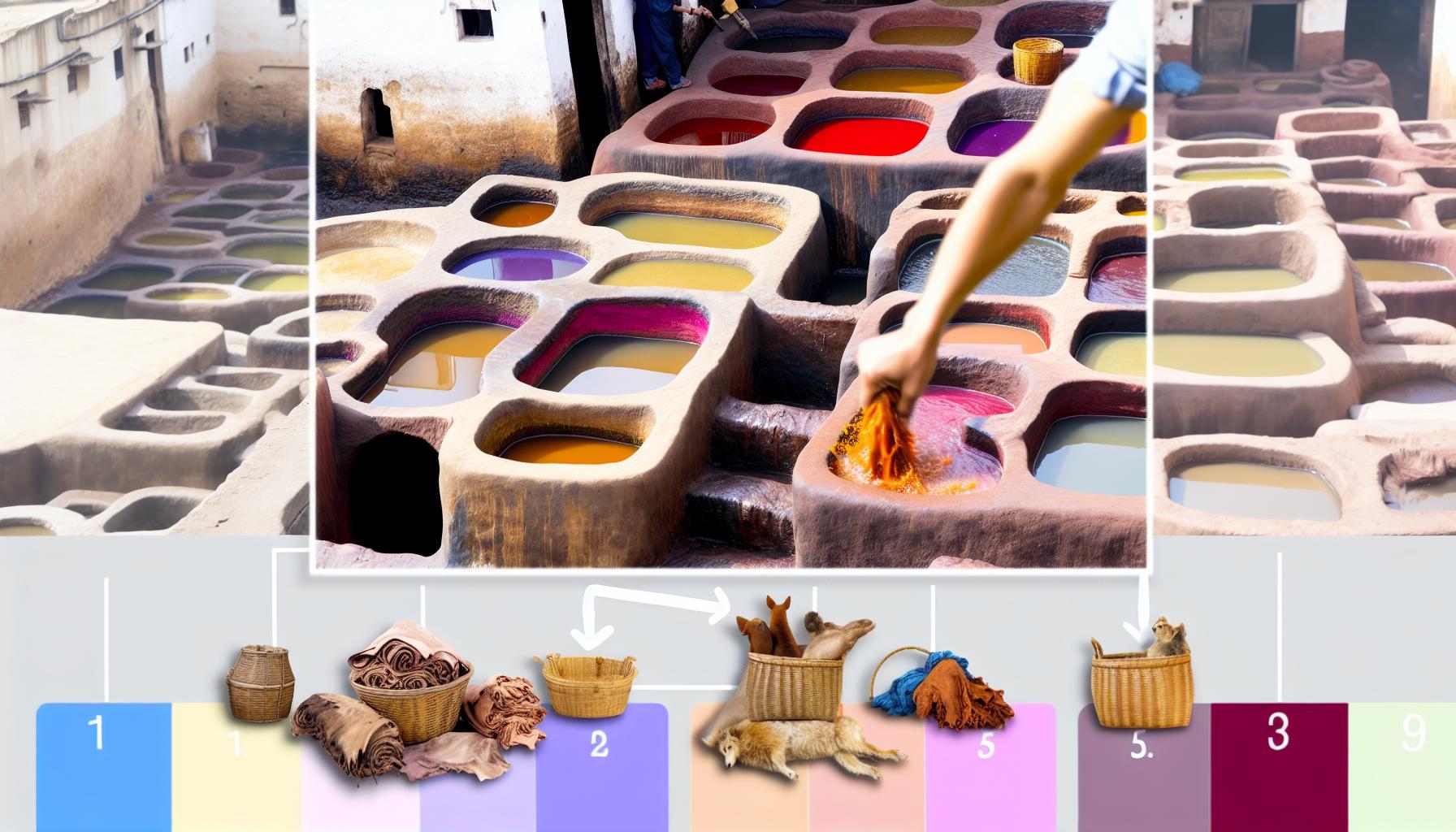
The processing of animal hides in Fez is based on ancestral know-how that follows precise steps to obtain high quality leather. It all starts with the collection of raw hides, mainly goats, sheep or cows.
The first major step is cleaning and soaking skins in large water basins to remove dirt and soften it. This process can take several hours or even days.
Then, the skins are immersed in natural lime-based solutions to remove dead hair and tissue. This operation is followed by a thorough washing to prepare the leather for tanning.
Tanning, the true heart of processing, consists in immerse the skin in baths of vegetable tannins from bark, roots or leaves. This durable treatment gives the leather its strength and flexibility.
After tanning, comes the manual drying and relaxation of the skins, essential step to guarantee the flexibility of the leather. Craftsmen use traditional tools to refine texture and finish.
Finally, leathers can be dyed with natural or chemical pigments, a know-how that makes the reputation of the traditional tannery of Fez.
To learn more about the history and craft techniques of this great city, discover our article dedicated to Fes, the old medina.
You can also deepen your knowledge of the different stages of tanning on this specialized site: The tanneries of Fez.
What natural ingredients are used in the coloured vats of fassie tanneries?
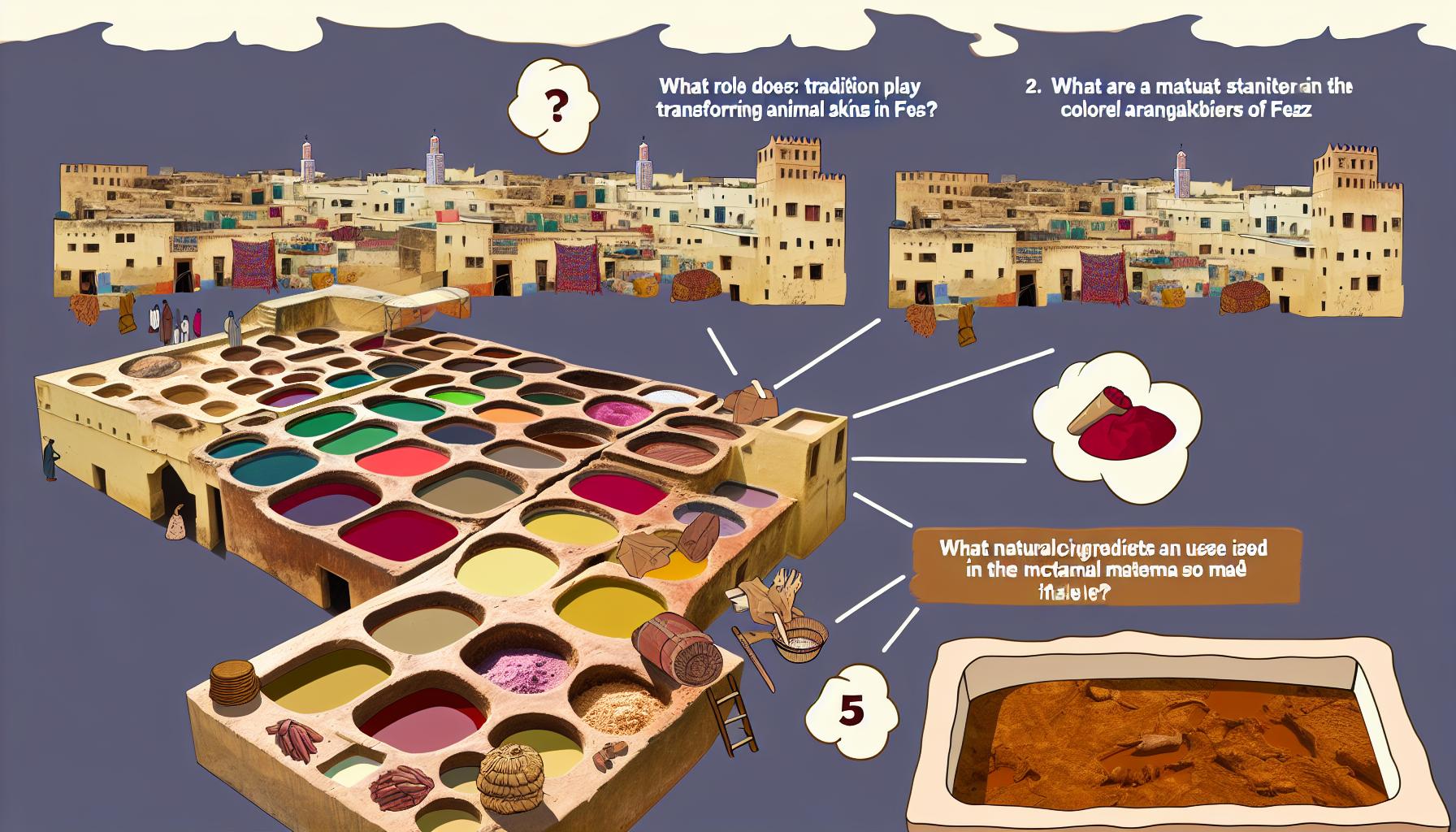
In the famous tanneries of Fez, artisans use natural ingredients to dye and treat leather in large coloured vats. These raw materials come mainly from plants, giving the skin unique and durable hues.
Tannin extracted from bark from trees, including oak and mimosa, is one of the main components involved in traditional tanning. This natural process preserves the flexibility and strength of the leather.
For the colours, different plants are used: the powder indigo for blue tones, the cochenille for reds, and the pomegranate bark or saffron for yellow and orange shades. These natural dyes give the leathers of Fez their authentic character and their characteristic brilliance.
This method, inherited from generations of artisans, is described in detail in this article on Moroccan handicrafts, which also explores the ancestral know-how of the region.
To learn more about the cultural heritages related to leather production, you can visit this specialized site Tanniou – Traditional Tanneries.
Why are tanning ponds so emblematic in the Fez Medina?
The tanning basins of the medina of Fez represent one of the strongest symbols of traditional Moroccan handicrafts. This unique place bears witness to an ancestral method of processing leather, practiced in the same way for centuries.
These huge tanks filled with natural solutions, such as pigeon or lime, make it possible to prepare and dye skins with exceptional know-how. Their colourful appearance, visible to visitors, creates a living and authentic spectacle in the heart of the old town.
The method used in these basins is entirely manual, which gives a special stamp to each leather worked. It is this combination of tradition, nuances and smells that makes this experience unforgettable and all the more emblematic for Fes.
To learn more about the richness of this historic medina and discover its other treasures, please visit our dedicated page Fez the old medina.
For further immersion in this universe, you can also consult this detailed report on the Traditional Fez tanneries, which highlights all the passionate work of tanners.
What unique objects do Fez artisans make from leather?
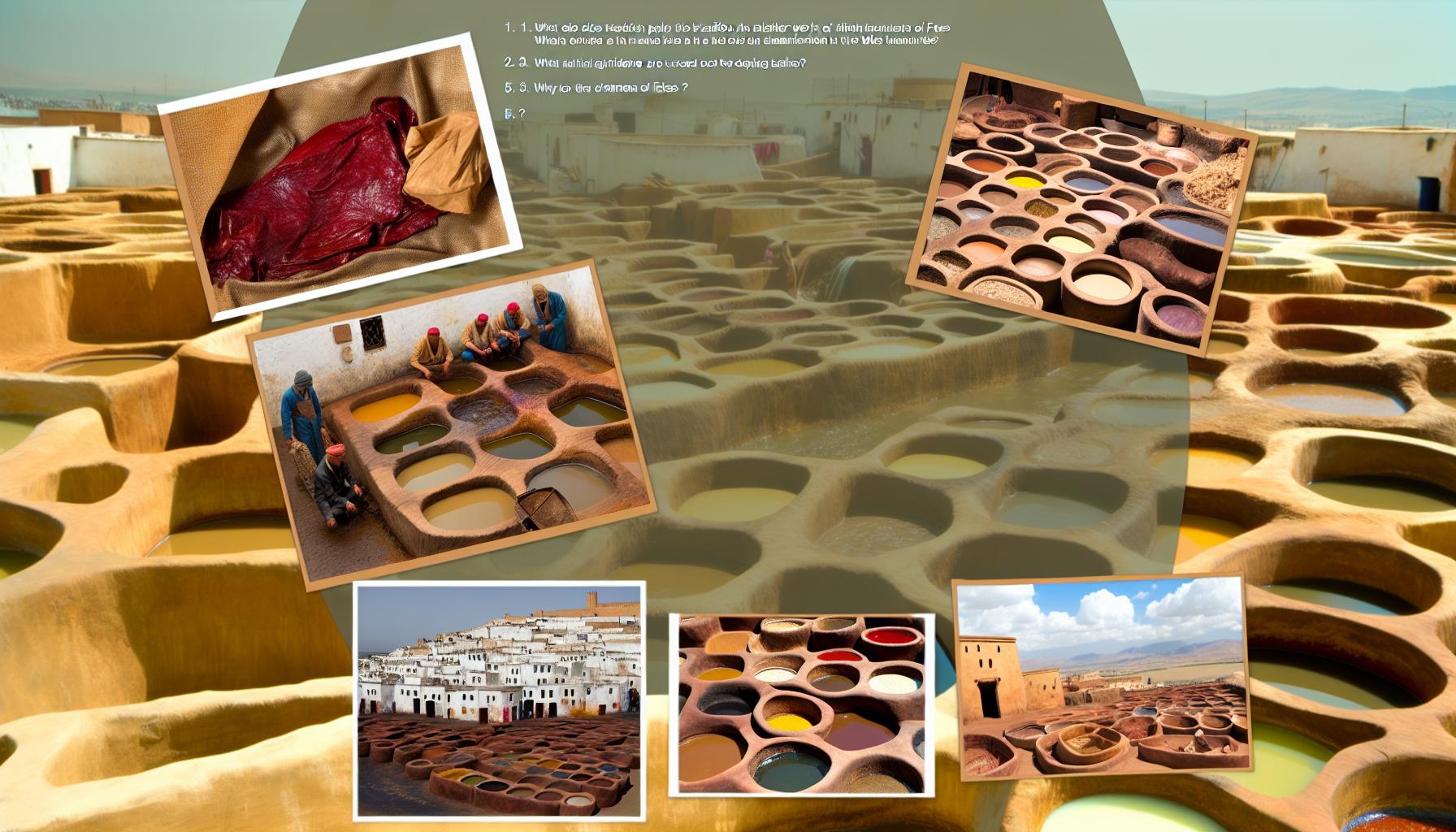
The artisans of Fez, renowned for their ancestral know-how, turn leather into truly unique works of art. Among the most emblematic pieces are the leather slippers, these traditional comfortable and elegant shoes, available in a multitude of colours and patterns.
In addition to babouches, artisans create finely worked handbags, belts, wallets and jewelry boxes, often decorated with hand carved or hand painted motifs. Each object reflects an exceptional blend of cultural heritage and contemporary creativity.
Fez tanneries, famous and essential, provide exceptional quality leather, facilitating the production of both durable and artistic items. These workshops are the beating heart of leather work that you can discover in detail in our section dedicated to Fez.
To learn more about this authentic tradition, I also invite you to consult specialized resources such as this Article which explores the richness of Moroccan handicrafts in Fez.
In conclusion, leather work in Fez is an ancestral art that is based on the tradition and know-how of local artisans. The main processing stages of animal skins, the use of natural ingredients in the coloured tanks of tanneries, as well as the manufacture of unique objects from leather make Fez a true leather capital in Morocco.
The tanning basins, emblematic in the medina of Fez, are the symbol of this centuries-old tradition that continues today. Visiting the tanneries of Fez, we dive into a world of colours and scents that testify to the exceptional know-how of local artisans.
In short, working with leather in Fez is about perpetuating a unique cultural heritage and offering the world products of incomparable quality, witness to a rich and fascinating history.
[contact-form-7 id= »6204c24′′ title= »Subscribe to our personalized newsletter »]