Explore the secrets of Morocco!
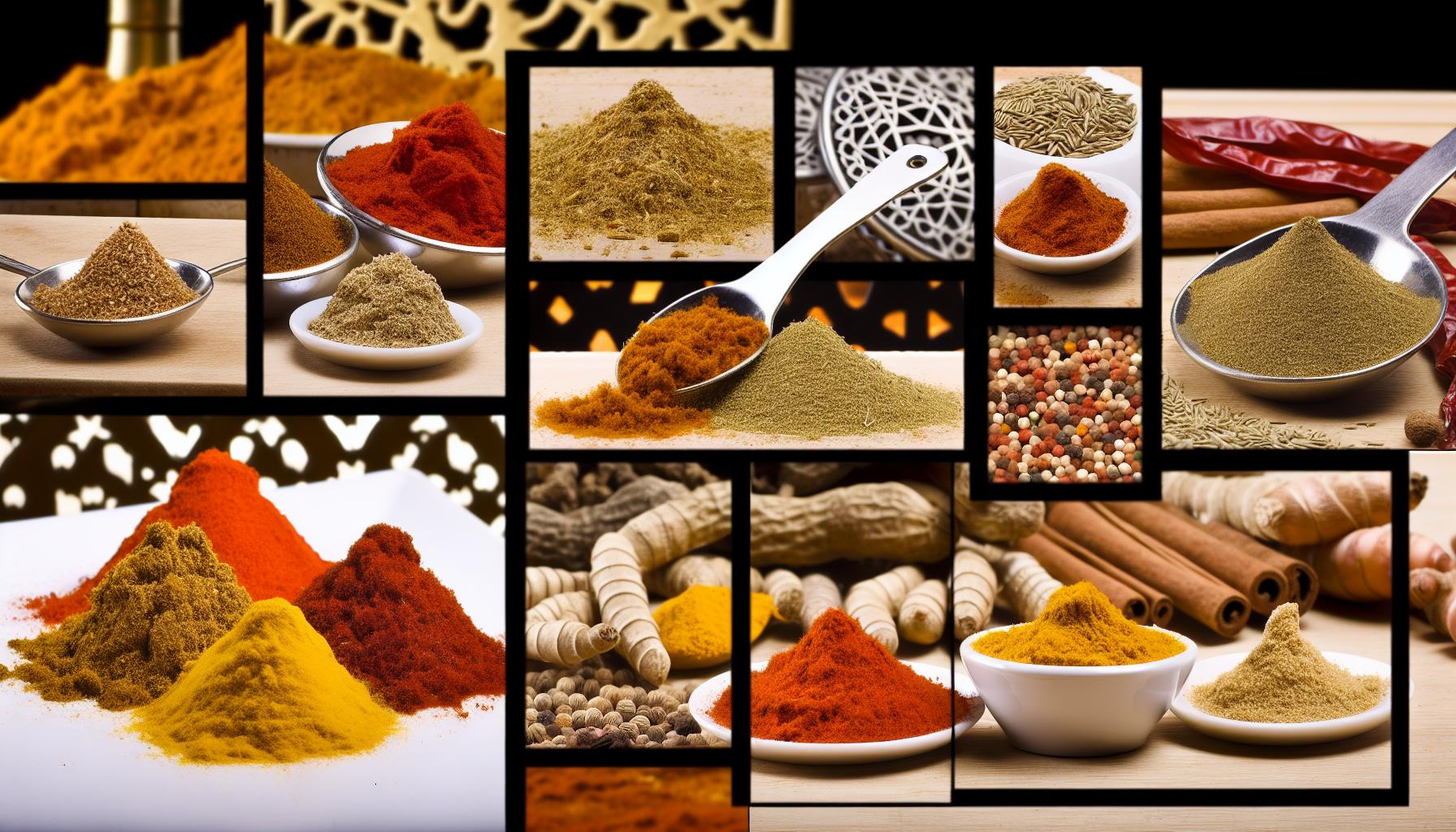
Dive into the delights of Moroccan cuisine by exploring the essential spices that make it all the rich. The cumin, the coriander, saffron, ginger and paprika are all magical ingredients that bring depth and warmth to the traditional dishes of Morocco.
At the heart of this enchanting gastronomy is the famous Ras El Hanout, a complex spice mixture that raises the flavours of tajines and couscous to unrivalled peaks. Each Moroccan spice plays a key role in making delicious and emblematic dishes.
Are you wondering what exactly this mysterious Ras El Hanout contains? Why the cumin Is it so essential in Moroccan cuisine? How the Precious saffron Is it used in traditional recipes? What is the secret behind the role of turmeric in this bewitching kitchen? What are the subtleties of spices present in the mixture paprika ? You will find the answers to all these questions and much more in the upcoming sections.
Prepare for a culinary trip rich in flavours and discoveries. Dive into the intoxicating universe of Moroccan spices and let yourself be carried by the enchanting aromas of the Moroccan cuisine.
What is Ras El Hanout?
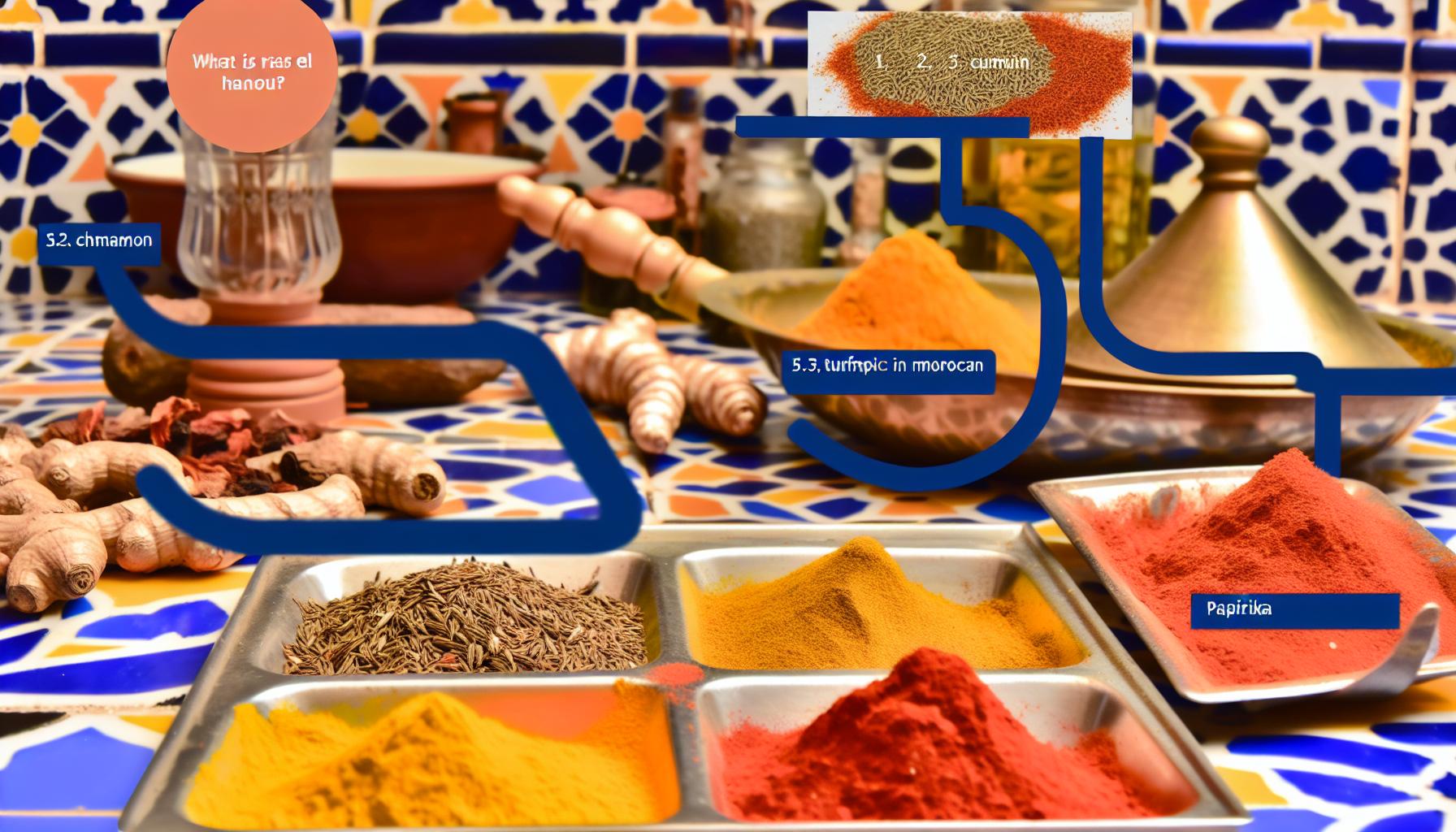
Ras El Hanout is an iconic spice blend of Moroccan cuisine. His name literally means « head of the grocery store », which reflects its richness and aromatic complexity often bringing together dozens of carefully selected ingredients.
Each Moroccan grocer or cook has their own recipe, making this blend unique to each region or even to each family. It may include spices such as cinnamon, ginger, coriander, cumin, clove, nutmeg, or cardamom.
Used mainly to raise tajines, couscous and other simmered dishes, Ras El Hanout brings a warm, slightly sweet and very fragrant flavor, characteristic of traditional Moroccan dishes.
To learn more about Moroccan culinary specialties, discover our article dedicated to Moroccan couscous, an essential dish where Ras El Hanout often plays a key role.
If you want to deepen the origin and the different variants of this mixture, see this detailed sheet on the Ras El Hanout on Wikipedia.
Why is cumin so popular in Moroccan cuisine?
Cumin is an essential spice in Moroccan cuisine, recognized for its powerful aroma and its warm notes that sublimate many traditional dishes.
Used both in tajines, couscous and marinades, cumin brings a depth of unique flavor that balances perfectly with other spices such as coriander or paprika.
Beyond its taste, cumin has benefits for digestion and health, which explains why it is very popular in Morocco's ancestral recipes.
Its popularity is also explained by its roots in local culinary culture, where it is one of the essential spice blends, often purchased in Moroccan souks and markets.
To discover more in detail the importance of spices in Moroccan gastronomy, do not hesitate to visit our section on Moroccan couscous, an emblematic dish where cumin plays a major role.
Finally, if you want to deepen your knowledge, you can consult this very complete external article on cumin in Moroccowhich explains its history, culture and virtues.
How is saffron used in Moroccan recipes?
The saffron is a precious and emblematic spice of Moroccan cuisine. Its delicate aroma and orange yellow colour bring a unique touch to traditional dishes.
In Moroccan recipes, saffron is often used in tajines, couscous and rice dishes to perfume and colour with elegance.
For example, Moroccan couscous frequently incorporates saffron to enhance its flavors and give it a warm tint.
It can also be found in recipes such as chicken and lamb tajine, where it blends perfectly with other spices such as cinnamon or ginger.
Saffron is also appreciated for its medicinal virtues, making it even more valuable in local gastronomy.
To discover recipes specific to saffron, you can consult specialized sources such as Chief Simon, which offers a beautiful selection of Moroccan dishes based on this spice.
What role does turmeric play in Moroccan gastronomy?
Turmeric occupies an essential place in Moroccan cuisine, not only for its bright yellow colour but also for its aromatic properties. Used in powder, it brings a touch of soft heat and a subtle fragrance that sublimes many traditional dishes.
In tajines, couscous or even marinades, turmeric is often mixed with other spices such as cumin or coriander, to create complex and balanced flavors. This spice is also recognized for its medicinal virtues, a valuable asset in local gastronomy.
The turmeric contributes to the identity of Moroccan dishes and perfectly accompanies meat, vegetables and cereals, thus strengthening the country's culinary richness. If you want to learn more about Moroccan destinations and their specialities, don't hesitate to visit imperial and must-see cities.
To better understand the role of turmeric and discover other spices that shape Moroccan gastronomy, you can consult this comprehensive resource on the Moroccan cuisine on Wikipedia.
What are the key spices of the paprika mixture?
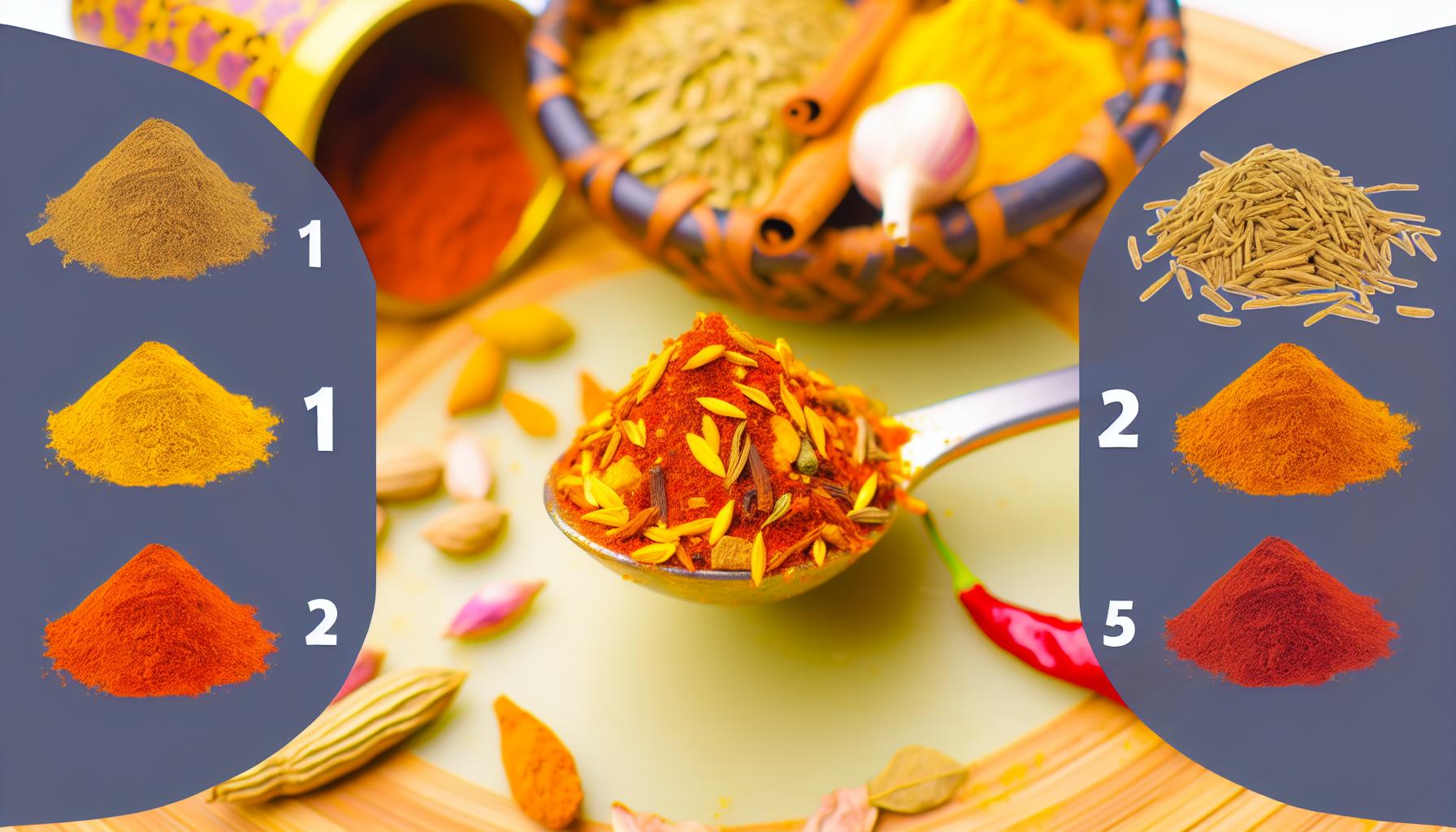
Paprika is an essential spice in many kitchens, including Moroccan cuisine, which is distinguished by its rich and tasty spice mixes. This blend obtains its characteristic red colour and its sweet or slightly spicy taste thanks to some perfectly dosed key spices.
The base of the paprika is of course the sweet pepper, but it can be combined with strong pepper to bring a raised touch. This combination balances warmth and softness. To this often add cumin, coriander and powdered garlic, which are typical of Moroccan flavours and complete the whole with earthy and slightly lemony notes.
Smoke sometimes present in certain types of paprika, such as smoked paprika, brings additional depth to the dishes. This complexity echoes the richness of Moroccan spice blends such as ras el hanout, often used in iconic recipes to discover on this link.
To learn more about paprika, its origin and its varied uses, you can consult this detailed resource: Paprika on Wikipedia.
Finally, paprika perfectly integrates into many traditional Moroccan dishes, bringing color, fragrance and a unique taste that delights taste buds.
In conclusion, spices play an essential role in Moroccan cuisine, bringing flavours and aromas unique to traditional dishes. From the famous Ras El Hanout to the precious saffron, popular cumin and coloured turmeric, each spice adds its special touch to each recipe. The paprika blend, on the other hand, offers a combination of spicy and sweet flavours that make the fame of many Moroccan dishes. Explore and use these spices in your kitchen will allow you to travel through the delights of Moroccan gastronomy.
[contact-form-7 id= »6204c24′′ title= »Subscribe to our personalized newsletter »]