Explore the secrets of Morocco!
You are passionate about artisanal jewellery and want to learn more about the treasures that can be found in southern Morocco? Then you're in the right place! In this blog, we will explore the fascinating universe of jewelry from southern Morocco, where money and traditional techniques combine to create unique pieces and prints of history.
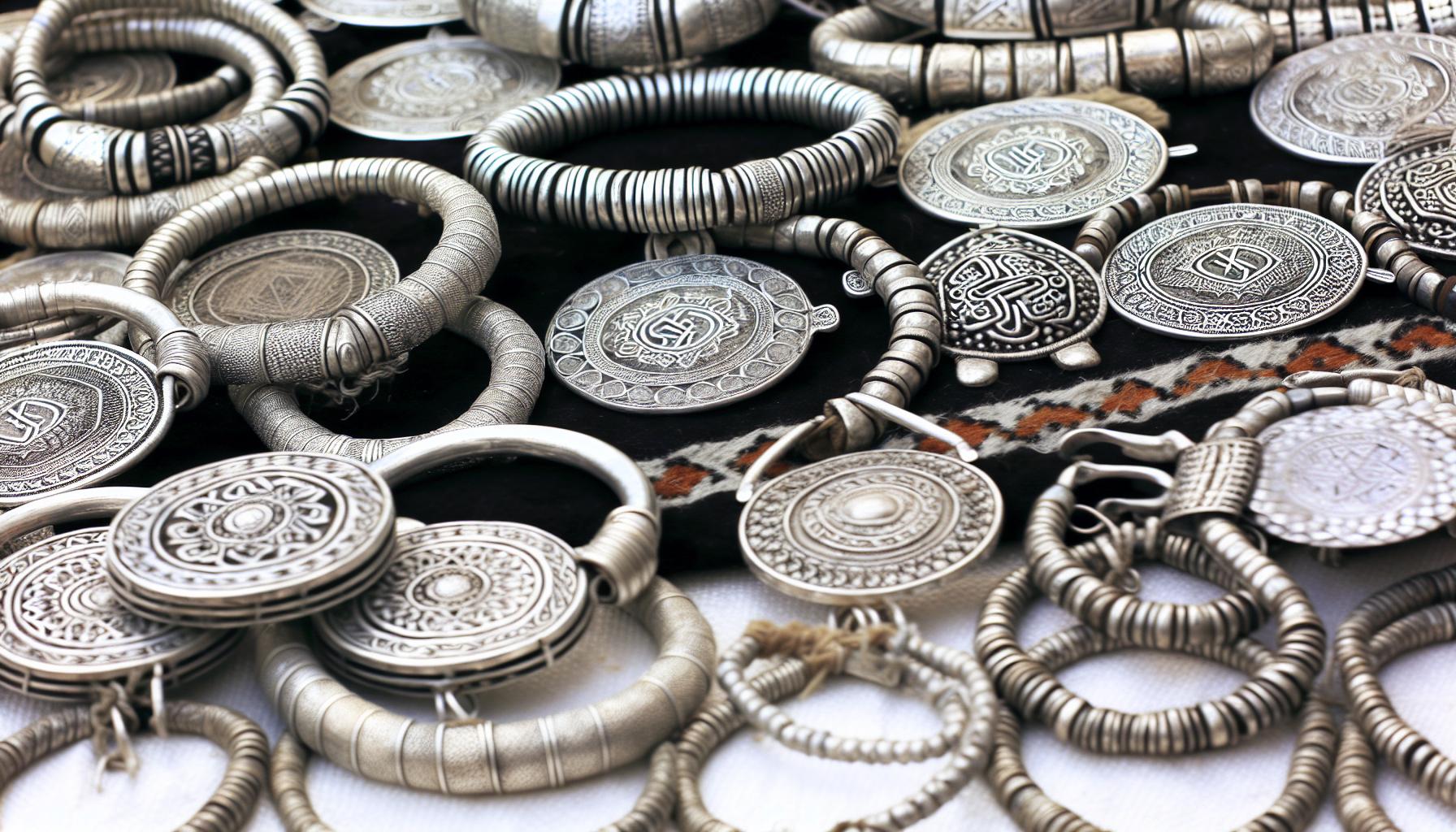
The Berber jewelry are a true representation of the cultural heritage of the region. Berber bracelets and symbolic fibules, such as the famous Thafzimth Berber fibula, are emblematic examples of Moroccan craftsmanship. These jewels, real treasures of the Under Mass and Tiznitmix elegance and spiritual protection, with motifs inspired by nature and spirituality.
The Moroccan artisanal jewelry are valued for their authenticity and beauty. They bear witness to the know-how of local artisans and their commitment to traditions. In this blog, we will explore the different facets of these jewels, traditional technologies to create them to the cultural importance of Berber fibula Like the Thafzimth.
That you are lovers of traditional jewelry or looking for unique pieces of charm ethnicThe jewels of southern Morocco will seduce you. Stay with us to discover how these jewels combine elegance and spiritual protection, and how the natural and spiritual motifs are sublimated in each creation.
What are the traditional materials used in handicraft jewellery in southern Morocco?
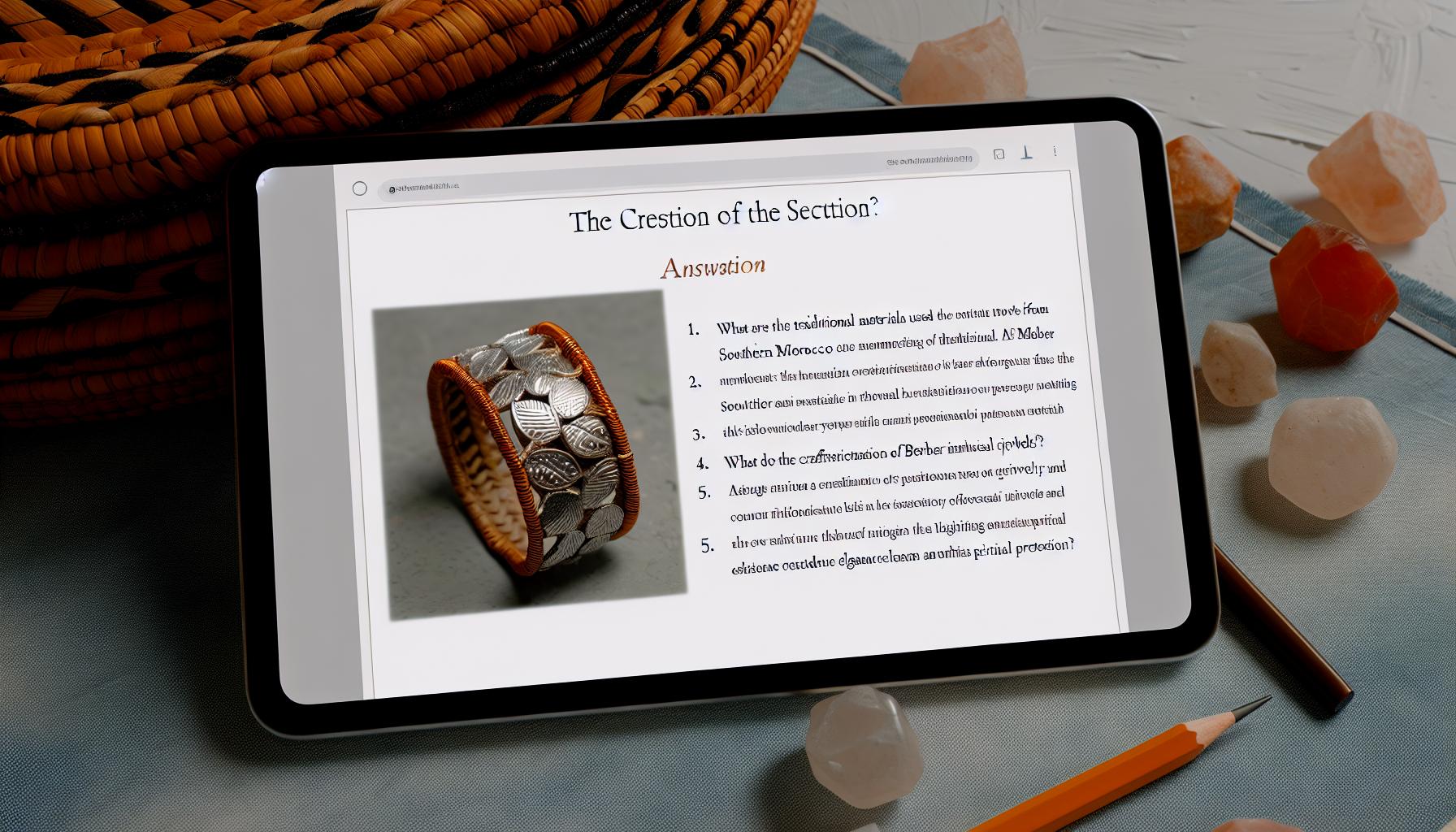
Handcrafted jewellery from southern Morocco is distinguished by the use of traditional materials that reflect both the cultural identity and ancestral know-how of local artisans. Among the most common materials are silver, a precious metal very popular for its beauty and ease of work.
The silver is often worked using complex techniques of engraving, incrustation and watermarking, giving birth to unique and richly decorated pieces. Besides silver, copper and bronze are also used, bringing warm shades and a more rustic touch to jewelry.
In addition to metals, artisans often use semi-precious stones such as coral, amber, turquoise or garnet. These coloured stones are carefully selected for their symbolic meanings and aesthetics.
Leather, glass beads, and sometimes even organic materials such as los or horn can also be used in jewellery composition, adding a variety of textures and shapes. This mixture of natural and metallic materials perfectly illustrates the richness of Moroccan craftsmanship, which you can discover in more detail in our section dedicated to Moroccan crafts and markets.
These traditional materials and techniques contribute to the creation of jewellery that is not only ornamental, but also bearers of history and strong cultural significance, making jewellery from southern Morocco a real treasure to explore.
For more information, you can also consult this external resource which details the jewelry manufacturing in the Souss Massa region, an important centre of this craft.
What is the cultural importance of Berber fibula such as Thafzimth?
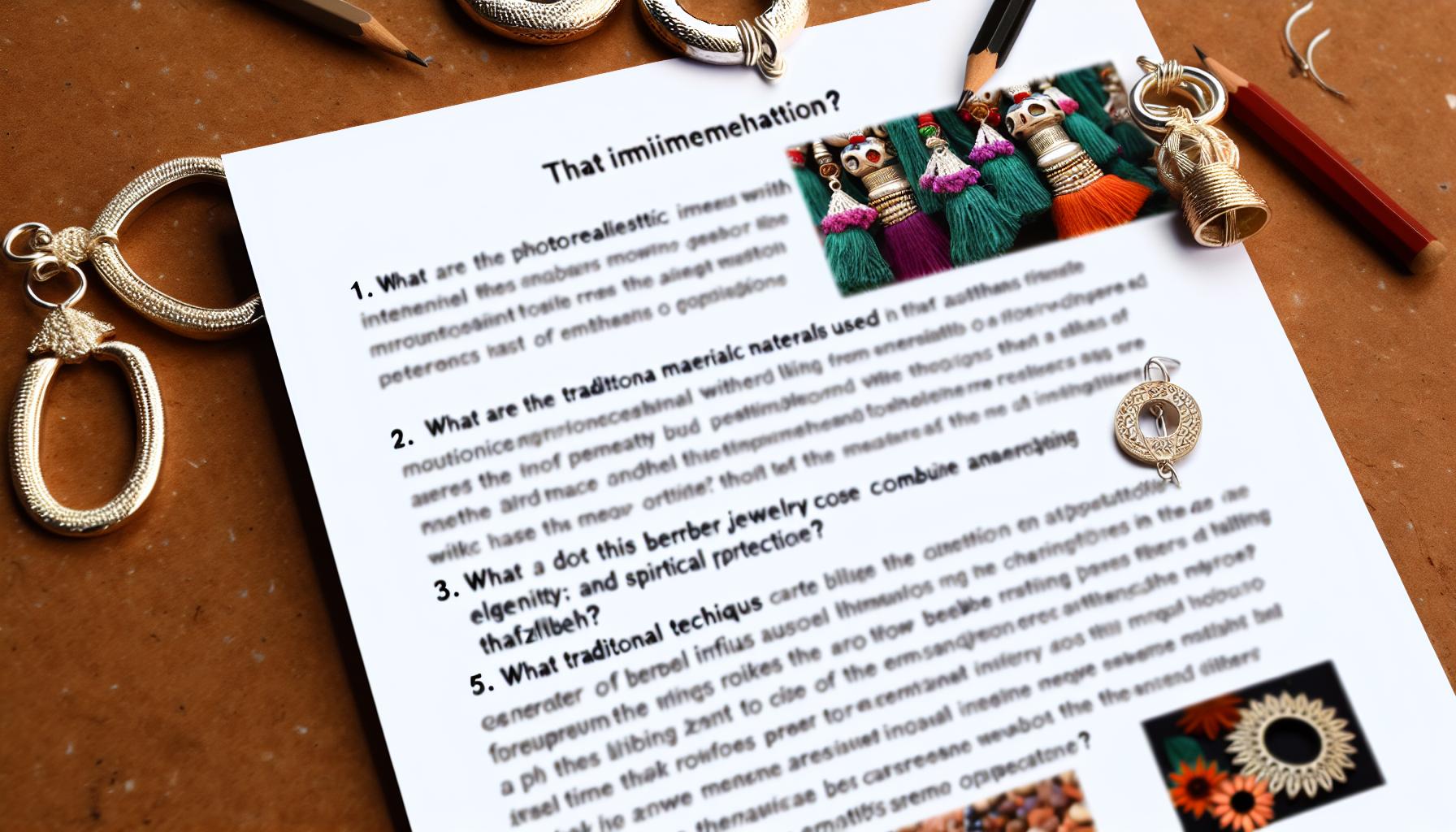
Berber fibula, especially the Thafzimth, are much more than just ornaments. These ancient jewels are a strong symbol of Amazigh identity, bearing witness to ancestral traditions transmitted from generation to generation.
The Thafzimth is often worn at important ceremonies and plays an essential role in passing rites. It is used not only to fix clothes, but also to display the cultural and social status of the person wearing it.
Each fibula has unique patterns, often inspired by nature and local symbolism, which reinforces its cultural and spiritual importance. The artisanal manufacture of these jewellery also contributes to the preservation of traditional know-how.
To better understand Moroccan crafts and jewellery, do not hesitate to explore other Kingdom treasures, particularly in the region of Marrakech, where crafts and markets are full of similar wonders.
To deepen your knowledge of Thafzimth and Berber fibula, this external link provides a detailed analysis: The Amazigh fib Habzimth.
How do artisanal jewellery mix elegance and spiritual protection?
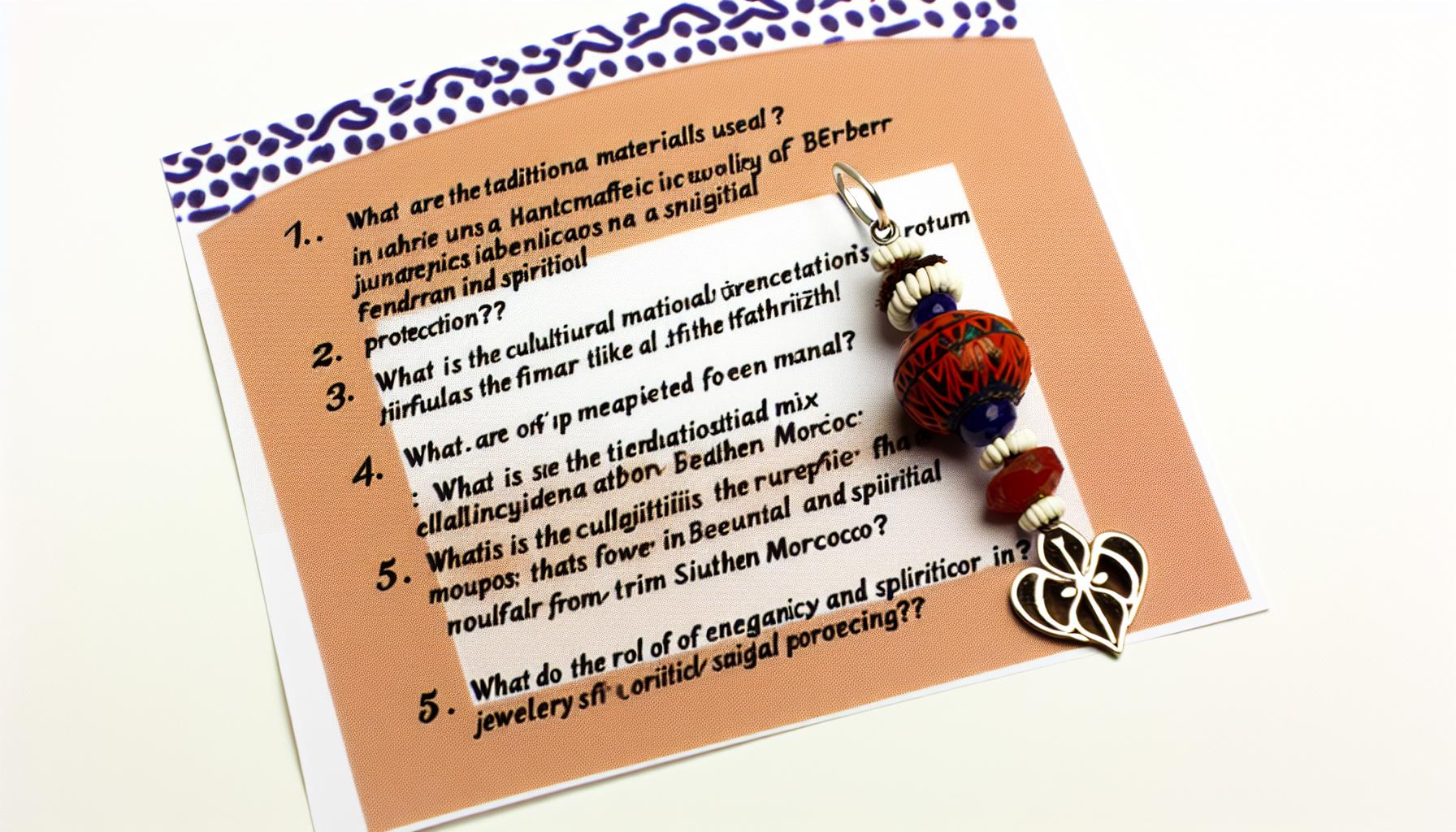
Handcrafted jewellery from southern Morocco is much more than just aesthetic accessories. They embody a wise blend of elegance and spiritual symbolism, an ancestral heritage passed on from generation to generation.
Each piece is designed with careful attention to detail, using noble materials such as silver, natural stones or leather. Above all, these jewels carry powerful symbols designed to protect their wearer from negative energies.
For example, talisman « Khamsa » or Fatima's hand is frequently present, known to keep the wrong eye away and promote luck. This spiritual dimension perfectly harmonizes with the refined design, thus offering beautiful and meaningful pieces.
The value of these jewels goes beyond mere ornamentation, linking the one that brings them to a rich tradition and a form of inner protection. To learn more about the Moroccan craftsmanship that inspires these creations, do not hesitate to discover our section dedicated to Moroccan crafts and markets.
To deepen this theme, you can also consult external resources such as this Article which explores how tradition and innovation unite in artisanal jewellery.
What are the traditional techniques used to create these artisanal jewels?
In southern Morocco, the manufacture of artisanal jewellery is based on ancestral methods transmitted from generation to generation. The artisans mainly use manual techniques that value the local know-how and authenticity of each piece.
Among these techniques, the work of silver wire and copper is very widespread. Craftsmen shape delicate designs using small tools to create precise engravings and unique ornaments. Marteling is also a key step to shape and texture metals.
The technique of watermarking, which consists of assembling fine metal volutes to form complex drawings, is very popular to adorn rings, necklaces and bracelets. This method requires great dexterity and patience, demonstrating the high level of expertise of local jewellers.
The setting of natural stones, often semi-precious, is also a common practice. It aims to highlight gems while ensuring their solidity within the final jewel. All these steps are most often carried out by hand, reinforcing the uniqueness of each creation.
To learn more about Moroccan handicrafts as a whole, please consult our article on and Moroccan markets, where you will discover other handmade wonders.
To deepen the techniques of manufacturing artisanal jewellery, you can also visit this very complete external site: joyemy.com – Making artisanal jewelry.
What is the role of natural and spiritual motifs in southern Moroccan jewellery?
Handcrafted jewellery in southern Morocco is not only decorative; They carry in them a symbolic wealth that draws its roots from nature and local spirituality.
The natural motifs, such as leaves, flowers or geometric shapes inspired by the desert and mountains, reflect a deep connection with the environment surrounding the artisans. These elements recall the beauty and strength of nature, essential to the daily life of Berber and nomadic communities.
Furthermore, spiritual symbols, such as the hand of Fatma (khamsa) or the talismanic motifs, are integrated to offer protection and luck to the one who wears the jewel. They are charged with popular beliefs that cross generations.
The combination of these natural and spiritual motifs gives jewels a dual function: aesthetic and protective. Each creation tells a story, symbolizes a heritage and serves as a mound in everyday life.
To better understand Moroccan crafts and discover other treasures, do not hesitate to consult our article on and Moroccan markets.
Also discover a fascinating selection of traditional and modern Moroccan jewellery on this specialized site: Deena Bazaar.
At the end of this exploration of artisanal jewellery in southern Morocco, it is clear that these jewels are more than just accessories. By using traditional materials and incorporating deep-rooted cultural motifs, these jewellery represent a true cultural heritage.
Thafzimth Berber fibula, for example, symbolizes not only protection, but also wealth and beauty. It is a true testimony of the cultural importance of jewellery in Moroccan society.
The traditional techniques of creating these jewels only reinforce their artistic and symbolic value, mixing with elegance ancestral know-how and modern aesthetics.
Finally, the natural and spiritual motifs that adorn these jewels bring a strong symbolic dimension, recalling the beauty of nature and the profound spirituality of Moroccan culture.
[contact-form-7 id= »6204c24′′ title= »Subscribe to our personalized newsletter »]