Explore the secrets of Morocco!
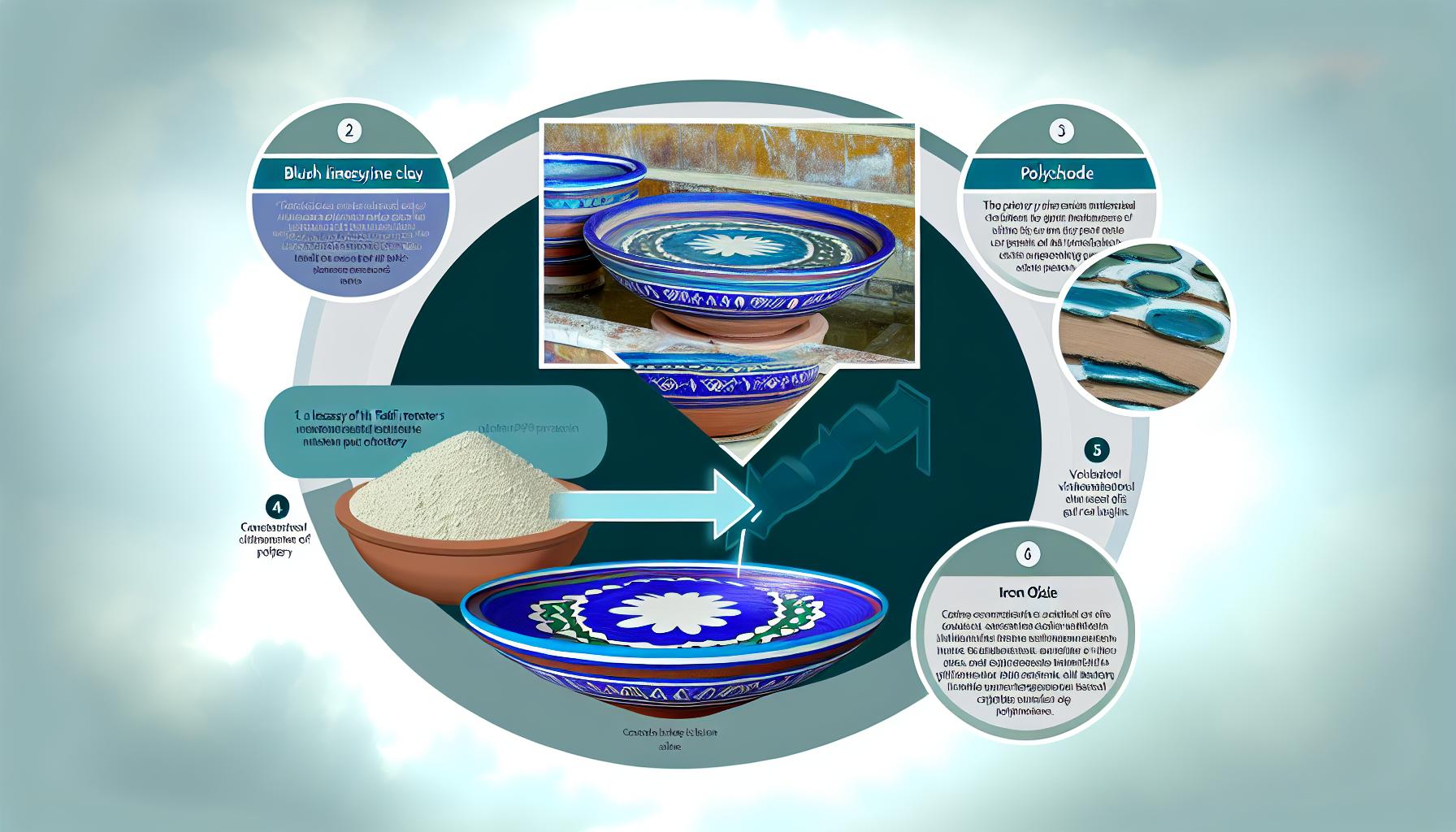
Welcome to our blog dedicated to the art of Safi pottery, a centuries-old tradition rooted in the history of Morocco. Renowned for its bluish and polychrome ceramics, Safi's pottery reflects all the know-how of 19th-century potters.
Calcareous clay and iron oxide are the main raw materials used by Safi artisans to give their creations a unique metallic texture. Symmetric patterns and polychromy are the distinctive features of this ceramic, which requires a five-step manufacturing process including a white barbotin and vibrational icing.
Our blog will explore in detail the origins of Safi's pottery, the manufacturing techniques used by artisans, the typical motifs that adorn their creations, and the cultural significance of this craft in Morocco.
Immerse yourself with us in the fascinating world of Safi's pottery, witness to an age-old know-how that continues to fascinate amateurs and collectors around the world.
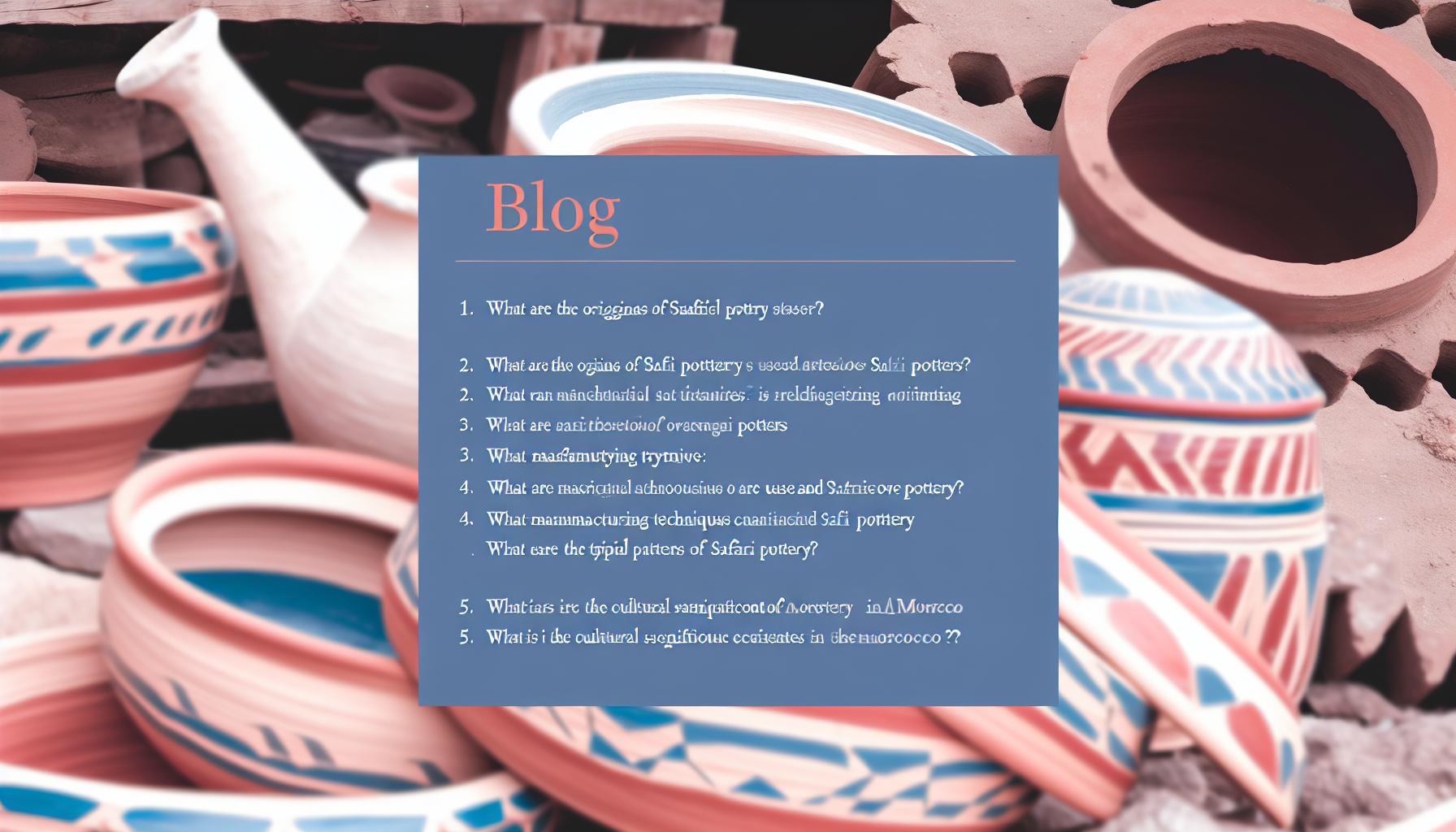
What are the origins of Safi's pottery?
The pottery of Safi draws its origins from a traditional craft tradition several times centuries old. This port city, located on the shores of the Moroccan Atlantic, has established itself as a major centre of ceramics thanks to the richness of its clay lands and the skill of its artisans.
Historically, the techniques of pottery in Safi have been influenced by trade with various civilizations, including Andalusians and Berbers, which have brought unique know-how and aesthetics. These influences are still found today in the patterns and shapes characteristic of the pieces manufactured.
The work of the land in Safi is based on a mix of traditional approaches and contemporary innovations, which gives this pottery a strong identity and a special attraction for artisans. To learn more about Moroccan crafts, discover our detailed article on Moroccan crafts and markets.
To deepen your knowledge of the history and origins of Moroccan pottery in general, we recommend reading the very good article of the magazine Tribaliste : Moroccan pottery and Berber.
Safi's pottery is thus a perfect illustration of the intersection between cultural heritage, local natural resources and artisanal creativity, making each piece a true work of art and witness to a rich history.
What raw materials do Safi potters use?
The Safi potters mainly work with a local clay, rich and easily malleable, extracted from the vicinity of the city. This clay gives their works a unique texture and a appreciated resistance throughout the region.
In addition to clay, they also use natural pigments for their decoration, often from minerals in the region. These pigments make it possible to obtain the bright colors and traditional patterns, characteristic of the safiote pottery.
Craftsmen's know-how is also based on complementary materials such as kaolin, which gives particular whiteness to certain pieces, as well as on specific varnishes that protect and embellish creations.
To better understand the Moroccan artisanal context, you can consult our article on Moroccan crafts and markets, which highlights the techniques and materials of different regions.
Finally, if you want to deepen the history and geography of Moroccan pottery, the site Serghini Pottery offers a valuable resource.
What manufacturing techniques characterize Safi's pottery?
Safi's pottery is distinguished by ancestral know-how passed on from generation to generation. Craftsmen mainly use a manual tower called « potter tower », which allows them to shape unique pieces with precision and delicacy.
The choice of clay is essential. At Safi, it is extracted locally, then thoroughly washed and sifted in order to eliminate any impurity. This step ensures the quality and durability of the ceramics manufactured.
Once the shape is created, the potters apply traditional decorations by hand, using geometric or floral patterns painted with fine brushes. These decorations are then covered with a bright and colourful glaze, typical of the safiot pottery.
The cooking finally takes place in traditional ovens, where the temperature is carefully controlled. This process gives the parts a robustness and an inimitable aesthetic.
To learn more about Moroccan craftsmanship and its specificities, please consult our section dedicated to Moroccan crafts and markets.
To deepen the topic, you can also visit this informative page on Safi's pottery, which presents in detail the techniques and history of these passionate artisans.
What are the typical patterns of Safi's pottery?
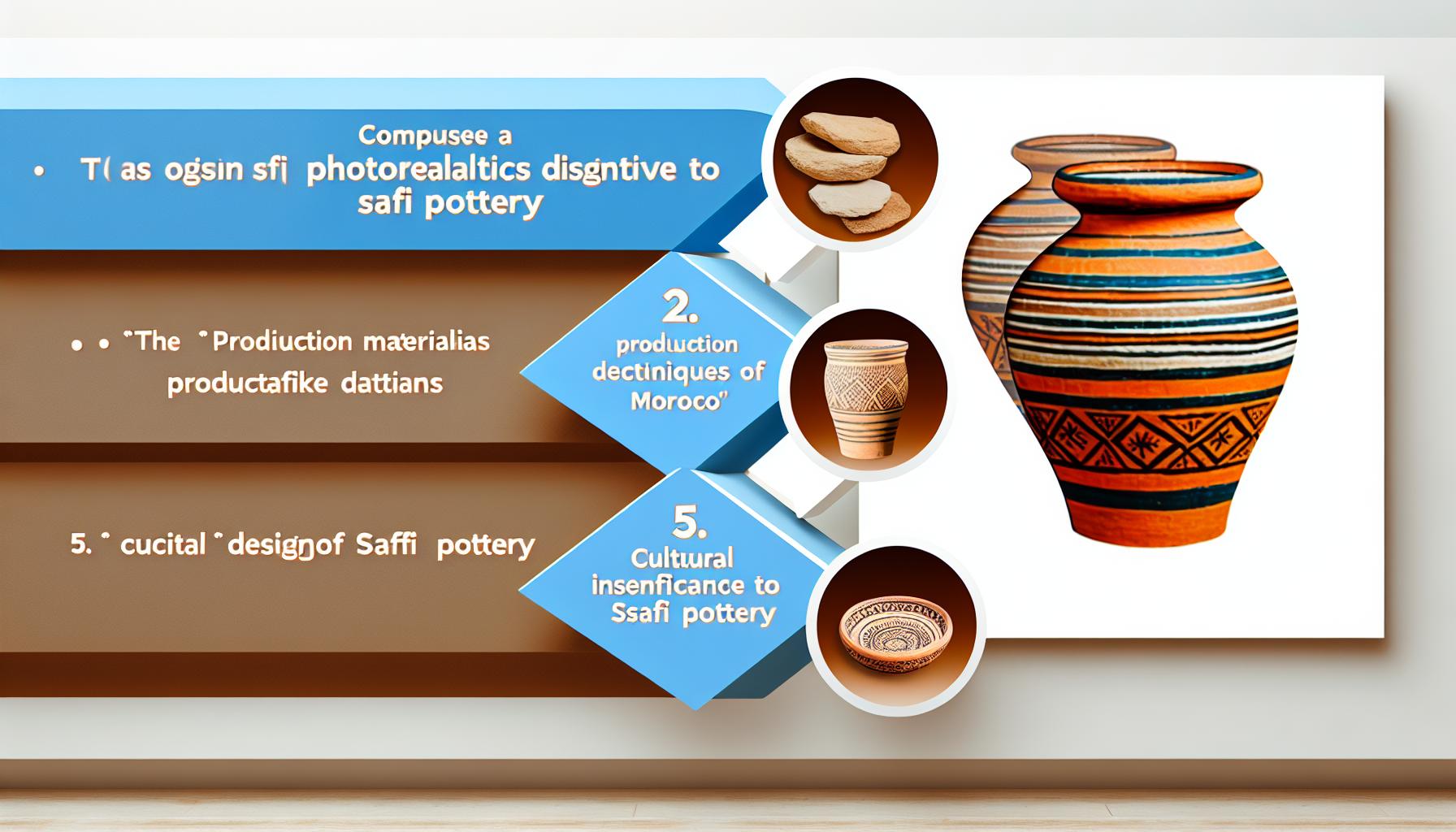
Safi's pottery is distinguished above all by its recognizable motifs, often inspired by natural elements and traditional Moroccan symbols. These decorations are crafted with great finesse, blending clean lines and geometric shapes.
Among the most typical motifs are the arabesques, the stylized floral forms, as well as the crescent and star motifs that recall Islamic art. These decorative elements give ceramics a unique identity, reflecting history and local culture.
Each pottery tells a story thanks to its ornaments, often hand painted with natural pigments. The dominant colours are blue, white, green and sometimes yellow, which bring a beautiful visual harmony.
To discover more Moroccan crafts, do not hesitate to visit our section dedicated to Moroccan crafts and markets, where you will find a wealth of local traditions and know-how.
For an immersive experience and additional information about Safi's pottery, you can also consult this very complete external article: Safi's potters.
What is the cultural significance of Safi pottery in Morocco?
Safi pottery occupies an essential place in Moroccan cultural heritage. Reflecting both the history and artistic identity of the region, it is much more than just a utilitarian object. Each piece bears witness to an ancestral know-how transmitted from generation to generation, a symbol of a deep link with the land and local traditions.
The motifs and colours characteristic of Safi's pottery have a Berber, Arab and Andalusian influence, illustrating the cultural richness of Morocco. These original creations tell stories, beliefs and customs specific to the Safio community.
Pottery is not only used for decorative purposes, but also for everyday uses such as food conservation or traditional tajine preparation. Thus, it embodies a harmony between aesthetics and functionality.
To better understand this craft and its regional context, do not hesitate to consult our article on Moroccan crafts, where are explored various emblematic Kingdom crafts.
Finally, you can deepen the knowledge of Moroccan pottery through specialized resources such as this file on Moroccan pottery and Berber, which offers a detailed look at this fascinating cultural heritage.
In conclusion, Safi's pottery is distinguished by its rich origins and its use of natural raw materials such as clay and ochre. Traditional manufacturing techniques, such as filming and enamelling, add an authentic touch to these unique artworks. Typical patterns, such as arabesques and geometric patterns, reflect Moroccan history and culture. Safi's pottery occupies an important place in Morocco's culture, symbolizing local craftsmanship and national identity. In short, Safi's pottery is an artistic treasure to discover and appreciate for its beauty and profound cultural significance.
[contact-form-7 id= »6204c24′′ title= »Subscribe to our personalized newsletter »]